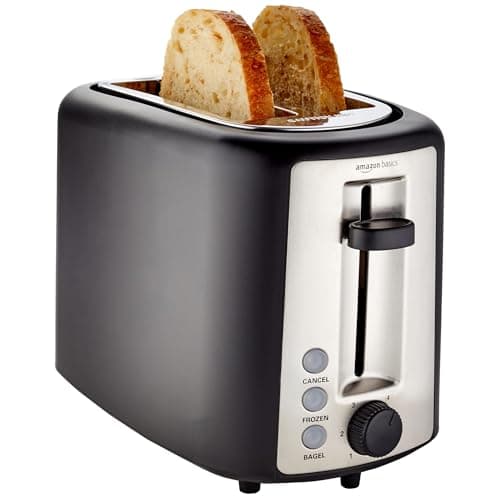
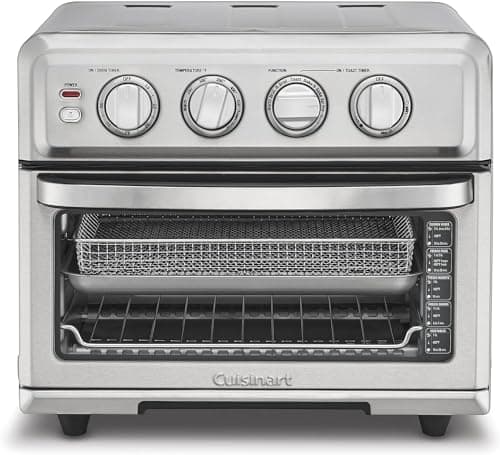
Start with the Cuisinart Air Fryer Toaster Oven. It is the pick for one reason that has nothing to do with cooking: RTINGS records its controls as 100% analog, so there is no touch panel to fail a dry fingertip and no menu to memorise. Food goes in and out at chest height on a rack rather than being lifted out of a deep pot. If you only replace one appliance, replace the one that asks the most of your hands.
Almost every “appliances for seniors” list is a normal list with larger type. This one is ranked on different criteria, because the things that make an appliance unusable later in life are not the things reviews measure. In rough order of how often they end an appliance's working life in someone's kitchen:
- What the controls are.A physical dial gives tactile feedback and works with dry skin, gloves, long nails and tremor. Capacitive touch panels read the moisture in your skin, which means a genuinely dry fingertip can fail to register at all — a point we first made on the air fryer version of this page and which applies to every appliance here.
- What you lift, and from where. A 7-quart ceramic crock full of stew is heavy, awkward and hot, and it has to come up and out. A rack that slides out at counter height does not.
- Whether it works without a phone. An appliance whose temperature lives in an app is an appliance that stops working when the phone updates. Everything on this page is fully controllable from the machine itself.
- Whether it turns itself off. Auto shut-off is a feature on a spec sheet and a safety system in a real kitchen.
The hazard the ranking is really about
The reason this page weights lifting and reach so heavily is scalds and burns, and they are not evenly distributed. Carrying a full pot across a kitchen, draining boiling water, and reaching over a hot element are the three motions that go wrong, and all three get harder with age. Every pick below either removes one of those motions or does it at counter height. We are not going to quote an injury statistic we have not read; what we will do is rank on the motions themselves, which you can check against your own kitchen before you buy.
The control-type table, because nobody publishes one
Makers advertise functions. Nobody advertises what you have to do with your hands to reach them. This is that table, built from the manuals and the product photographs.
| Appliance | Control type | Heaviest lift | Turns itself off |
|---|
| Cuisinart Air Fryer Toaster Oven | Analog dials | A rack, at counter height | Timer ends the cook |
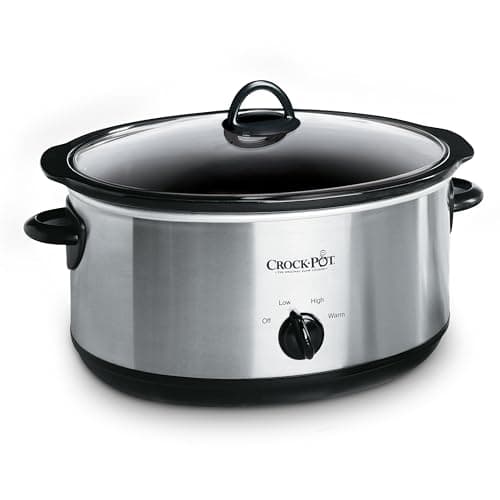
| Crock-Pot 7 Qt Manual | Mechanical 3-position dial | A full stoneware crock | No |
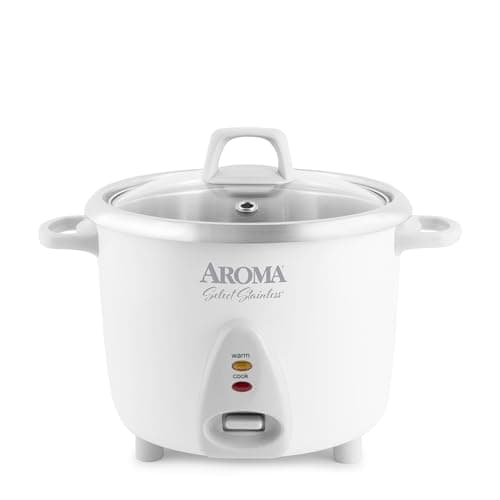
| Aroma Select Stainless | Single mechanical switch | An inner pot of rice | Yes, releases to keep-warm |
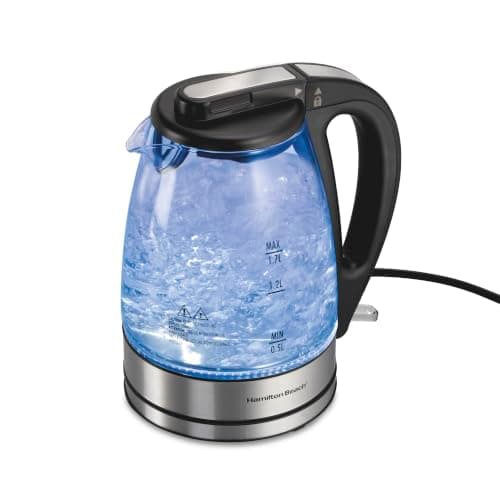
| Hamilton Beach 1.7 L Kettle | Single switch | The kettle, as full as you fill it | Yes, plus boil-dry cut-off |
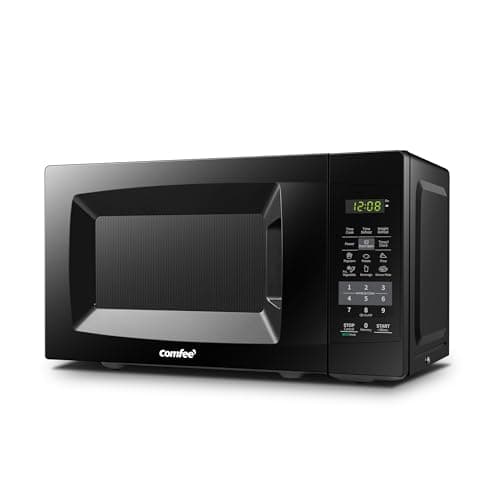
| COMFEE’ 0.7 Cu Ft Microwave | Membrane keypad | A plate, at a shallow reach | Yes |
| Amazon Basics 2-Slice Toaster | Lever and dial | Nothing | Yes, pops up |
Three appliances we would not buy for this kitchen
A page like this is more useful for what it rules out. We would skip anything app-controlled, including machines we rate highly elsewhere — the most expensive sous vide circulator we cover is last on its own roundup precisely because its manual describes app-only control. We would skip a full-size stand mixer unless baking is a weekly event, because a 5-quart bowl-lift machine weighs more than most people want to move and lives permanently on the counter. And we would skip any pressure cooker as a first appliance: they are excellent machines, but they add a locking lid, a steam release and a sequence to get right, and the slow cooker above produces the same stew with a dial.
Legibility is a separate problem from controls
Note that the Cuisinart wins on control type and loses on legibility — its dial lettering is genuinely small, and we have said so since the review. Those are two different axes and most lists collapse them. A large bright display you cannot operate reliably is worse than small lettering on a dial that always works, which is why the ranking weights control type higher. If eyesight rather than dexterity is the constraint, the toaster and the slow cooker are the two picks here with large, high-contrast markings, and a 2-dollar roll of raised silicone dots on the two settings you actually use will outperform any feature on a spec sheet.
Where the running cost lands
None of this costs much to run, and the arithmetic is public: kilowatts times hours times your rate, at a U.S. average of about $0.17 per kWh. The 1,800 W Cuisinart for twenty minutes is roughly 10 cents. The kettle boiling a mug is under a cent. The slow cooker is the one category where no maker publishes a wattage at all, which we report rather than estimate — the energy-efficiency page names every category we cannot cost and why. The practical point for this page is that running cost should not influence the decision; usability should.
How we picked
We did not lab-test this gear
Everyone in this category says they tested twenty air fryers. We have not lab-tested any of these, and we say so. What we did instead: compiled the published specifications — wattage, capacity, materials — worked out what each machine actually costs to run at the national electricity rate, read the manuals and owner reviews, and scored each one against a published rubric. The scores are judgments from documented research — not measurements we took, because we do not have a lab and we will not pretend we do. Where a number came from someone else's work, we name them in Sources.