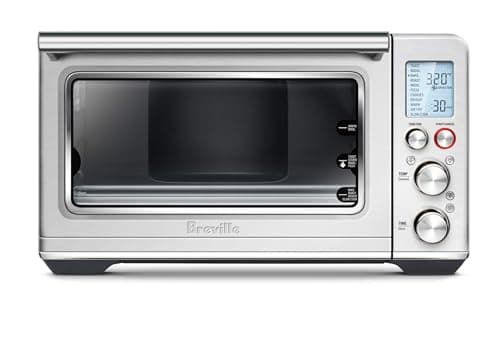
A modern toaster oven is really two appliances in one: a compact convection oven that toasts and bakes, plus — on nearly every model worth buying now — a genuine air-fry mode. That overlap is the whole point. If you're short on counter space, the right toaster oven replaces both a basket air fryer and a small oven. We ranked these on capacity, build quality and value, and every pick air-fries.
The trade-off versus a dedicated basket is footprint and cleanup — an oven takes more space and has more parts to wash. If air-frying is nearly all you'll do, a basket air fryer is simpler; the full case is in air fryer vs toaster oven. If you want one machine that does everything, read on.
A countertop oven and a microwave are not rival versions of one appliance, and buying the wrong one first is the most common mistake in this part of the kitchen. Toaster oven vs microwave sets out which jobs each physically cannot do, with the running cost for a single reheat on both sides.
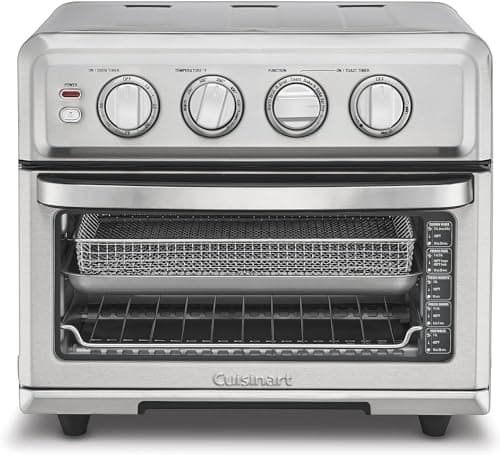
The two machines most readers end up choosing between here are the Breville and the Cuisinart, and they are not really competing on cooking: Breville vs Cuisinart air fryer toaster ovenputs them side by side on what each maker publishes — including the four spec rows only one of them fills in.
Should you buy a toaster oven or a basket air fryer?
It comes down to how you cook. If your list is mostly “crisp a batch of something fast,” a basket air fryer is smaller, cheaper and easier to clean — buy from the air fryers roundup. If you also want to toast bread, bake a small tray, broil, or reheat flat food like pizza, a toaster oven does all of that plus air-frying, and one machine replaces two. The trade-off is space and a bit more cleanup. The full head-to-head is in air fryer vs toaster oven.
What actually matters when choosing one
- Even heating. The single biggest quality difference — it's why the Breville costs more and toasts better. Cheap ovens have hot spots.
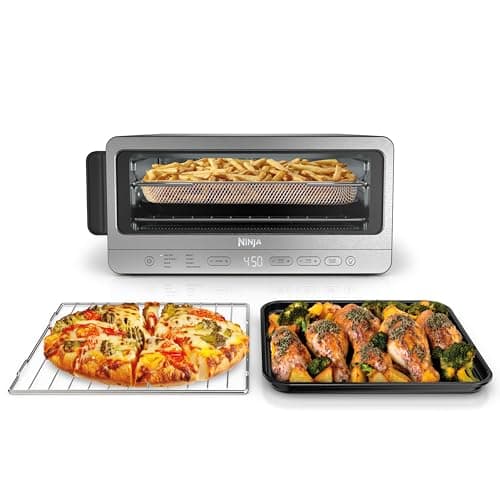
- Capacity vs footprint. XL ovens fit a whole chicken but dominate the counter; compact and flip-away models save space at the cost of tray size.
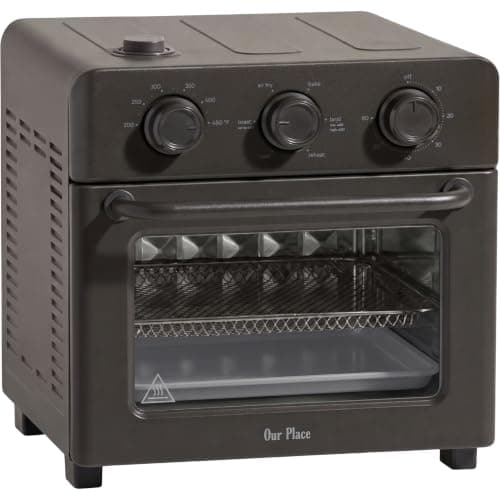
- Build and materials. Stainless lasts; a PTFE-free interior (Our Place) matters if you're coating-conscious — see are air fryers toxic.
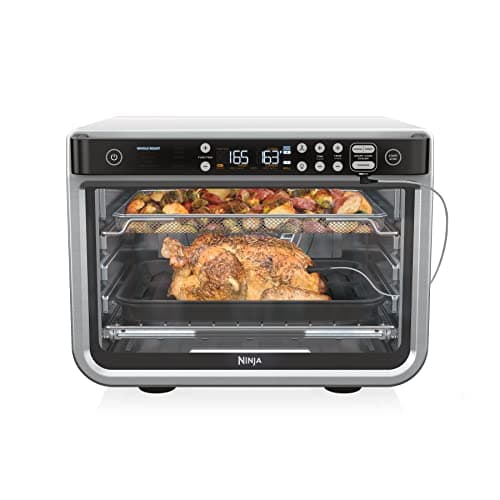
- Controls. A probe (Ninja DT251) or precise element control (Breville) genuinely improves results; extra preset buttons rarely do.
Running cost is the same story as air fryers
Toaster ovens draw a similar 1,200–1,800 watts to basket air fryers, so a typical cook costs the same single-digit cents — and, like air fryers, they beat a full-size oven for small jobs because there's less cavity to heat. Put your model's wattage into the running-cost calculator for your exact number.
One category next door is worth a look for the same reason we rank toaster ovens on the cavity rather than the badge. In the best waffle makers, the coated plate is bonded in on nearly every model sold — it cannot be put in a dishwasher and it cannot be replaced, so a worn coating ends the machine.
The other question this page raises is whether a toaster oven makes a pop-up toaster redundant. Mostly yes, if you toast occasionally; less so if toast is a daily habit for more than one person, because a pop-up heats both faces at once from an inch away with no preheat. The best toasters ranks seven of them on watts per slot and on which makers will actually publish a slot length, and answers that question honestly.
How we picked
We did not lab-test this gear
Everyone in this category says they tested twenty air fryers. We have not lab-tested any of these, and we say so. What we did instead: compiled the published specifications — wattage, capacity, materials — worked out what each machine actually costs to run at the national electricity rate, read the manuals and owner reviews, and scored each one against a published rubric. The scores are judgments from documented research — not measurements we took, because we do not have a lab and we will not pretend we do. Where a number came from someone else's work, we name them in Sources.