Guides
Air fryer guides, sourced not guessed
The questions that come before a purchase — is the coating safe, what does it cost to run, how do you actually use one — answered with primary sources and real arithmetic.
We earn a commission when you buy through our Amazon links, at no extra cost to you. It never changes a verdict, and we say so when the cheaper product is the better buy. How this works.
This hub is for the questions people type into a search bar at 11pm and get a wall of contradictory takes in response. Are air fryers toxic? Do they use a lot of electricity? How much clearance do they need? Our answers lead with a direct response in the first two sentences, then show the reasoning and cite where the facts come from — food-safety agencies, the manufacturers' own documentation, and published electricity data, not a rehash of whatever ranked first last year.
Two guides here carry most of the weight. The first is the safety explainer, are air fryers toxic — a real concern, because most baskets use a PTFE nonstick coating, and the honest answer (it's stable at normal air-fryer temperatures, with specific, checkable caveats about overheating an empty pan) is more useful than either the scare version or the dismissive one. If you'd rather sidestep the coating question entirely, that guide points you straight to the glass, ceramic, and stainless picks.
The second is the one nobody else bothers with: what it actually costs to run an air fryer. Air fryers are sold on energy savings, yet not one of the big ranking guides puts a dollar figure on it. We do, with a formula you can reproduce and a calculator you can put your own numbers into. The headline: a typical cook costs a handful of cents, and the real savings come from not heating your big oven for a small job.
The rest are practical: how to use an air fryer covers preheating, not overcrowding the basket, the clearance it needs behind it, and the handful of foods that go wrong. These are the guides we wish existed when we were figuring this out ourselves — plain, honest, and pointing you toward the right machine when a purchase is the answer.
Before you buy anything, what size air fryer do I need is the one to read — capacity is the decision that determines whether the machine gets used or resented, and quart ratings mean very little until someone translates them into actual dinners. After you've bought, the troubleshooting pair does the heavy lifting: air fryer not crisping works through the eight causes of soggy food in the order they're actually to blame, and how to clean an air fryer covers the monthly job almost everyone skips, plus the four cleaning habits that destroy a nonstick coating early.
Three more for everyday use: air fryer cooking times gives starting temperatures and times for common foods — clearly labeled as starting points compiled from manufacturer charts, not measurements we took — along with the rule for converting oven recipes. What not to cook in an air fryer covers the nine foods that genuinely fail and why. And your first five air fryer cooks is a deliberate sequence rather than a recipe list — five cooks that each teach you one thing about your machine, so you stop needing charts at all.
Five newer guides answer the questions people search for at the moment something goes wrong. Can you put foil in an air fryer gives the four rules that make it safe and the one food you must keep off it. Why your air fryer is smoking works through six causes in the order they're actually to blame, and names the one pattern that means stop and unplug. How to preheat an air fryer covers the three foods preheating actively ruins, which nobody tells you. Why air fryer baskets peel answers the flaking-coating question with the evidence rather than the panic. And how long do air fryers last explains why parts availability, not build quality, is the best predictor of service life.
Two newer guides cover the electrical side, which the whole category skips. Can you plug an air fryer into an extension cord does the arithmetic nobody publishes — a 1,500-watt machine is 12.5 amps, which is most of a household circuit — then sets it against what the National Electrical Code actually requires of a kitchen, and says exactly what a cord would have to be rated at in the one case where you have no alternative. And air fryer won't turn on is a diagnosis order rather than a list: the outlet, the breaker, the basket interlock, then heat — because the overwhelming majority of air fryers people believe have died are simply not fully latched.
The newest five split between materials and setup. Are ceramic air fryers safe takes the word apart — it is a marketing term, not a chemistry one — and explains why “PFOA-free” has meant almost nothing since the EPA's stewardship program ended. Which air fryer brands are actually non-toxic goes brand by brand using only what each manufacturer publishes, including the one that openly discloses PTFE and the one that makes no claim at all. BPA-free air fryers shows where the plastic in an air fryer actually is, which is almost never in the food path. Air fryer clearance and placement gives the five- to six-inch figures the manuals print and nobody reads, and why cooking under a wall cabinet damages the cabinet. And reheating food in an air fryer is the function everybody uses most and nobody writes about — with the USDA's 165°F rule and the rice caveat that reheating cannot fix.
Four newer guides answer questions the category answers badly or not at all. What can you put in an air fryer works through the container question by material, and leads with the fact almost every other guide gets wrong: Pyrex's own published instructions say its glass cannot be used in an air fryer, because an air fryer is a direct heat source. Are air fryers worth it reduces the decision to four questions and then shows the money honestly — about $33 a year against a full-size oven, which is a real saving and not a payback story. Air fryer recalls lists all six U.S. recalls on the CPSC record with their model numbers and incident counts, and points out that five of the six were overheating faults rather than anything to do with a coating. And air fryers and pet birds is the one page where our calm line on nonstick does not apply: for a household with a bird, veterinary guidance is avoidance rather than care, and we explain why the margin that protects a person does not protect a parrot.
Four newer guides answer questions the troubleshooting pages kept raising. Can you leave an air fryer plugged in? separates the standby-power question from the unattended-cooking one, because they have different answers. Can you stack food in an air fryer? explains which foods tolerate a second layer and why most do not. Do air fryers heat up the kitchen? converts the running-cost arithmetic into BTU released into your room. And why is my air fryer so loud diagnoses a machine that got louder by the sound it makes.
Six newer guides answer the questions readers kept arriving with. Why your air fryer smells like plastic gives you the four-run test that separates normal curing residue from a real fault. Are air fryer liners safe? answers yes under three conditions, and explains why the hazard is the fan rather than the material. Do you need oil in an air fryer? goes food by food, and is blunt about aerosol spray. Can an air fryer catch fire? lists the five realistic causes and the one rule that matters most if it happens. Can you cook raw chicken in an air fryer? explains why this machine makes food look done soonest. And is an air fryer basket dishwasher safe draws the distinction between a part surviving a cycle and a coating surviving three hundred.
Three new guides take the materials and safety questions out to the rest of the counter. Are plastic electric kettles safe quotes the FDA on BPA and then does the useful part, naming the five places plastic meets water in a kettle, since “BPA-free” is a label every product on the shelf already passes. Are nonstick rice cookers safe makes the appliance-specific argument: a rice cooker holds its contents at the boiling point of water and switches off above it, which makes it the hardest place in the kitchen to overheat a coating. And is it safe to leave a slow cooker on all day answers yes, with four rules from the extension services — thaw first, fill between half and two thirds, keep the lid on, never reheat in it — which is also where what size slow cooker you need gets its usable-quarts table from.
Everything in this hub
All guides & safety
Buyer's guide
Are air fryers toxic? The honest, sourced answer
A sourced look at the PTFE coating question — what's actually a risk, what isn't, and the glass/ceramic/steel options if you'd rather skip coatings entirely.
Read the guide →
Buyer's guide
What does it cost to run an air fryer? The math nobody else publishes
The running-cost math in full — a typical cook is pennies — plus a live calculator that takes your machine's wattage and your electricity rate.
Read the guide →
Buyer's guide
How to use an air fryer: the six rules that actually matter
The handful of habits that make any air fryer work — preheat, don't crowd, shake, oil, clearance — plus the foods that go wrong in one.
Read the guide →
Buyer's guide
What size air fryer do I need?
Quarts translated into actual dinners, household by household — plus why basket shape beats volume and when to size up.
Read the guide →
Buyer's guide
Air fryer not crisping? Work through these eight causes
The troubleshooting order that fixes soggy air-fryer food — starting with the cause behind most complaints, and ending with when it really is the machine.
Read the guide →
Buyer's guide
How to clean an air fryer without wrecking the basket
The after-every-use routine, the monthly deep clean most owners skip, and the cleaning mistakes that kill a coating years before its time.
Read the guide →
Buyer's guide
What not to cook in an air fryer
The nine foods that genuinely go wrong in a basket, why each one fails, and which have a workaround worth knowing.
Read the guide →
Buyer's guide
Air fryer cooking times: a starting-point chart, not a promise
Starting times and temperatures for common foods, the oven-to-air-fryer conversion rule, and why your machine will differ from the chart.
Read the guide →Buyer's guide
Your first five air fryer cooks
Five starter cooks in a deliberate order, each teaching one lesson about your machine — plus the day-one mistakes worth skipping.
Read the guide →
Buyer's guide
Can you put foil in an air fryer?
The four rules that make foil safe in an air fryer, the acidic foods to keep off it, and why parchment usually beats it anyway.
Read the guide →
Buyer's guide
Why your air fryer is smoking, and how to stop it
Six causes of a smoking air fryer diagnosed in order of likelihood — plus the water-in-the-drawer trick and the one smell that means stop.
Read the guide →
Buyer's guide
How to preheat an air fryer — and when not to bother
How long to preheat, which foods need it, the three cases where it actively hurts, and what to do if your air fryer has no preheat setting.
Read the guide →Buyer's guide
How long do air fryers last?
Realistic lifespans by price tier, the five habits that shorten them, and the honest repair-or-replace rule.
Read the guide →
Buyer's guide
Why air fryer baskets peel — and what to do about it
What actually causes basket coatings to flake, the honest safety answer, and the coating-free options if you would rather never deal with it.
Read the guide →Buyer's guide
Can you plug an air fryer into an extension cord?
The watts-to-amps math on a 1,500-watt appliance, what a kitchen circuit is built to carry, and why manufacturers tell you to find an outlet that is not on a power strip.
Read the guide →Buyer's guide
Air fryer won’t turn on? Work through it in this order
A diagnosis order for an air fryer that will not power on, will not start, or cuts out mid-cook — supply first, interlock second, overheat third.
Read the guide →Buyer's guide
Are ceramic air fryers safe?
What a ceramic air fryer basket actually is, which manufacturer claims you can check, why “PFOA-free” means almost nothing in 2026, and the durability trade-off.
Read the guide →
Buyer's guide
BPA-free air fryers, and where the plastic actually is
Where plastic sits in an air fryer, what the FDA’s current position on BPA actually is, and the machines built almost entirely from metal and glass.
Read the guide →Buyer's guide
Which air fryer brands are actually non-toxic?
Six brands, each judged only on what it publishes about its own coatings — including the one that openly discloses PTFE and the one that makes no claim at all.
Read the guide →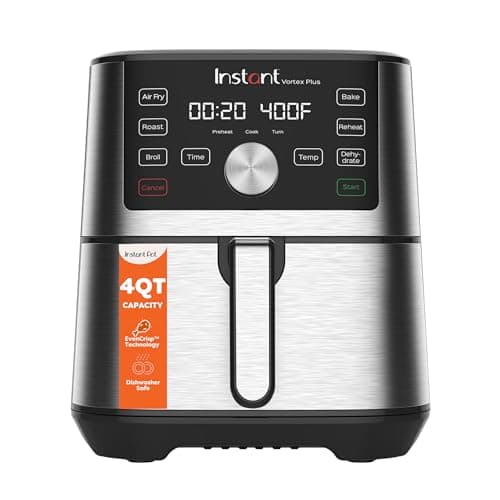
Buyer's guide
Air fryer clearance: how much space it really needs
The published clearance figures from Ninja and Cosori, why the exhaust goes where it goes, and the three placements that actually work in a tight kitchen.
Read the guide →Buyer's guide
Reheating food in an air fryer
Starting temperatures and times for the leftovers people actually reheat, the USDA’s 165°F rule, and the foods an air fryer makes worse rather than better.
Read the guide →Buyer's guide
What can you put in an air fryer? The container rules, by material
Metal, ceramic, silicone, paper and glass ranked by what actually survives an air fryer - including Pyrex's own published instruction not to use its glassware in one.
Read the guide →Buyer's guide
Are air fryers worth it? Four questions that decide it
The decision framed as four questions, with the running-cost math worked in full - and an honest answer to whether the machine ever pays for itself.
Read the guide →Buyer's guide
Air fryer recalls: the full U.S. list, and how to check yours
Every U.S. air fryer recall on the CPSC record with model numbers and incident counts, the pattern they share, and the 60-second check for your own machine.
Read the guide →Buyer's guide
Air fryers and pet birds: the one question we answer differently
Why the nonstick verdict that holds for humans does not hold for birds, what the veterinary sources actually publish, and the coating-free machines that settle it.
Read the guide →- Buyer's guide
Buyer's guide
Can you leave an air fryer plugged in?
The honest split: plugged in and switched off is fine, running unattended is not - with the published fire-safety guidance and what the U.S. recall record actually shows.
Read the guide → - Buyer's guide
Buyer's guide
Can you stack food in an air fryer?
The honest rule for stacking and for cooking two things at once: dry, sturdy food tolerates a second layer, anything that browns or sweats does not - plus what a rack does and does not fix.
Read the guide → - Buyer's guide
Buyer's guide
Do air fryers heat up the kitchen?
The honest answer with the conversion the category never prints: a typical air fryer meal puts roughly 2,000 BTU into your kitchen against 7,000 to 9,000 for the same job in a full-size oven.
Read the guide → - Buyer's guide
Buyer's guide
Why is my air fryer so loud?
A diagnostic guide by sound: which noises are normal physics, which are grease on the fan, which are a loose basket, and which mean the motor bearing is finished.
Read the guide → Buyer's guide
Why your air fryer smells like plastic
The four-run test that separates normal curing residue from a real fault, plus what a plastic taste in the food means and when to stop using the machine.
Read the guide →Buyer's guide
Are air fryer liners safe?
The three conditions that make a liner safe, why the hazard is the fan rather than the material, and the honest difference between paper and silicone on temperature ratings.
Read the guide →Buyer's guide
Do you need oil in an air fryer?
Which foods need oil in an air fryer and which bring their own, how little is enough, and why aerosol cooking spray is the main cause of a basket coating failing early.
Read the guide →Buyer's guide
Can an air fryer catch fire?
The five realistic ways an air fryer starts a fire, what the USFA actually records about cooking fires, and the one thing never to do if it happens.
Read the guide →Buyer's guide
Can you cook raw chicken in an air fryer?
Why the air fryer's fast surface browning makes raw chicken look done before it is, the single USDA temperature that settles it, and how cooking from frozen changes the timing.
Read the guide →Buyer's guide
Is an air fryer basket dishwasher safe?
Why dishwasher safe and good for your basket are different claims, which parts must never go in, and the two materials where the dishwasher genuinely costs you nothing.
Read the guide →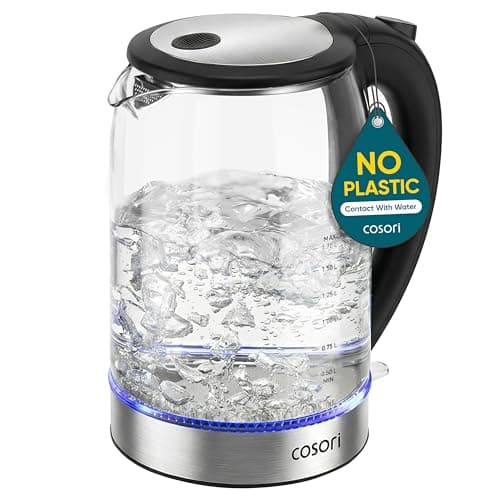
Buyer's guide
Are plastic electric kettles safe?
What the FDA says about BPA in its own words, why “BPA-free” is not plastic-free, the five plastic parts in a typical kettle, and the three ways to get a water path without any.
Read the guide →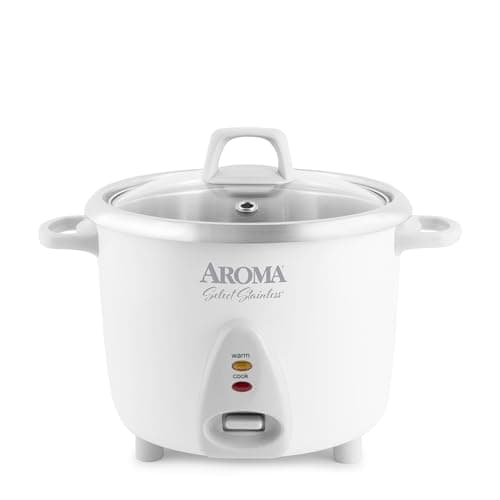
Buyer's guide
Are nonstick rice cookers safe?
Why a rice cooker physically cannot overheat its coating the way a hot pan can, what a scratched pot actually means, and the uncoated option if you want one anyway.
Read the guide →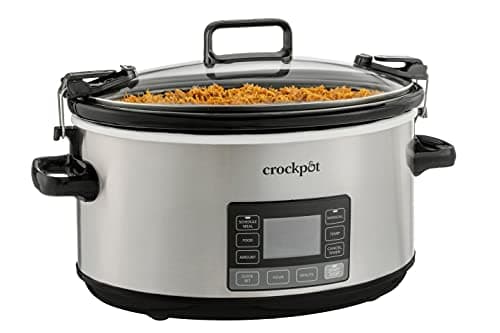
Buyer's guide
Is it safe to leave a slow cooker on all day?
The honest answer, plus the four rules that actually decide it: thaw first, fill between half and two-thirds, leave the lid alone, and never use it to reheat.
Read the guide →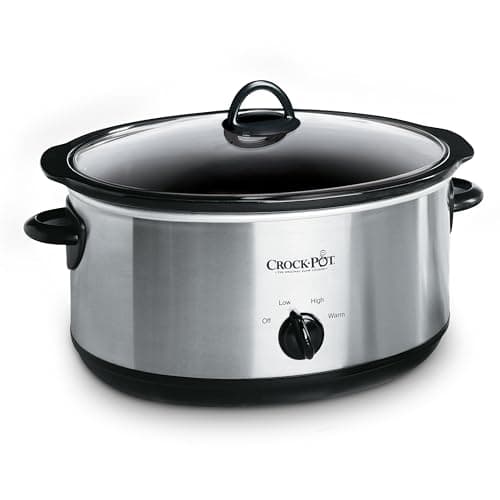
Buyer's guide
What size slow cooker do I need?
Rated quarts versus usable quarts, a size per household from one person to eight, why oval beats round for a joint, and why too big is a real problem rather than just waste.
Read the guide →