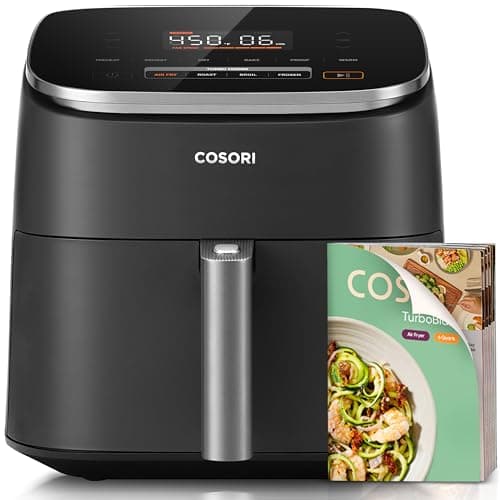
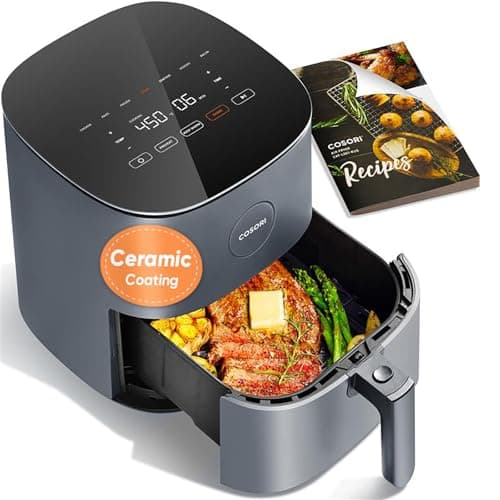
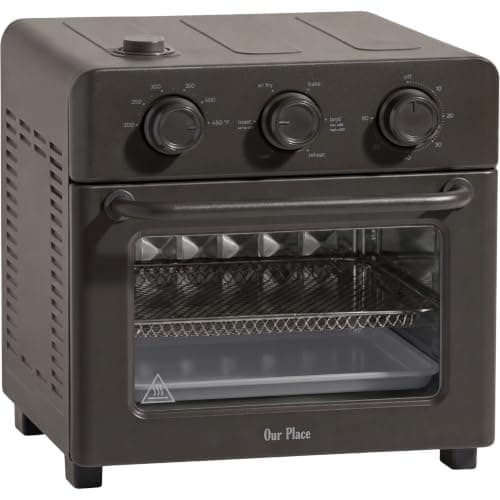
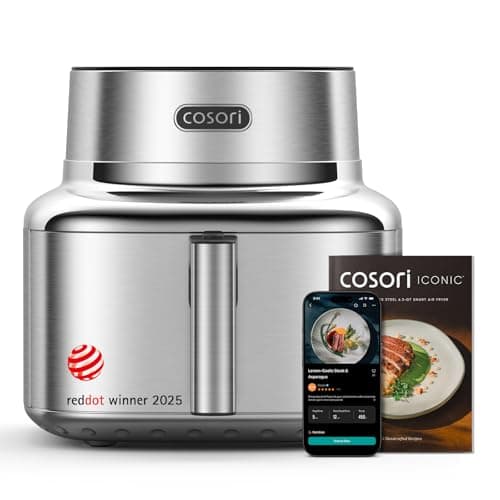
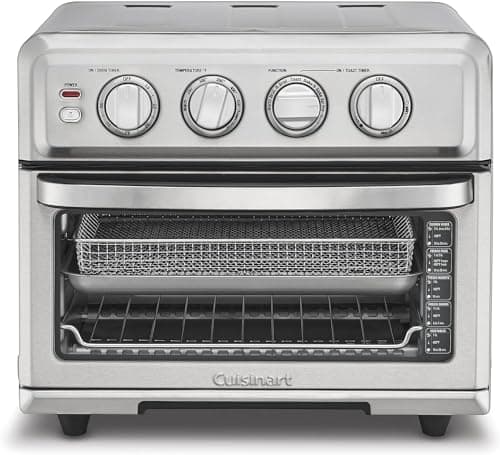
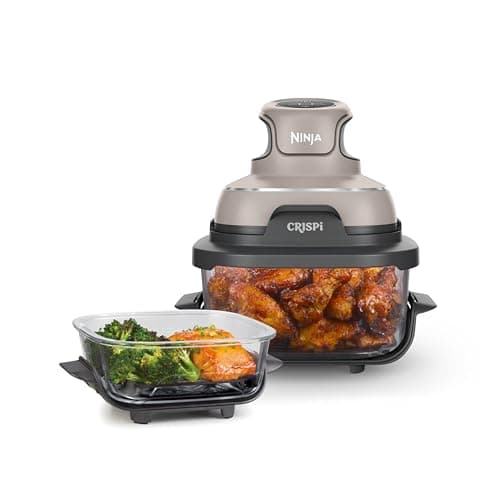
“Non-toxic” is one of the most abused words in kitchen marketing, so we treat it as a material claim you can check, not a feeling. Every air fryer here avoids the standard PTFE (Teflon-family) nonstick coating in a real, verifiable way — food touches glass, PFAS-free ceramic, or bare stainless steel instead. We rank them on how honest and complete that claim is, then on the usual things: capacity, crisping and value.
Two honest notes up front. First, mainstream PTFE coatings are considered safe by food-safety agencies at normal air-fryer temperatures — we explain the actual evidence in are air fryers toxic — so choosing coating-free is a reasonable preference, not a rescue from danger. Second, coating-free machines make real trade-offs: glass has less working capacity, and stainless baskets can need a little more oil to stop sticking. If none of that bothers you and you just want the best all-round machine, the main roundup is the place to start.
Glass vs ceramic vs stainless: the honest trade-offs
There are three real ways to avoid a PTFE coating, and each costs you something. Glass(the Ninja Crispi) is the purest — nothing coated touches food at all — and the containers on our pick hold less than a big basket, though that is no longer a limit of the format: Ninja's larger Crispi Pro runs the same CleanCrisp glass system at 6 quarts, for a lot more money and a lot more counter. PFAS-free ceramic (Cosori TurboBlaze, Pro LE, Iconic) gives you full basket capacity and easy release without PTFE, but ceramic can wear faster over years of heavy use. Stainless steel (the Cuisinart oven) never degrades and cleans up forever, but food can stick without a little oil. Pick the trade-off you can live with; there is no free lunch here.
The same question applied to the rest of the kitchen has its own page now: non-toxic kitchen appliances ranks kettles, rice cookers, pressure cookers and dehydrators on what material touches the food, and names the three categories where no coating-free option exists yet.
“Non-toxic” claims to trust — and to ignore
Trust a claim you can verify from the material: “borosilicate glass,” “stainless steel basket,” “PFAS-free” with the coating type named. Be skeptical of a vague “non-toxic” badge with no material named, or “BPA-free” used as if it settles the coating question (BPA is about plastics, not the cooking surface). And remember that PFAS-free ceramic is still a coating — an honest one, but not the same as a bare, coating-free surface. We spell out the underlying science in are air fryers toxic.
Do you actually need coating-free?
Food-safety agencies consider PTFE coatings safe at normal air-fryer temperatures, so this is a preference, not a safety emergency — and that's exactly why we won't fear-sell it. Good reasons to choose coating-free anyway: you want a surface that lasts for years without flaking, you cook at high heat often, or you simply prefer glass and steel. If those don't apply, a well-made coated basket like the ones on our main roundup will serve you just as well for less.
Three pages take this further. If there is a bird in the house the calculation changes completely — veterinary guidance is to avoid PTFE rather than to use it carefully — and we set that out with its sources in air fryers and pet birds. The design-led oven on this list is reviewed on its own terms in our Our Place Wonder Oven review. And if you are buying for somebody else who cares about this, the same thinking is re-sorted for gifters in gifts for a non-toxic kitchen.
How we picked
We did not lab-test this gear
Everyone in this category says they tested twenty air fryers. We have not lab-tested any of these, and we say so. What we did instead: compiled the published specifications — wattage, capacity, materials — worked out what each machine actually costs to run at the national electricity rate, read the manuals and owner reviews, and scored each one against a published rubric. The scores are judgments from documented research — not measurements we took, because we do not have a lab and we will not pretend we do. Where a number came from someone else's work, we name them in Sources.