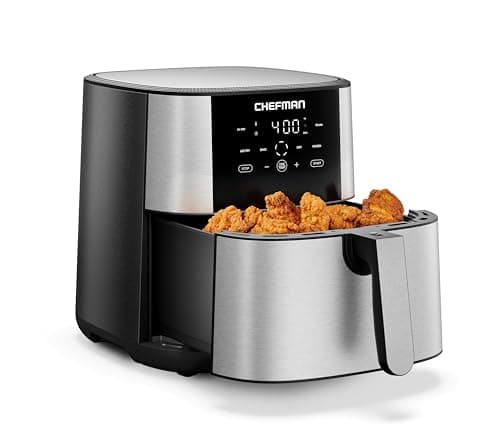
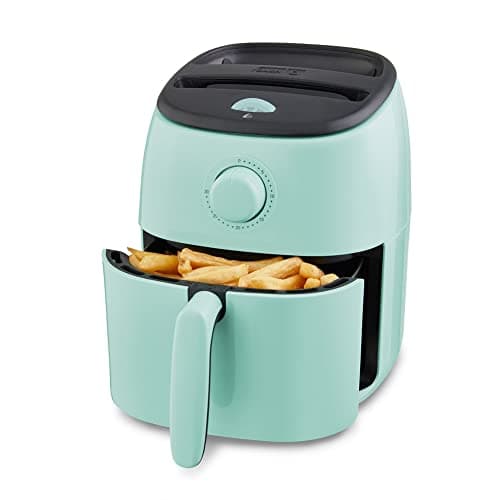
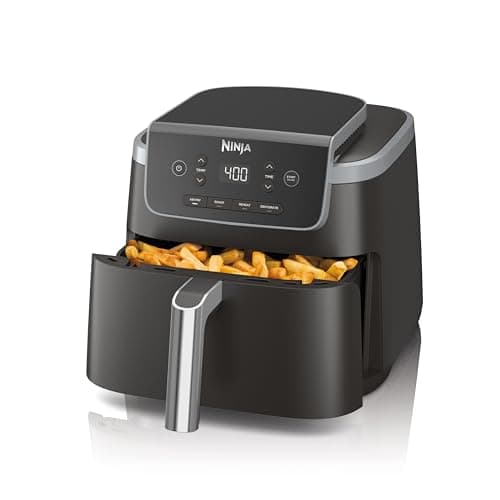
Almost every “air fryer deal” page is a screenshot of a percentage. The percentage is the least reliable number on the listing: it is calculated against a reference price the seller supplied, not against what the machine has actually been selling for. So this page does the opposite. The prices in the table below come from the Amazon Product API, refreshed daily and stamped with the date they were pulled — and when we can't verify a price, we show no number at all rather than a rotten one.
The rest of the page is the part the deal blogs leave out: what a fair price actually looks like at each basket size, how to check a strike-through against the rules that govern it, when the genuine sales land in the calendar, and the four “discounts” that are really just inventory moving. The picks are ordered the way we'd spend the money — the mid-price workhorse first, the cheap tier last — not by whichever one happens to be marked down hardest today.
If you want the picks chosen on need rather than price, the best air fryers roundup is the one to read; if the nonstick coating is your sticking point, start with the non-toxic picks. And before you decide a bigger machine is worth it because it's on sale, our running-cost guide shows what the electricity side of the bargain really comes to.
How to tell a real discount from a fake one
A strike-through price is a claim, and there are rules about it. The FTC's Guides Against Deceptive Pricing say that when a seller advertises a reduction from its own former price, that former price should be one at which the product was “openly and actively offered for sale, for a reasonably substantial period of time, in the recent, regular course of business.” A number invented to make today's price look generous does not qualify. That is the standard to hold every percentage on every listing against.
On Amazon specifically, the crossed-out figure is usually a List Price, which Amazon defines as the suggested retail price supplied by a manufacturer, supplier or seller — and which Amazon says it validates “against sales in our store and external competitor prices.” That validation got noticeably stricter in 2026: trade reporting on the policy update describes a rule effective 23 April 2026 under which a List Price only displays if the product has recently been offered at that price by another retailer, or has actually been bought on Amazon at that price as the Featured Offer. The practical effect is that a strike-through means more than it used to — but it still tells you about a reference price, not about whether today is a good day to buy.
The only test that really works is the boring one: ignore the percentage and compare the price to what that specific model has been selling for lately. That is why the numbers in our table carry the date they were pulled. A machine that has hovered around a hundred dollars for months is not a bargain at ninety-five just because the listing says thirty percent off something else.
When air fryers actually go on sale
Small kitchen appliances follow a predictable calendar, and knowing it saves more than any coupon code. Amazon named kitchen among the categories in Prime Day 2026, which ran as a four-day event from 23–26 June— worth noting because Amazon moved it earlier than the July slot people had got used to, and a lot of “when is Prime Day” advice was wrong all summer. The next window is Amazon's fall event, Prime Big Deal Days on 6–7 October 2026: 48 hours, Prime members only, with kitchen again named among the categories. After that comes Black Friday on 27 November 2026, running into Cyber Monday on 30 November, which is historically the deepest discounting of the year in this category.
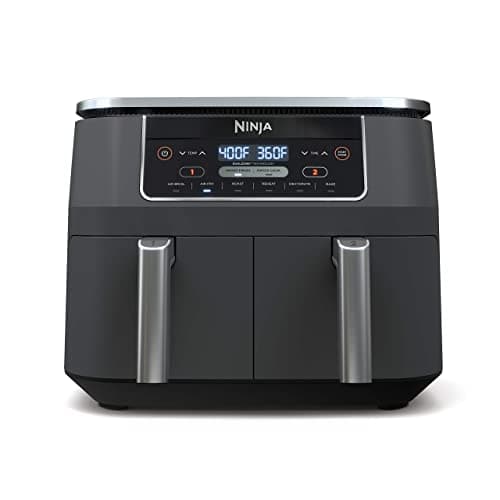
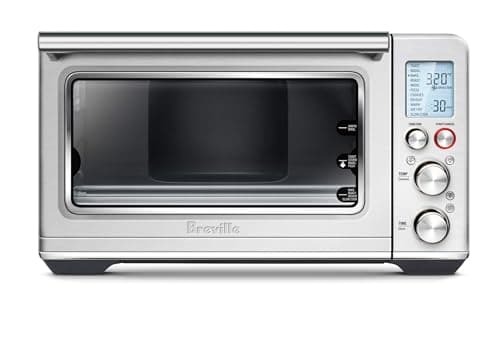
After that comes January, when post-holiday clearance overlaps with new-model changeovers and outgoing versions get cut hard. Between those windows, individual models rotate through promotions more or less constantly — which is the real reason not to obsess over the calendar. A workhorse like the AF141 discounts often enough that waiting five months to save a few dollars is a poor trade for five months of not owning an air fryer. Wait for an event when the item is expensive and rarely discounted, like the Breville; buy the cheap stuff whenever it is at a normal price.
What a fair price looks like, by size
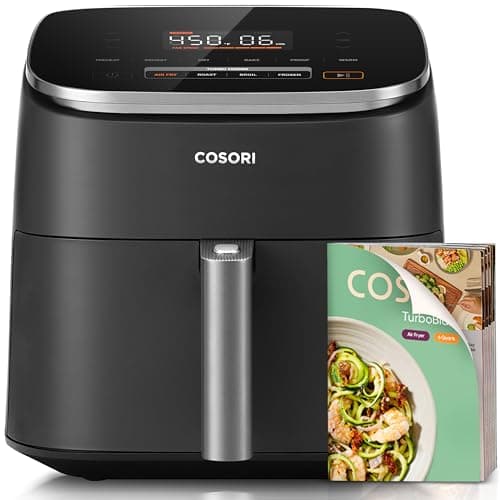
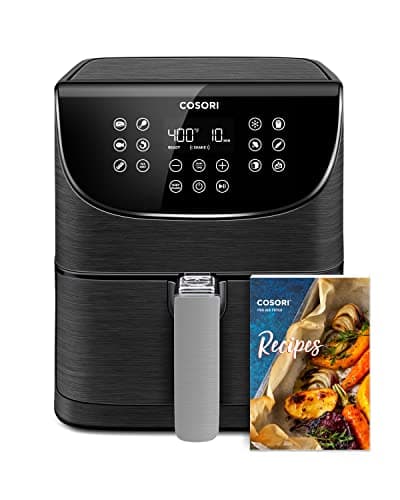
Prices move, so treat these as brackets rather than targets, and check the live numbers in the table above. A compact 2–3 quart machine belongs in the forties-to-fifties; above about sixty dollars you are paying mid-size money for a one-person basket. The 5–6 quart workhorse tier — where most people should buy — runs from the low seventies to about a hundred and thirty, and anything asking more than that without a genuine differentiator like a PFAS-free coating is not worth it.
Eight-quart and dual-basket models start a little above a hundred and should not need to reach two hundred; the single-basket 8-quart route is the cheap way in, and the dual-zone premium is what you pay for two independent cooking zones. A countertop convection oven that air-fries, like the Breville, is a different purchase altogether — it sits in the high two hundreds and up, and it only makes sense if it is replacing a toaster oven as well. If a price is above its bracket, the answer is almost always to wait rather than to buy a size down.
Where else to check — and why we only link Amazon
Every model on this page is also sold by other large retailers, and their promotional calendars now shadow Amazon's closely — Target Circle Deal Days ran alongside Prime Day in 2026, and Walmart runs its own event in the same season. Costco carries a rotating subset, often in bundles. It is genuinely worth opening a second tab before you check out, particularly during a big event week.
We will say plainly why we do not show you those prices: Amazon is the only retailer we have an affiliate relationship with, so it is the only one whose live prices we can pull and stamp with a date. We are not going to hand-type a Walmart price into a page and let it rot, and we are not going to pretend we checked. That is the whole arrangement, and it is set out in full on our affiliate disclosure page.
Four “deals” that are not deals
Renewed and refurbished units. A discounted “Renewed” air fryer is a returned machine that has been inspected and repackaged. That can be fine, but the saving is usually modest against a new unit on promotion, and you are trading away the manufacturer warranty for a shorter guarantee. On an appliance with a heating element and a fan, that is not a trade we would make for twenty dollars.
Bundle padding. Adding a silicone liner set and a recipe book inflates the reference price without adding much you would have paid for. Price the machine alone before you decide the bundle is a saving.
The outgoing model. A deep cut often means a replacement is coming. That can be a genuinely good buy — last year's air fryer cooks exactly as well as this year's — but check that baskets and racks are still sold separately before you commit, because a discontinued model with no spare parts is a two-year appliance.
Buying a size up because it is on sale. This is the expensive one. An 8-quart machine at a great price is still the wrong machine if you cook for one, and a 2.6-quart bargain is worse than useless for a family of four. Capacity is the decision that determines whether you keep using the thing — get that right first, then find the price. The main roundup works through the sizing properly.