There is one reason most home-brewed coffee tastes thin and sour, and it is not the beans. It is that the machine never gets the water hot enough. Coffee extracts properly between about 195°F and 205°F, and a very large share of drip machines — including expensive ones — brew ten or fifteen degrees below that, which under-extracts the grounds and produces exactly the weak, acidic cup people blame on their supermarket beans.
So this roundup ranks on the two variables that decide the cup: brew temperature and saturation time — how long the water actually spends in contact with the grounds, which should be somewhere around four to six minutes for a full carafe. Everything else — programmability, carafe material, the number of buttons — is comfort. Those two are the coffee.
The useful shortcut is that the Specialty Coffee Association runs a certification program that tests exactly this, and publishes the list of machines that pass. We checked every claim on this page against the SCA's own current list rather than against manufacturer marketing, and where a well-regarded machine is not on it, we say so instead of quietly implying otherwise. That distinction alone reorders most coffee maker roundups you will read.
The temperature problem, in one paragraph
Coffee solubles come out of the grounds at different rates, and temperature is the main lever on which ones you get. Below about 195°F you extract the acids readily and the sugars and body poorly, which is what “weak and sour” actually means. Above about 205°F you start pulling the bitter compounds. The window is narrow, and it is the single thing a cheap drip machine fails at — the element is sized to boil water and move on, not to hold a band. Any machine that publishes a figure inside 195-205°F, or carries current SCA certification, is telling you something meaningful. Everything else is a guess.
Saturation time is the half nobody mentions
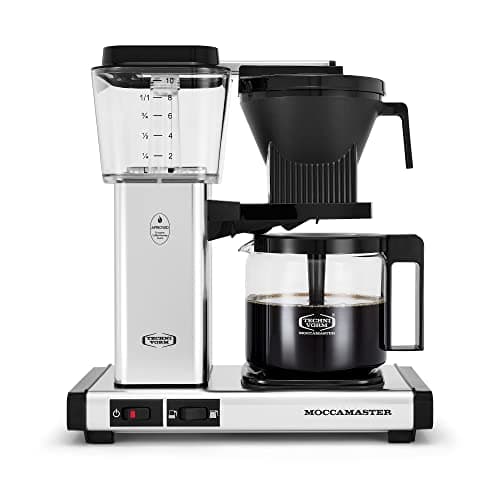
Correct temperature with a two-minute brew still under-extracts, because the water has not been in contact with the grounds long enough. A full carafe should take roughly four to six minutes, which is why Technivorm publishes that figure alongside its temperature range. The related detail is how the water arrives: a single-jet machine drills a hole through the middle of the coffee bed and channels around it, leaving the outside dry. A showerhead or rainmaker design distributes water across the whole bed. If you have ever seen a dry ring of grounds in the filter after brewing, you have seen this failure directly.
A “cup” is five ounces, not a mug
This trips up almost every buyer. Coffee makers measure in 5-ounce cups, a convention inherited from the 1970s. So a 10-cup Moccamaster produces 40 ounces, and a typical large mug holds 12 to 16 ounces — meaning that 10-cup machine makes about three large mugs. A 12-cup machine makes about four. Buy at least one size up from your instinct, and if you are a household of two who each drink two mugs, you want a 10- or 12-cup machine, not an 8-cup one. This is the same over-optimistic capacity math we call out on air fryers in what size air fryer do I need.
Thermal carafe versus glass and a hotplate
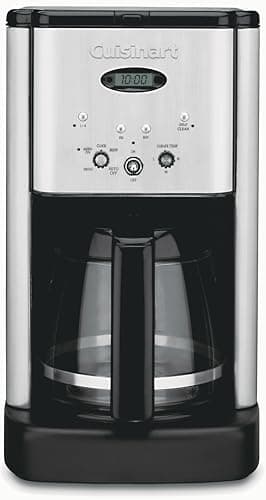
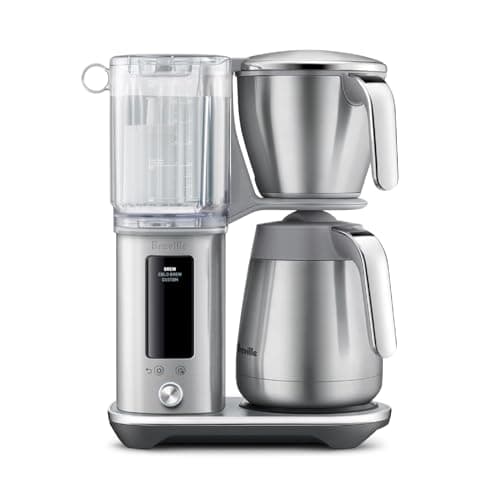
A hotplate is the enemy of coffee you drink slowly. It continues applying heat to already-brewed coffee, which drives off aromatics and develops bitterness — the reason the second cup from a pot so often tastes worse than the first. A double-walled thermal carafe stops the process: Breville publishes that the Luxe holds above 150°F for up to four hours, which is exactly the right specification to look for. The trade-offs are that thermal carafes are harder to clean, you cannot see the level, and they cost more. If you drink the whole pot within twenty minutes, a glass carafe genuinely does not matter. If you nurse it, it matters more than almost anything else on this page.
What we deliberately did not rank on
Built-in grinders. Grinding fresh does improve coffee more than any machine upgrade — but a burr grinder built into a drip machine is usually a low-quality blade or conical unit that is difficult to clean, and when it fails you lose the whole appliance. A separate grinder is the better architecture and the better repair story. Pod compatibility. A different category with different economics. App control. Coffee is made at a fixed time each morning by a person standing in front of the machine; we apply the same skepticism here that we apply in smart air fryers. Number of programs. As with air fryers, a longer list of presets is not more capability.
Descaling is the maintenance that actually matters
Every machine here will drift below its correct brew temperature as scale builds on the heating element, and in hard-water areas that can happen within months. A scaled machine is the most common reason a coffee maker that used to make good coffee stops — people replace the beans, the filter and eventually the machine, when the fix was a descaling cycle. Do it every one to three months depending on your water, using the manufacturer's instructions. It is the coffee equivalent of cleaning the element on an air fryer, which we nag about in how to clean an air fryer for exactly the same reason: the neglected part is the part that determines performance.
Which one to buy
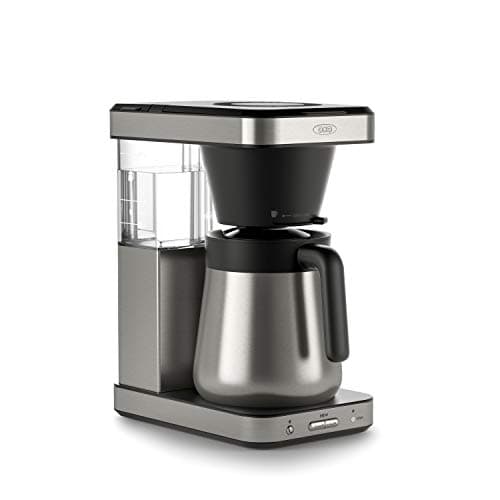
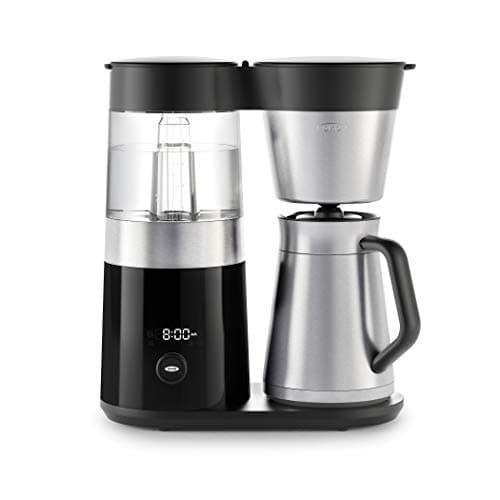
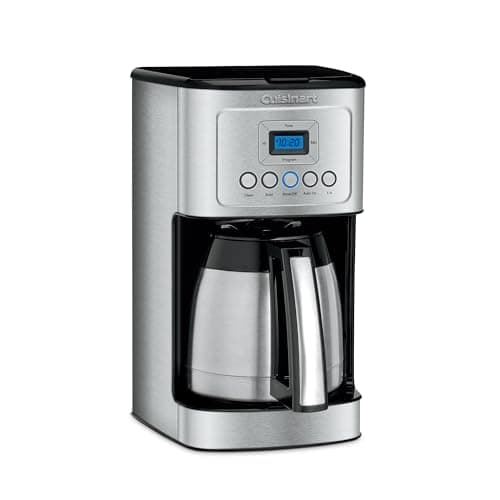
For most households: the OXO Brew 8-Cup if certification and a thermal carafe matter, or the 9-Cup if you want the same design language for less and can live without either. For someone who wants one machine for fifteen years and does not care about a timer: the Moccamaster, which is the only product on this page with a published repair-for-life commitment — the same longevity test we apply across the counter in the best kitchen appliance brands. For someone who genuinely wants to control bloom and flow: the Breville Luxe. And for a family pot at a fair price, the thermal Cuisinart, with clear eyes about what is unproven on it.