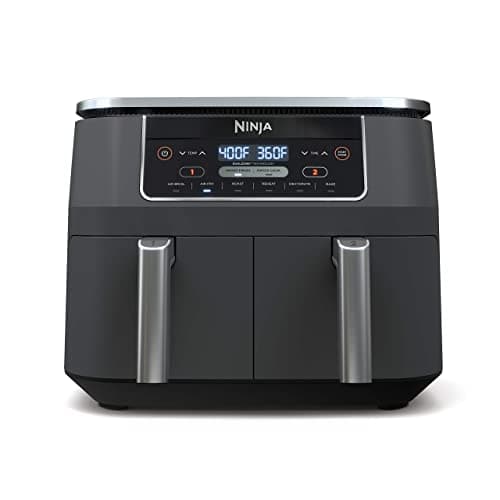
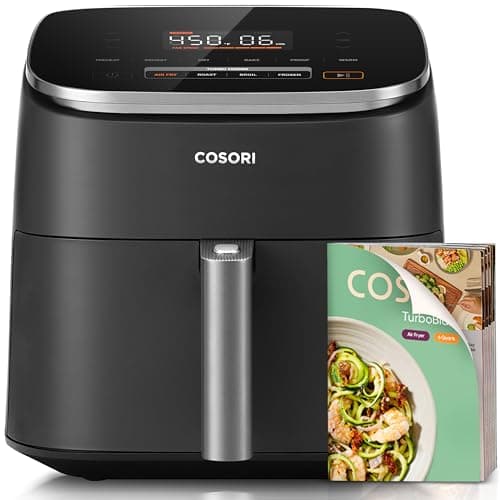
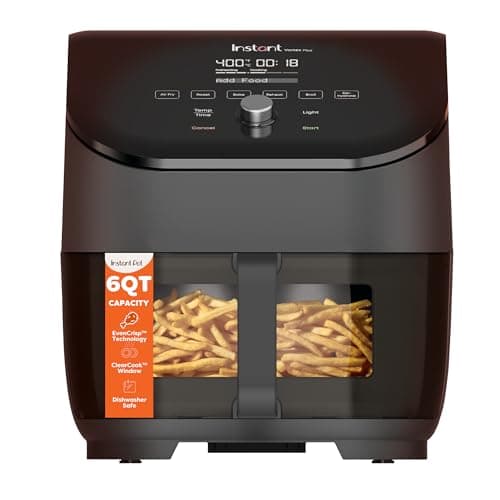
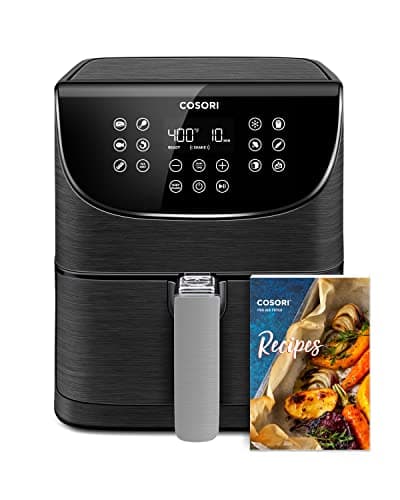
The best air fryer for you is mostly a question of size and what you want touching your food — not price, and not the number of “functions” on the box. Get the capacity right and almost any of these will make good fries; get it wrong and the machine ends up in a cupboard because you're cooking dinner in three batches. So this list is built around real needs: the do-everything pick most people should buy, a family-sized dual-basket, a quiet premium model, a genuinely non-toxic glass option, and a budget pick that isn't junk.
We ranked these by reading the published specs — real basket capacity, wattage, coating, maximum temperature — working out what each costs to run at the national electricity rate, and weighing that against thousands of owner reviews. We have not lab-tested them, and we say so. If the nonstick coating is a dealbreaker for you, jump to the non-toxic roundup; if you're brand new to air frying, the beginner picks favor the simplest machines. Still not sure an air fryer beats the oven you already own? The air fryer vs convection oven comparison has the numbers. And if you want a second, independently compiled shortlist to check ours against, Watt & Whisk's best air fryers roundup ranks the same field on capacity, wattage and real countertop footprint.
Get the capacity right first — everything else is secondary
Basket size is the single decision that determines whether you keep using your air fryer or resent it. As a rough guide: 3–4 quarts feeds one or two people and suits a small kitchen; 5–6 quarts is the sweet spot for a typical household and what most people should buy; 8 quarts or a dual-basket is for families of four-plus who don't want to cook in shifts. A too-small basket forces batch cooking, which is the number one reason air fryers get abandoned. When in doubt, size up one step — the extra footprint is worth it more often than the extra capacity goes unused.
What the coating is — and whether it should matter to you
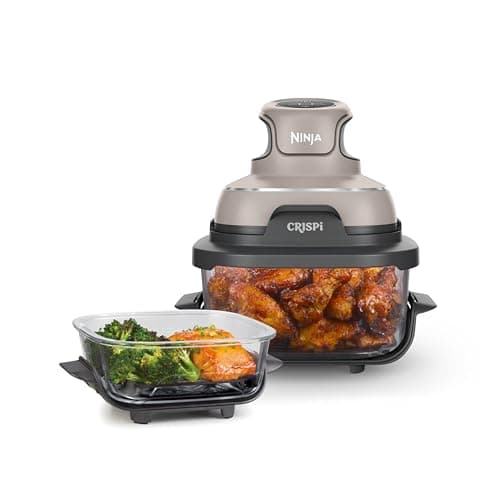
Most air fryer baskets are coated in PTFE nonstick, the same family as Teflon. At normal air-fryer temperatures this coating is stable, and food-safety agencies consider it safe in normal use; the real caveat is not overheating an empty pan. We cover the evidence in full in are air fryers toxic. If you'd rather avoid the coating entirely — a completely reasonable preference — you have genuine options: glass (like the Ninja Crispi), PFAS-free ceramic (the Cosori TurboBlaze), or stainless steel. Those are on the non-toxic roundup. This is a material fact you can check on the box, not a vibe.
Running cost: the number nobody else publishes
Air fryers are sold on energy savings, so it's strange that no big roundup tells you what they actually cost to run. Here it is: a typical air fryer draws 1,400–1,800 watts, and a 20-minute cook at the U.S. average electricity rate costs roughly 7 to 9 cents. The real saving isn't versus other small appliances — it's versus heating your full-size oven, which draws far more and takes ten minutes just to preheat. Put your own machine's wattage into our running-cost calculator to see your exact number.
Functions, presets and the stuff you can ignore
A “9-in-1” air fryer is a 1-in-1 air fryer with eight preset buttons. Presets are convenient, but they're just time-and-temperature shortcuts you could set yourself — do not pay a premium for a longer list of them. The features that genuinely change the experience are the ones on this list: a second basket (cook two foods at once), a window (watch without opening), a square basket (fits more flat food), and a quiet fan. Buy for those, not for the marketing number.
If you are not yet certain you want one at all, read are air fryers worth it first. It reduces the decision to four questions, shows the running-cost arithmetic in full, and names the three situations where our answer is no.
How we picked
We did not lab-test this gear
Everyone in this category says they tested twenty air fryers. We have not lab-tested any of these, and we say so. What we did instead: compiled the published specifications — wattage, capacity, materials — worked out what each machine actually costs to run at the national electricity rate, read the manuals and owner reviews, and scored each one against a published rubric. The scores are judgments from documented research — not measurements we took, because we do not have a lab and we will not pretend we do. Where a number came from someone else's work, we name them in Sources.