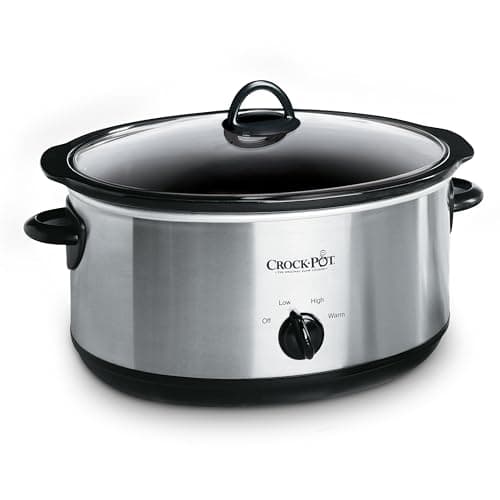
Slow cookers have not changed much in fifty years, and that is a compliment. A ceramic or metal insert sits in a heated jacket, holds food between roughly a simmer and a bare bubble for hours, and turns cheap collagen-rich cuts into something better than an expensive cut cooked fast. The technology is settled. What varies is the geometry, the controls and one genuinely useful sensor.
Three things are worth paying for, and none of them is a screen. An oval crock, because roasts and whole chickens are oval and a round crock wastes the corners. A temperature probe, because “low for eight hours” is a guess about your particular cut and a probe is a measurement. And the ability to sear in the same vessel, which removes the pan-washing step that stops people browning meat at all — and browning is most of the flavor.
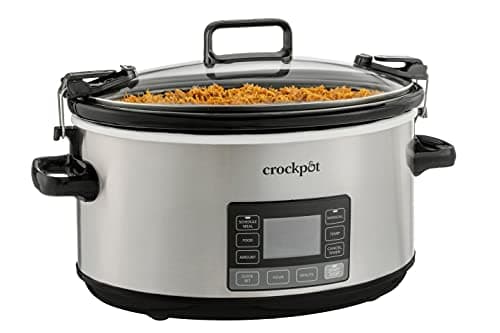
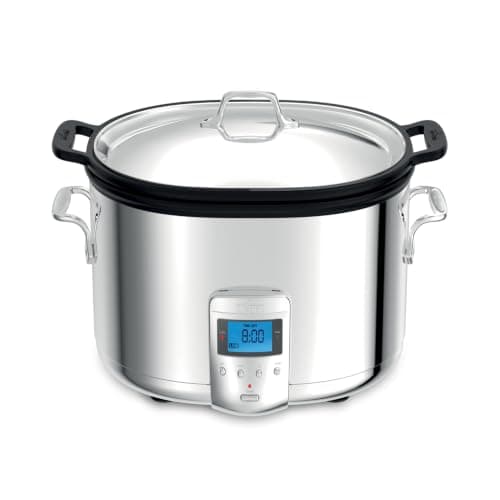
Everything else is preference. Programmable timers that shift to warm are genuinely convenient; locking lids matter only if you carry the thing to a potluck; and the insert material — glazed stoneware versus aluminum — changes how fast it heats and how heavy it is to lift, not how good the food is.
The USDA rules, because most slow-cooker guides skip them
Two pieces of official guidance change how you use one of these, and neither is complicated. First: always thaw meat or poultry before putting it into a slow cooker. A slow cooker may take several hours to reach a safe, bacteria-killing temperature, and starting from frozen extends the time food spends warming through the range where bacteria multiply. Constant refrigeration until the moment it goes in is the point — it stops bacteria getting a head start during the first few hours.
Second: the danger zone is 40°F to 140°F, and perishable food left in it for more than two hours should be discarded even if it looks and smells fine. Bacteria multiply fastest in that range, doubling in as little as twenty minutes. For holding cooked food — a slow cooker on warm at a party — USDA guidance is to keep hot food at or above 140°F. That is precisely what a warm setting is for, and precisely why leaving the lid off to cool it down defeats the machine.
Shape matters more than volume
Seven quarts in a round crock and seven quarts in an oval crock are not equivalent. A pork shoulder, a brisket and a whole chicken are all longer than they are wide, and in a round insert they either sit at an angle or do not fit. If you cook whole cuts rather than diced ones, buy oval. If you make chilli, stew and curry, the shape is irrelevant and you should buy on capacity and controls.
The probe is the only sensor worth paying for
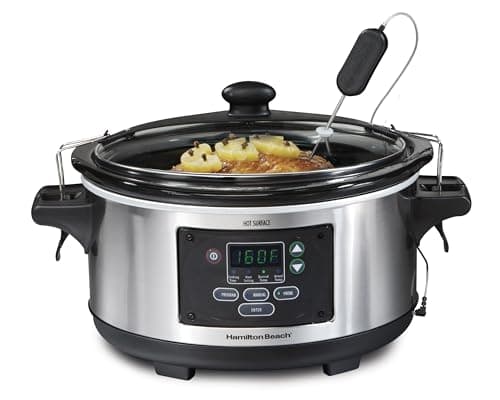
Time-based slow cooking is inherently approximate: an eight-hour recipe assumes a cut size, a starting temperature and a machine. A probe removes all three assumptions by reading the meat itself and shifting to warm at your target. It is the same argument we make about air fryers throughout this site — cook to a temperature, not a time — and it is why the Hamilton Beach Set & Forget outranks more expensive machines here. The general case is in air fryer cooking times.
Sear-in-the-pot, and why it changes the food
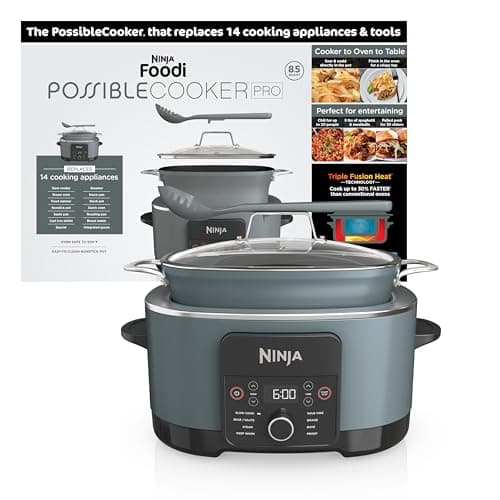
Almost every slow-cooker recipe worth cooking starts with browning the meat, and almost nobody does it, because it means heating a separate pan and washing it. A machine whose insert can be heated directly — Ninja’s PossibleCooker being the obvious example here — removes the excuse. The flavor difference between browned and unbrowned slow-cooked beef is larger than the difference between any two machines on this page.
What it costs to run
Slow cookers are the cheapest hot appliance in the kitchen. A typical unit draws roughly 200 to 300 watts on low, so eight hours is around 1.6 to 2.4 kWh — thirty to forty cents at the US average residential rate for a whole meal, and less than an hour of a conventional oven. That is the real argument for the category alongside flavor, and it is the same arithmetic we publish for air fryers on what an air fryer costs to run. Check the rating plate on your own machine for its exact figure.
Slow cooker or pressure cooker?
Different tools for the same cuts. A pressure cooker does in forty minutes what a slow cooker does in eight hours, and a slow cooker produces a texture in braised meat that pressure does not replicate — softer, less shredded, better held together. If you want one machine, a multi-cooker does both adequately; if you want the best version of either, buy the dedicated one. The pressure side is ranked in best pressure cookers.