Skip to content
Preheat Club

Beyond air fryers · Kitchen Appliances

The best pressure cookers and multi-cookers

The appliance that does the exact opposite of an air fryer: it traps moisture instead of driving it off. Six picks ranked on inner-pot material, honest capacity and whether you can still buy a sealing ring in five years.

By Stephen V.Updated How we review
#ad

We earn a commission when you buy through our Amazon links, at no extra cost to you. It never changes a verdict, and we say so when the cheaper product is the better buy. How this works.

A pressure cooker is the mirror image of the appliance this site is built around. An air fryer works by moving hot, dry air fast enough to pull moisture out of the surface of food; a pressure cooker seals moisture in and uses the resulting pressure to push the boiling point above 212°F, so a stew that needs three hours in the oven is done in forty minutes. They are not rivals, and the honest answer to “which one should I buy” is usually “they do different jobs” — which is exactly the argument we make in air fryer vs pressure cooker. This is the page that comparison sends you to.

The category is dominated by one brand and a lot of numbers that do not mean what they look like. Nine-in-one, thirteen-in-one, fourteen-in-one — those counts are presets, not capabilities, and they change nothing about the machine underneath. What actually decides which one you should own is smaller and duller: what the inner pot is made of, how much of the stated capacity you can legally fill (never more than two-thirds, and half for anything that foams), and whether the manufacturer still sells you a sealing ring in five years, because a perished gasket is what ends most of these machines rather than a dead element.

We rank on those three, plus one safety point that no roundup in this category seems willing to lead with: several of these machines now carry a button labelled “canning,” and the USDA-funded body that writes America’s home-canning processes does not support using it. That is in the buyer’s guide below, sourced, because it is the single most consequential thing on the box. As everywhere on this site, we have not lab-tested these — we read the published specifications, the manuals and the safety guidance, and we say so.

The short answer

Quick picks

#ProductBest forScorePrice
01
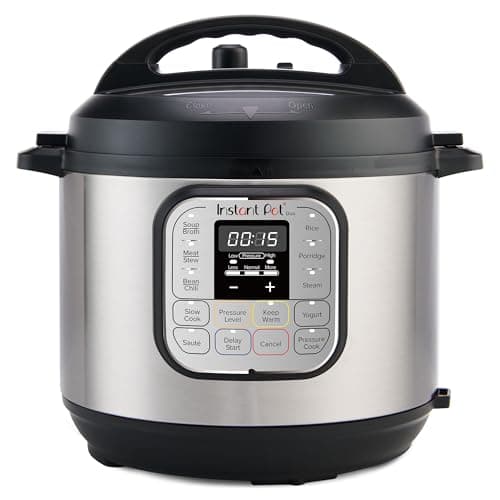
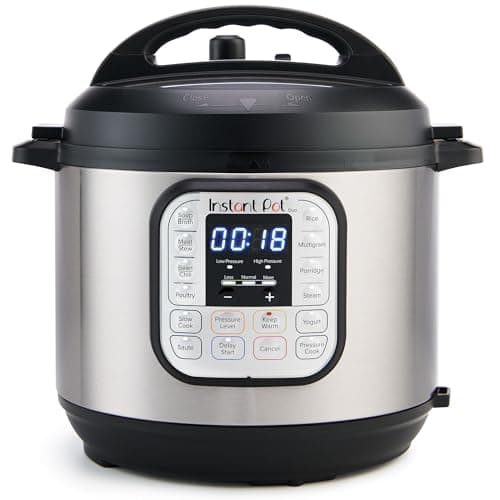
Instant Instant Pot Duo 7-in-1, 6 Quart
Instant Pot Duo 7-in-1, 6 Quart

The default, and it deserves to be. Six quarts is the size that suits most households, the inner pot is bare stainless steel with no coating to wear through, and it is the single most widely supported appliance in this category — sealing rings, lids and inner pots are all easy to buy years later. Nothing here is clever. That is the point.

Best overall
9.0
$104.67Amazon
02
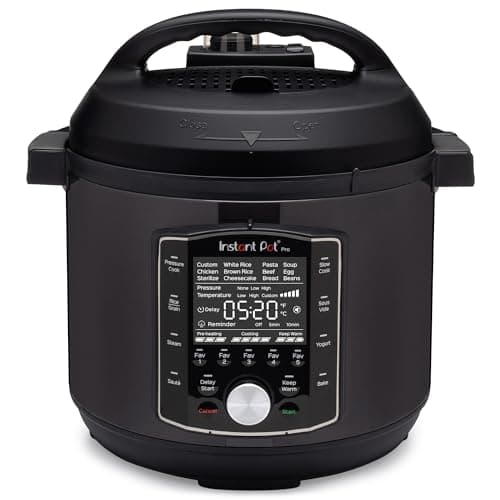
Instant Instant Pot Pro 10-in-1, 8 Quart
Instant Pot Pro 10-in-1, 8 Quart

The one to buy if you cook in batches. Eight quarts is a genuine capacity change rather than a marketing one — stock, chilli for a crowd, a whole chicken with room to spare — and the Pro adds sous vide and finer temperature control over the Duo. It also takes noticeably more cupboard.

Batch cooking and larger households
8.6
$149.99Amazon
03
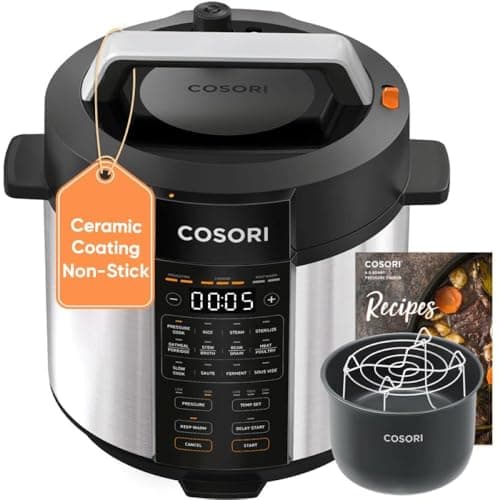
Cosori Cosori Pressure Cooker 6 Qt (9-in-1, Ceramic-Coated Pot)
Cosori Pressure Cooker 6 Qt (9-in-1, Ceramic-Coated Pot)

The value pick, and the interesting one. Cosori uses a ceramic-coated inner pot rather than bare stainless, which is a real trade rather than an upgrade: food releases far more easily and sautéing is less of a scrubbing job, but a coating is a wear item and stainless is not. Cosori lists twelve safety features, which is the part of a pressure cooker spec sheet worth reading.

Best value, and the easiest to clean
8.0
$78.20Amazon
04
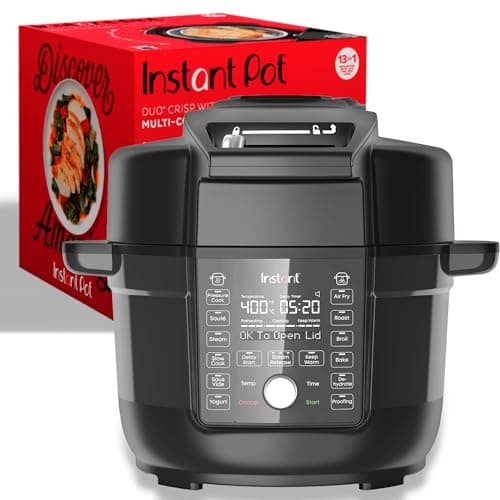
Instant Instant Pot Duo Crisp Ultimate Lid 13-in-1, 6.5 Quart
Instant Pot Duo Crisp Ultimate Lid 13-in-1, 6.5 Quart

The honest answer for anyone who arrived here from the air-fryer-versus-pressure-cooker question and wants one machine instead of two. A single lid both pressure cooks and air fries, at 1,500 watts, in 6.5 quarts. It genuinely does both jobs — and it does each of them slightly less well than a machine built for one, which is the trade you are making.

One machine instead of two
7.4
$199.99Amazon
05
Instant Instant Pot Duo Mini 7-in-1, 3 Quart
Instant Pot Duo Mini 7-in-1, 3 Quart

The small one, and the only size that makes sense for one or two people. Three quarts with the two-thirds fill rule is about two litres of usable space — a couple of portions of curry, rice for two, or a batch of hard-boiled eggs. It comes to pressure faster than the 6-quart for exactly the reason you would expect: there is less to heat.

One or two people, and small kitchens
8.0
$79.99Amazon
06
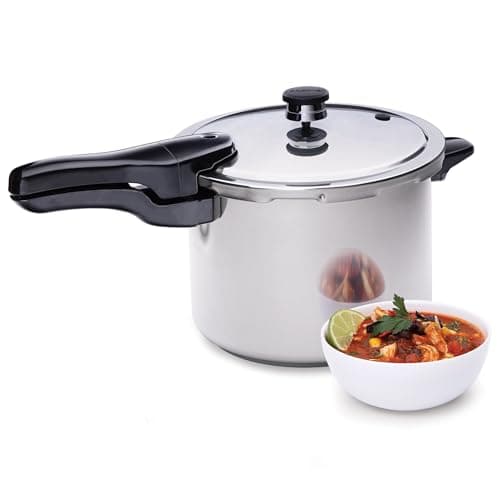
Presto Presto 01362 6-Quart Stainless Steel Pressure Cooker
Presto 01362 6-Quart Stainless Steel Pressure Cooker

The one with no electronics in it, and the reason it earns a place is the same reason we like a manual thermometer: there is nothing to fail. A stainless stovetop cooker reaches a higher working pressure than an electric multi-cooker, so it cooks faster, and Presto has been selling gaskets and overpressure plugs for its cookers for decades. You have to actually watch it.

Speed, longevity, and anyone who distrusts electronics
8.2
$97.97Amazon

#ad · Live prices from the Amazon Product API, as of Aug 13, 2026. Where we have no verified live price, we show none — a gap beats a number that has rotted.

In detail

The picks, in full

01
Instant Instant Pot Duo 7-in-1, 6 Quart

Best overall

Instant Pot Duo 7-in-1, 6 Quart

6 qt7-in-1 presetsStainless inner potSlow cook + sauté + rice
9.0/10

The default, and it deserves to be. Six quarts is the size that suits most households, the inner pot is bare stainless steel with no coating to wear through, and it is the single most widely supported appliance in this category — sealing rings, lids and inner pots are all easy to buy years later. Nothing here is clever. That is the point.

Usable capacity
8
Pot material
9
Ease
9
Parts availability
10
Value
9

Pros

  • Bare stainless inner pot — nothing coated touching acidic food for hours
  • Six quarts is the household sweet spot, and it fits a 4 lb roast
  • Sealing rings and spare pots are stocked everywhere, for years
  • The controls are simple enough that people actually keep using it

Cons

  • Basic LED display next to the newer Pro models
  • The silicone sealing ring holds onto strong smells and needs replacing
  • No sous vide or the finer temperature control of the Pro

Don't buy this if…

you regularly cook for six or more, or batch-cook stock — the 8-quart Pro below removes the ceiling for a modest step up in price.

The reason the Duo is still the recommendation years after launch is the same reason the Ninja AF141 tops our air fryer list: it is the boring middle of the range from the brand with the best parts supply. A pressure cooker is a sealed vessel with a heating element and a gasket, and once that is done properly, extra presets are decoration. If you are choosing between this and a machine with six more programs, buy this and spend the difference on food.

$104.67View on Amazon

$109.995% off

Price as of Aug 13, 2026. Prices change — Amazon's at checkout is the one that counts.

#ad · we may earn a commission from this link to Instant Pot Duo 7-in-1, 6 Quart

02
Instant Instant Pot Pro 10-in-1, 8 Quart

Batch cooking and larger households

Instant Pot Pro 10-in-1, 8 Quart

8 qt10-in-1 presetsSous videStainless inner pot
8.6/10

The one to buy if you cook in batches. Eight quarts is a genuine capacity change rather than a marketing one — stock, chilli for a crowd, a whole chicken with room to spare — and the Pro adds sous vide and finer temperature control over the Duo. It also takes noticeably more cupboard.

Usable capacity
10
Pot material
9
Ease
8
Parts availability
9
Value
7

Pros

  • Eight quarts removes the batch ceiling for stock and braises
  • Sous vide and lower-temperature control the Duo does not have
  • Same stainless inner pot and the same parts supply
  • Quieter steam release than the older Duo lid

Cons

  • Large enough that it will live on the counter, not in a cupboard
  • Takes longer to come up to pressure simply because there is more mass
  • Costs meaningfully more than the 6-quart Duo for the same core function

Don't buy this if…

you cook for two — a half-empty 8-quart pot takes longer to pressurise and buys you nothing.

$149.99View on Amazon

$199.9925% off

Price as of Aug 13, 2026. Prices change — Amazon's at checkout is the one that counts.

#ad · we may earn a commission from this link to Instant Pot Pro 10-in-1, 8 Quart

03
Cosori Cosori Pressure Cooker 6 Qt (9-in-1, Ceramic-Coated Pot)

Best value, and the easiest to clean

Cosori Pressure Cooker 6 Qt (9-in-1, Ceramic-Coated Pot)

6 qt9-in-1 presetsCeramic-coated inner pot12 listed safety features
8.0/10

The value pick, and the interesting one. Cosori uses a ceramic-coated inner pot rather than bare stainless, which is a real trade rather than an upgrade: food releases far more easily and sautéing is less of a scrubbing job, but a coating is a wear item and stainless is not. Cosori lists twelve safety features, which is the part of a pressure cooker spec sheet worth reading.

Usable capacity
8
Pot material
7
Ease
9
Parts availability
6
Value
10

Pros

  • Ceramic coating makes the sauté step release cleanly instead of welding on
  • Usually the cheapest capable 6-quart in the category
  • Cosori publishes its safety-feature list rather than a bare preset count
  • Same 6-quart footprint as the Instant Duo

Cons

  • A coating is a wear item — a bare stainless pot cannot wear out
  • We have not verified any PFAS-free claim for this coating and will not repeat one
  • Smaller aftermarket for spare pots and rings than Instant

Don't buy this if…

you want an inner pot that will still be intact in ten years — buy the stainless Instant Duo, which has nothing on it to fail.

Worth flagging, because this site spends a lot of time on coatings in the non-toxic air fryer roundup: a coating in a pressure cooker is a different question from a coating in an air fryer basket. The temperatures are far lower — a sealed cooker runs around the boiling point of water under pressure, nowhere near the 400°F an air fryer reaches — so the heat-degradation argument largely does not apply. The real objection to a coated pot here is durability and acidic food, not safety.

$78.20View on Amazon

$89.9913% off

Price as of Aug 13, 2026. Prices change — Amazon's at checkout is the one that counts.

#ad · we may earn a commission from this link to Cosori Pressure Cooker 6 Qt (9-in-1, Ceramic-Coated Pot)

04
Instant Instant Pot Duo Crisp Ultimate Lid 13-in-1, 6.5 Quart

One machine instead of two

Instant Pot Duo Crisp Ultimate Lid 13-in-1, 6.5 Quart

6.5 qt1,500 WPressure + air fry in one lid13-in-1 presets
7.4/10

The honest answer for anyone who arrived here from the air-fryer-versus-pressure-cooker question and wants one machine instead of two. A single lid both pressure cooks and air fries, at 1,500 watts, in 6.5 quarts. It genuinely does both jobs — and it does each of them slightly less well than a machine built for one, which is the trade you are making.

Usable capacity
7
Pot material
8
Ease
7
Parts availability
8
Value
7

Pros

  • One lid does both jobs — no swapping or storing a second one
  • Saves an entire appliance footprint in a small kitchen
  • Sous vide, dehydrate and proof included alongside the two headline modes
  • 1,500 W is a published figure, so its running cost is checkable

Cons

  • Air-frying capacity is limited by a pot shape designed for liquid, not a wide basket
  • Heavy, tall, and awkward to lift down from a shelf
  • Costs more than a good 6-quart cooker and a good air fryer bought separately, on sale

Don't buy this if…

air frying is the job you do most nights — a dedicated basket machine from the best air fryers roundup crisps better and costs less.

The case for a combo machine is counter space, and it is a good case. The case against it is that the two jobs want opposite shapes: pressure cooking wants a deep, narrow vessel that holds liquid, and air frying wants a wide, shallow one that spreads food in a single layer. This machine is shaped for the first. If you want the full argument with the numbers, it is in air fryer vs pressure cooker, and the dedicated alternatives are in the best air fryers.

$199.99View on Amazon

$219.999% off

Price as of Aug 13, 2026. Prices change — Amazon's at checkout is the one that counts.

#ad · we may earn a commission from this link to Instant Pot Duo Crisp Ultimate Lid 13-in-1, 6.5 Quart

05
Instant Instant Pot Duo Mini 7-in-1, 3 Quart

One or two people, and small kitchens

Instant Pot Duo Mini 7-in-1, 3 Quart

3 qt7-in-1 presetsStainless inner potFast to pressure
8.0/10

The small one, and the only size that makes sense for one or two people. Three quarts with the two-thirds fill rule is about two litres of usable space — a couple of portions of curry, rice for two, or a batch of hard-boiled eggs. It comes to pressure faster than the 6-quart for exactly the reason you would expect: there is less to heat.

Usable capacity
5
Pot material
9
Ease
9
Parts availability
9
Value
8

Pros

  • Genuinely small — it fits in a cupboard, which the 8-quart never will
  • Reaches pressure faster because there is less mass to heat
  • Same stainless pot and the same parts supply as the full-size Duo
  • Cheapest way into the category from a brand that supports it

Cons

  • Three quarts filled to two-thirds is two portions, not four
  • Too small for stock, a whole chicken, or most batch cooking
  • Often only a little cheaper than the 6-quart on sale

Don't buy this if…

there is any chance you will cook for four — the 6-quart is barely more money and you cannot add capacity later.

$79.99View on Amazon

$89.9911% off

Price as of Aug 13, 2026. Prices change — Amazon's at checkout is the one that counts.

#ad · we may earn a commission from this link to Instant Pot Duo Mini 7-in-1, 3 Quart

06
Presto Presto 01362 6-Quart Stainless Steel Pressure Cooker

Speed, longevity, and anyone who distrusts electronics

Presto 01362 6-Quart Stainless Steel Pressure Cooker

6 qtStovetopStainless steelWorks on induction
8.2/10

The one with no electronics in it, and the reason it earns a place is the same reason we like a manual thermometer: there is nothing to fail. A stainless stovetop cooker reaches a higher working pressure than an electric multi-cooker, so it cooks faster, and Presto has been selling gaskets and overpressure plugs for its cookers for decades. You have to actually watch it.

Usable capacity
8
Pot material
10
Ease
6
Parts availability
9
Value
8

Pros

  • No circuit board, no display, no firmware — the failure surface is a gasket
  • Higher working pressure than an electric machine, so shorter cook times
  • Presto still stocks sealing rings and overpressure plugs for old models
  • Doubles as an ordinary stockpot with the lid off

Cons

  • No timer and no automatic pressure hold — you adjust the burner yourself
  • Nothing to do the sauté, slow-cook or rice jobs an electric machine covers
  • Learning curve: getting a stable pressure takes a couple of goes

Don't buy this if…

you wanted a set-and-forget machine — the appeal of an electric multi-cooker is that it holds pressure without you standing there, and this does not.

$97.97View on Amazon

$109.9911% off

Price as of Aug 13, 2026. Prices change — Amazon's at checkout is the one that counts.

#ad · we may earn a commission from this link to Presto 01362 6-Quart Stainless Steel Pressure Cooker

What pressure actually buys you

At normal atmospheric pressure water boils at 212°F and refuses to go higher — put more heat in and you get faster boiling, not hotter liquid. Seal the vessel and the steam has nowhere to go, pressure rises, and the boiling point rises with it. Home pressure-canning references work in the same range these cookers do: roughly 240°F to 250°F at 10 to 15 pounds of pressure. That extra 30 to 40 degrees is the entire product. Collagen in tough cuts breaks down dramatically faster, dried beans cook without soaking, and stock that wants six hours on the stove is done in one.

It also means the two formats here are not interchangeable on time. A stovetop cooker like the Presto holds a higher working pressure than a countertop electric machine, so a recipe written for one will be wrong on the other — usually by enough to matter. Use the times in your own machine’s manual and treat any recipe that does not say which kind it was written for as a starting point, the same way we treat the numbers in air fryer cooking times.

The “canning” button is not a canning feature

Several electric multi-cookers now ship with a canning or steam-canning preset. The National Center for Home Food Preservation — the USDA-funded body that develops the home canning processes everyone else cites — states plainly: “We do not support the use of the USDA canning processes in the electric, multi-cooker appliances now containing ‘canning’ or ‘steam canning’ buttons.” Their reasoning is not squeamishness. The approved processes were developed for stovetop pressure canners holding four or more quart jars upright, and nobody has done the thermal process work that tracks temperature inside the jars in an electric machine. Their summary of why is worth quoting too: what matters is temperature, not pressure, and the come-up time, process time and cool-down all count toward killing spores.

The practical version: use any of these machines for cooking, and buy a proper stovetop canner if you want to preserve low-acid food. This is the one place in this whole site where getting it wrong is not a wasted forty dollars — botulism is the risk being managed, and it is why we put this above the specs rather than in a footnote.

Two-thirds is the real capacity

Every pressure cooker manual sets a maximum fill line, and it is not near the top. The standard limit is two-thirds of the pot for ordinary food and one-half for anything that foams or expands — beans, rice, pasta, split peas, oats — because foam can block the vent that keeps the machine safe. So a 6-quart cooker is a 4-quart cooker in practice, and a 3-quart is a 2-quart. That is the same arithmetic we apply to basket sizes in what size air fryer do I need, and it is the reason the 3-quart Mini above is a genuinely small machine rather than a slightly smaller one.

Stainless or coated: a different question than it is in an air fryer

Most of this site argues about coatings in the context of dry heat at 400°F, where the questions are wear and degradation. A pressure cooker never gets close to those temperatures — it is working at the boiling point of water, raised somewhat. So the case for a bare stainless pot here is not really a safety case; it is a durability case. Nothing can flake off a pot that has nothing on it, and a stainless insert will outlive the electronics driving it. The case for a ceramic-coated pot, as on the Cosori, is that the sauté step actually releases instead of welding on, which is a real quality-of-life difference in a machine you brown meat in. Pick the one whose downside you mind less.

What actually ends these machines: the gasket

Ask around and you will hear about a pressure cooker that “stopped sealing.” That is almost never the machine — it is the silicone ring, which hardens, shrinks and takes on the smell of everything you have ever cooked in it. Rings are consumables on roughly a one-to-two year cycle in heavy use, and the entire question of whether a pressure cooker is a ten-year appliance or a two-year one is whether you can still buy the ring. Instant and Presto both stock them for old models; smaller brands frequently do not. It is the same parts-in-ten-years test that decides our rankings in the best kitchen appliance brands and the same argument we make about baskets in how long do air fryers last.

Running cost, since nobody else publishes it

An electric pressure cooker draws roughly 700 to 1,200 watts, and only draws it in bursts: full power while it comes up to pressure, then intermittently to hold it. A one-hour braise might genuinely pull 0.5 to 0.7 kWh of electricity — call it 8 to 12 cents at the U.S. average residential rate. The comparison that matters is the oven doing the same braise: a 2,000 to 3,000 watt element heating a large cavity for three hours is not in the same conversation. Put your own numbers in on our running-cost calculator — the arithmetic is identical whichever appliance you point it at.

Do you need one at all, if you own an air fryer?

Yes, if you cook the food a pressure cooker is for, and no otherwise — and the split is unusually clean. Anything that wants to be dry and browned on the outside is an air fryer job. Anything that wants to be wet and broken down — beans, stock, tough cuts, curry, rice — is a pressure cooker job, and an air fryer cannot do it at all. Neither replaces the other, which is why the combo machine above exists and why it compromises. The full version of that argument, with the mechanism explained, is in air fryer vs pressure cooker.

How we picked

We did not lab-test this gear

Everyone in this category says they tested twenty air fryers. We have not lab-tested any of these, and we say so. What we did instead: compiled the published specifications — wattage, capacity, materials — worked out what each machine actually costs to run at the national electricity rate, read the manuals and owner reviews, and scored each one against a published rubric. The scores are judgments from documented research — not measurements we took, because we do not have a lab and we will not pretend we do. Where a number came from someone else's work, we name them in Sources.

Questions

Frequently asked

What size pressure cooker should I buy?
Six quarts for most households, three for one or two people, eight if you batch-cook or make stock. Remember the fill rule: two-thirds maximum for ordinary food and one-half for foaming foods like beans, rice and pasta, so a 6-quart cooker is really a 4-quart cooker in use.
Can I use an Instant Pot for canning?
No — not for USDA-approved pressure canning, even on models with a “canning” button. The National Center for Home Food Preservation states it does not support USDA canning processes in electric multi-cooker appliances, because no thermal process work has validated the temperature inside the jars. Use a stovetop pressure canner that holds four or more quart jars upright. The full quote and reasoning are in the buyer’s guide above.
Is a pressure cooker better than an air fryer?
They do opposite jobs — one traps moisture, the other drives it off — so neither is better in general. Buy a pressure cooker for stews, beans, stock and tough cuts; buy an air fryer for anything you want crisp. Our air fryer vs pressure cooker comparison works through which one your cooking actually calls for.
Should I get a stainless or a ceramic-coated inner pot?
Stainless if you want the pot to outlive the machine — there is nothing on it to wear through, and it handles acidic food indefinitely. Ceramic-coated if you brown meat often and hate scrubbing, since the sauté step releases far more easily. Unlike air fryer baskets, the coating question here is about durability rather than high-heat degradation, because a pressure cooker never gets near air-fryer temperatures.
Why has my pressure cooker stopped sealing?
Almost always the silicone sealing ring, not the machine. Rings harden, shrink and warp with heat, typically needing replacement every year or two under heavy use. Check that the ring is seated evenly all the way round and the float valve is clean before assuming the cooker has failed — and buy a spare from the manufacturer rather than a generic one.
How much does a pressure cooker cost to run?
Very little. These draw roughly 700 to 1,200 watts and only in bursts — full power to reach pressure, then intermittently to hold it. A one-hour braise costs somewhere around 8 to 12 cents at the U.S. average residential rate, against a full-size oven running 2,000 to 3,000 watts for three hours to do the same job. Put your own utility rate into our running-cost calculator for the exact figure.

Keep reading

Receipts

Sources

We do not run a testing lab, and we do not pretend to. Where a measured number came from someone else's work, we name them and link them. Where we could not verify something, we say so on the page rather than quietly leaving it out. Read our full method.