Almost every air fryer roundup ranks on capacity, wattage and function count. None of those is the reason an appliance ends up unused in a cupboard. That is usually one of three things: a control panel that has to be read before it can be pressed, a full basket that is heavier and more awkward than it looks, or a cleaning routine that has become a chore. This list is ranked on those three things and nothing else.
It is not a list of “simple” machines in the sense of stripped-down ones. Two of the picks here are among the most capable air fryers we rank. The difference is that they ask less of your hands and your eyes to get the same dinner out.
The three questions we ranked on
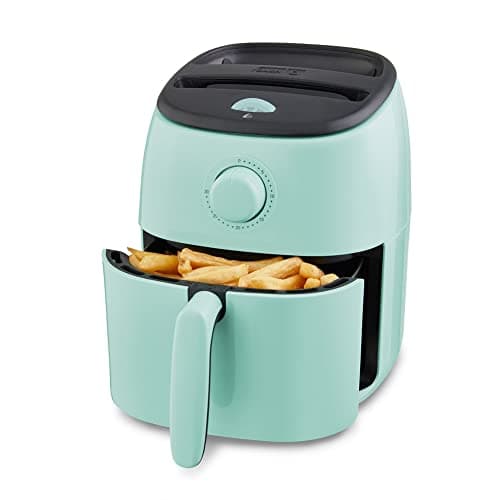
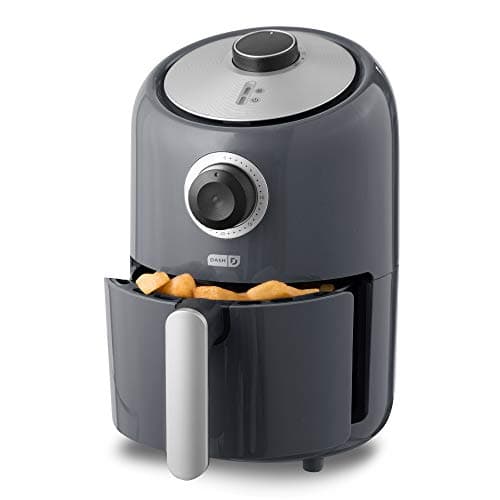
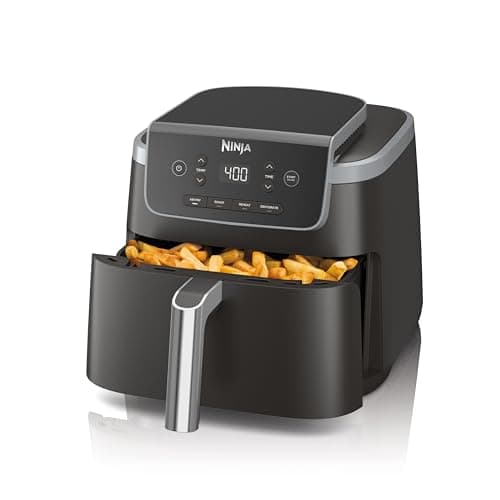
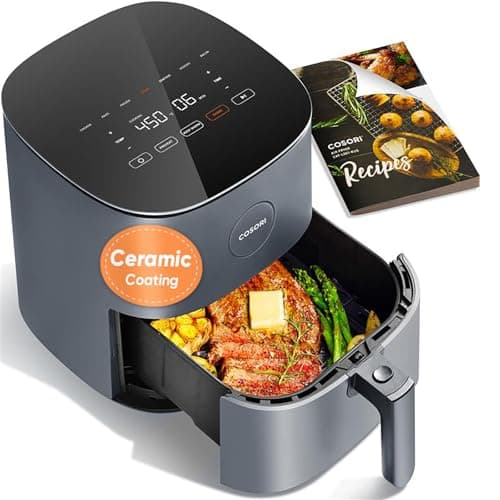
Can you operate it without reading? A dial has a position you can feel and see from across a kitchen. A flat capacitive panel has small backlit icons that must be located, identified and pressed in the right order, and it gives no tactile confirmation that anything happened. For anyone with reduced near vision, arthritic fingertips or dry skin — capacitive panels can simply fail to register a dry fingertip — that difference is not cosmetic.
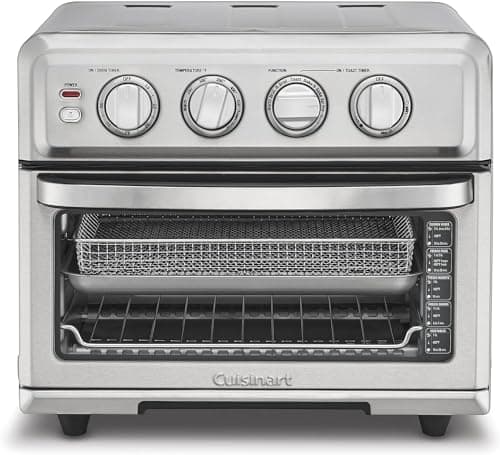
What do you have to lift, and from where?A basket machine asks you to pull a hot drawer clear of the housing and carry it, one-handed, to a counter. At two or three quarts that is nothing. At eight quarts with food in it, held out at arm's length, it is a genuine strain and the commonest way people burn themselves. An oven-format machine never asks for it: the door opens downward and the rack slides out onto it.
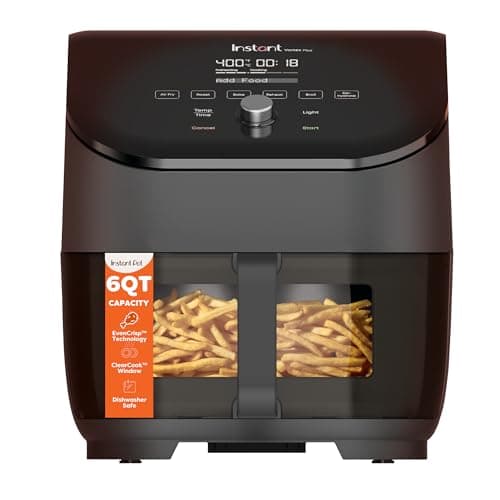
Can you see inside without opening it? Every look into a basket machine means lifting the drawer. A window and an interior light turn five lifts into none, which is the single biggest reduction in handling available anywhere on this list.
Capacity still matters, and if you are cooking for a household rather than for one or two, read what size air fryer do I need before you shop — the quart figure is measured differently from the way people imagine it.
Dials versus touchscreens, honestly
A dial does three things a flat panel does not. It shows its setting when the machine is off. It gives physical feedback, so you know the input registered without looking. And it can be operated with a knuckle, a dry fingertip or the side of a hand — capacitive panels often cannot, because they are reading skin moisture rather than pressure.
The counter-argument is real too: a digital panel with presets can be two presses for a job that takes a dial-user two settings and a mental note of the time. If someone is comfortable with a phone, a preset panel is not an obstacle. The decision is about the person, not the technology, and it is worth trying the buttons in a shop before buying if that is possible.
The lifting problem nobody mentions
Here is the part that gets left out of every other list. A basket of cooked food is not heavy in absolute terms, but you are holding it away from your body, with one hand, at arm's length, while it radiates heat. That posture multiplies the effective load and it is the exact movement that a weak wrist or a painful shoulder makes unsafe. Three ways to reduce it, in order of how much they help:
- Choose an oven format. The door drops down, the rack slides out onto it, and nothing is ever carried. This is why the Cuisinart leads the list.
- Choose a smaller basket. A 2.6-quart basket full of food is a fraction of an 8-quart one. Two small cooks are easier than one big one if lifting is the constraint.
- Choose a window. It does not change the final lift, but it removes every interim one.
Wherever the machine lives, put it where the basket comes out onto a clear surface at the same height rather than being carried across a kitchen — and give it the ventilation gap the manufacturer asks for, which is set out in air fryer clearance and placement.
Cleaning, which decides whether it keeps being used
A dishwasher-safe basket is worth more than almost any cooking feature on this page, because the appliance that stops getting used is nearly always the one that is a nuisance to wash. Where the manual clears the dishwasher, use it. Where it does not, hand washing is the safe assumption and the routine takes two minutes; the full method, and the four habits that destroy a coating, are in how to clean an air fryer.
One genuine advantage of the uncoated stainless mesh basket on the Cuisinart: there is no coating to protect, so the usual anxiety about metal utensils and abrasive sponges simply does not apply. The trade is that food sticks more without a little oil.
Safety features worth having
Auto shut-off is the one to insist on, and every machine here has it — the timer ends and the heat stops, whether or not anyone is in the room. Cool-touch housings and handles vary; assume the outside gets warm and site the machine accordingly. And do not run any air fryer through an extension cord or a power strip: they draw 1,500 watts and up, which is the reasoning set out in can you plug an air fryer into an extension cord. If you want to know what does go wrong with these machines in practice, the recall record is short and instructive — we list all six U.S. recalls in air fryer recalls.
What it costs to run
Very little, and that is worth saying to anyone watching a fixed income. A typical 20-minute cook in a 1,500-watt machine costs about nine cents at the U.S. average electricity rate, against roughly 25 cents to heat a full-size oven for the same job. Used four times a week that is a saving of about $33 a year — not life-changing, but the running cost of the appliance itself is genuinely negligible. Put your own rate into the calculator on what an air fryer costs to run.