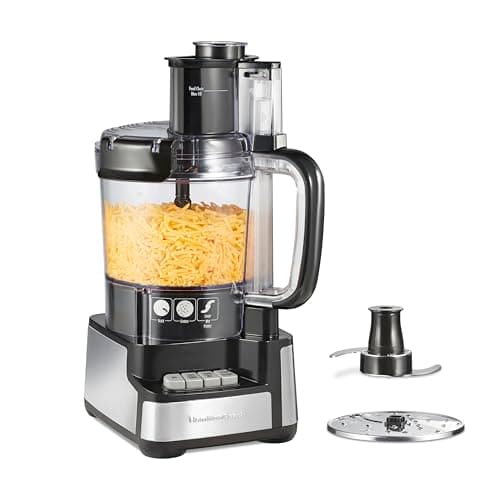
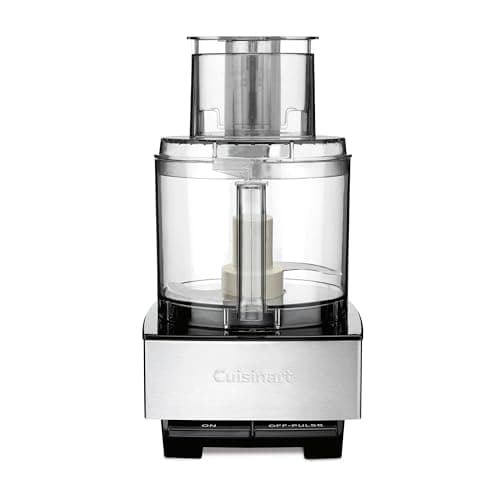
Before the picks, the question nobody selling food processors asks: do you need one? A food processor does four things well — slicing and shredding large volumes, chopping vegetables fast, making dough and pastry, and emulsifying sauces. If you do none of those more than once a month, a sharp knife and a box grater will beat it on every metric including time, because the processor takes four minutes to wash. That is not a reason not to buy one. It is a reason to be honest about which one.
If you do cook that way — big batches of slaw, weekly meal prep, pastry, hummus, nut butters, shredded cheese by the pound — a food processor is transformative in a way few appliances are, and the difference between a good one and a mediocre one is large. It comes down to three things: usable bowl capacity (which is not the number on the box), the quality of the slicing and shredding discs, and how many parts you have to wash, because that last one decides whether it lives on the counter or in a cupboard.
We rank on those, plus the criterion that runs through this whole hub: can you still buy parts for it in ten years? A food processor should outlast several air fryers, so a cracked bowl or a lost pusher should not be the end of the machine — which is exactly the test we apply in the best kitchen appliance brands.
Bowl capacity is not usable capacity
The number on the box is the dry capacity of the bowl filled to the brim, and you will never use that. For dry work — chopping, shredding, slicing — you can realistically fill to about two-thirds before the blade stops circulating food properly. For anything liquid, the limit is much lower and it is set by the center column: the bowl leaks around the drive shaft well before it is full, which is why every manufacturer prints a separate and much smaller liquid capacity that nobody reads. In practice a 14-cup processor handles about 9 cups of dry ingredients and roughly 5 or 6 cups of soup. Buy accordingly, and treat this the same way we treat quart ratings on air fryers in what size air fryer do I need.
The discs are the difference between using it and not
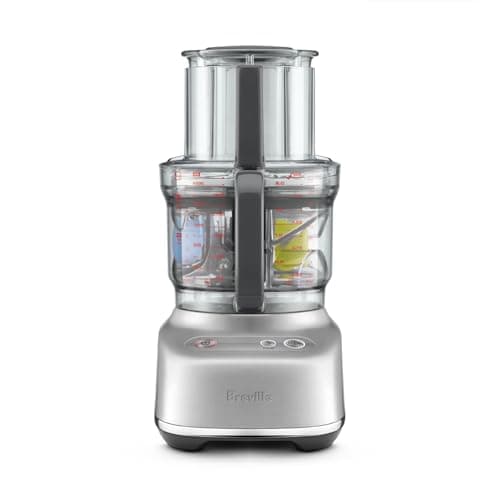
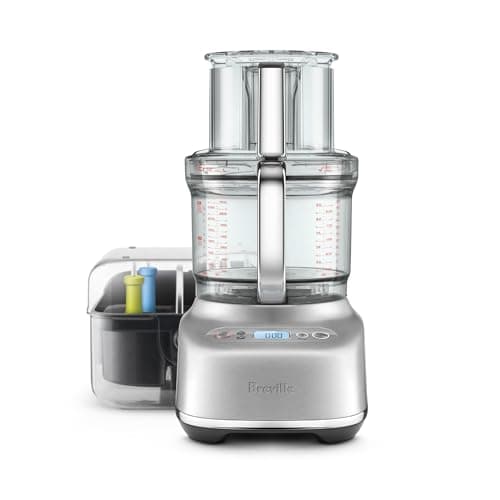
Nearly every food processor chops adequately — the S-blade is a solved problem. What separates them is slicing and shredding, and specifically whether the slicing thickness is fixed or adjustable. A fixed 4mm disc slices potatoes for gratin fine and is useless for paper-thin fennel or thick-cut chips. Breville's adjustable disc covers the whole range from one dial, and it is the single feature most likely to make you reach for the machine instead of a knife. If you are choosing between a bigger bowl and better discs, and you cook for four or fewer, take the discs.
Cleanup decides whether you keep using it
A food processor is five or six parts: bowl, lid, pusher, S-blade, one or two discs, and sometimes a stem. That is the real cost of using one, and it is why processors get abandoned far more often than they break. Two things genuinely help. First, buy a machine whose parts are all dishwasher safe and check that includes the lid, since some are not. Second, rinse immediately — dough and cheese set like cement in a bowl left for an hour. A machine with fewer parts you will actually use beats a machine with more parts you will not, which is the honest case for the simpler Cuisinarts over the disc-heavy premium machines.
Food processor, blender, or stand mixer?
They overlap less than people think, and buying the wrong one is expensive. A blender is for liquids: smoothies, soups, sauces, anything that ends up pourable — it is bad at anything dry and cannot slice at all. Our best blenders roundup ranks them by what you actually blend. A stand mixer is for aeration and long mixing: dough, batters, meringue, creaming butter — jobs a processor does quickly and less well, since its fast blade develops gluten differently. See best stand mixers. A food processor is for dry bulk work: slicing, shredding, chopping, pastry, hummus, pesto. If you only ever wanted a machine to make smoothies, you wanted a blender and you will resent the processor's six parts.
Motor: what the wattage number is and is not telling you
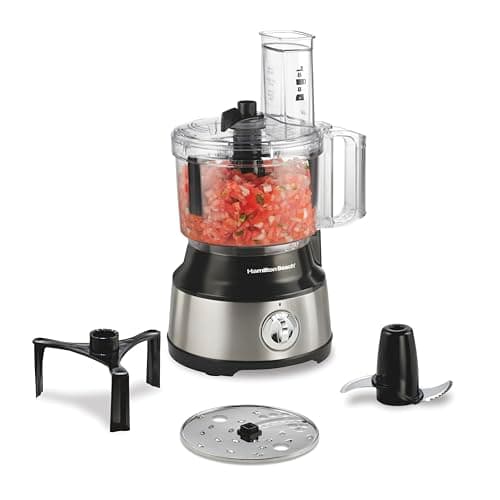
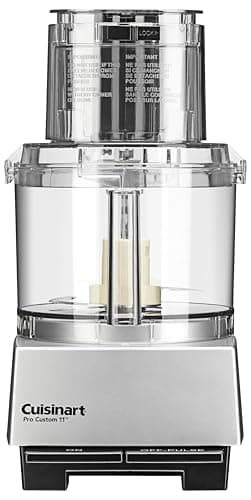
Cuisinart publishes 720 watts on the DFP-14 and that figure is meaningful only in comparison to other food processors, because these are direct-drive machines where the motor sits immediately below the blade. There is no gearbox and no belt, so the wattage is a reasonable proxy for torque under load. The job that actually tests it is stiff bread dough, and it is the single reliable way to tell a budget processor from a proper one: a cheap motor will bog, heat up and cut out on its thermal protector. If you will never make dough, you can buy far cheaper than the specs suggest — which is exactly why the Hamilton Beach earns its place here rather than being dismissed.
Buy for parts, not for features
A food processor is a fifteen-year appliance if it is anything. Motors in this category rarely fail; what ends them is a cracked bowl, a lost pusher or a warped lid, and whether the machine survives that is entirely a question of whether the manufacturer still sells the part. Cuisinart and Breville both do, years after a model is discontinued. Value brands generally do not, and that is the real difference in what you are buying — not the wattage. It is the same test that decides our rankings in the best kitchen appliance brands, and the same argument we make about air fryer baskets in how long do air fryers last.