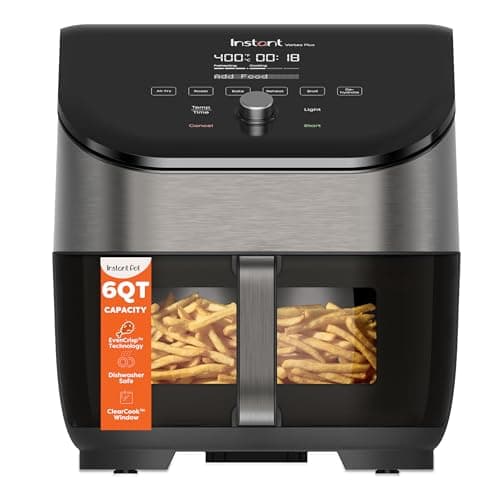
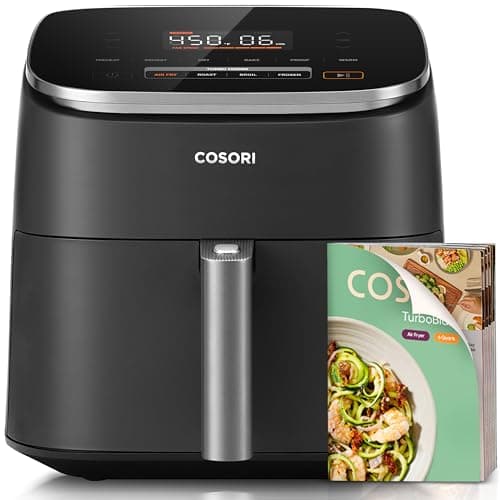
Air fryer noise is the complaint that shows up in owner reviews far more than it shows up on spec sheets, and there is a reason for that: almost no manufacturer publishes a decibel figure for the US market, and the few marketing numbers that do circulate are measured under conditions nobody discloses. So we are not going to hand you a fake dB table. We are going to rank on the three mechanical facts that genuinely decide how loud a machine is, all of which you can verify on the product page before you spend anything.
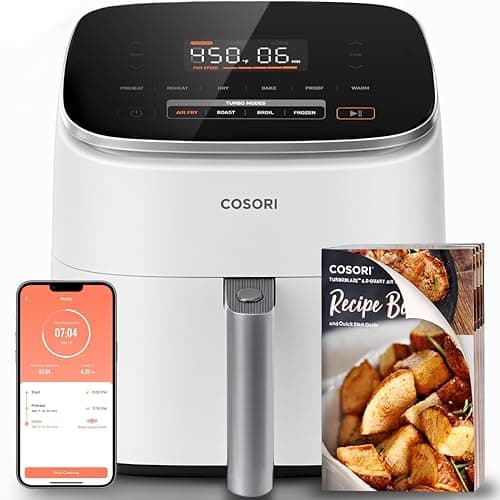
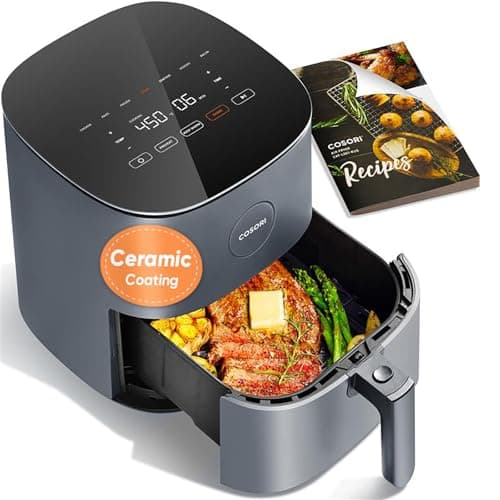
Those facts are: the motor type (a DC motor with electronic speed control runs quieter and steadier than a fixed-speed AC motor), whether the fan speed is variable (a machine locked at full blast is loud for the entire cook, even when the food does not need it), and the format — an enclosed countertop oven puts a bigger cavity and a door between the fan and your kitchen, while a small basket machine puts a high-speed fan about eighteen inches from your face. Wattage matters too, but much less than people assume: a 1,725-watt Cosori with a DC motor is quieter than a 1,000-watt compact with a cheap AC fan.
Two honest caveats before the picks. First, we have not measured any of these with a sound meter — we do not have a lab, and we say so on every page. What follows is ranked on published mechanical specs plus the consistent direction of aggregated owner reports. Second, no air fryer is silent. A fan moving enough air to crisp food is going to be audible; the realistic goal is “you can hold a conversation next to it,” not “you forget it is on.” If quiet matters to you mostly because the kitchen is open-plan, also read the how to use an air fryer guide — where you put the machine changes the perceived noise as much as the machine does.
Why nobody publishes a decibel number
Search for a quiet air fryer and you will find dozens of sites quoting confident dB figures. Almost none of them say how far from the machine the meter was, what the room was, what the machine was cooking, or which fan speed it was on — and every one of those changes the answer by more than the differences between models. A figure measured at six inches from an empty basket is not comparable to one taken at three feet with food in it. Rather than add another unverifiable number to the pile, we rank on the design decisions that produce the noise, because those are printed on the box and cannot be fudged.
DC motor versus AC motor — the one spec that matters
Most air fryers use a simple AC motor that runs at a single speed: on, or off. A DC motor can be driven electronically at different speeds, which is why Cosori is able to publish five fan settings on the TurboBlaze and most competitors publish none. This matters twice over. At lower settings the fan is physically moving less air, which is quieter in the obvious way. And because the machine can modulate rather than cycling a fixed-speed fan on and off, the sound it does make is steadier — and steady noise is far less irritating than noise that surges every ninety seconds. If a listing does not mention motor type or fan speeds at all, assume single-speed AC.
Format changes noise more than any feature
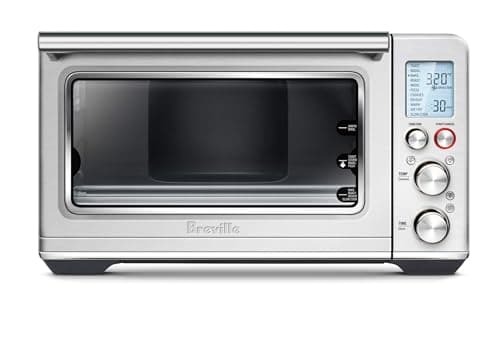
A basket air fryer is a small sealed box with a powerful fan directly above the food, sitting at counter height about arm's length from you. A countertop oven has a much larger cavity, so it can move the same amount of heat with lower air velocity, and it has a glass door and insulated walls between the fan and the room. That is why the Breville sits third here despite costing several times what our top pick does — it is quieter because of what it is, not because of anything clever. The trade-off is counter space and price, and it only adds up if it replaces your toaster oven as well. We work through that trade in air fryer vs toaster oven.
Three things you can do that cost nothing
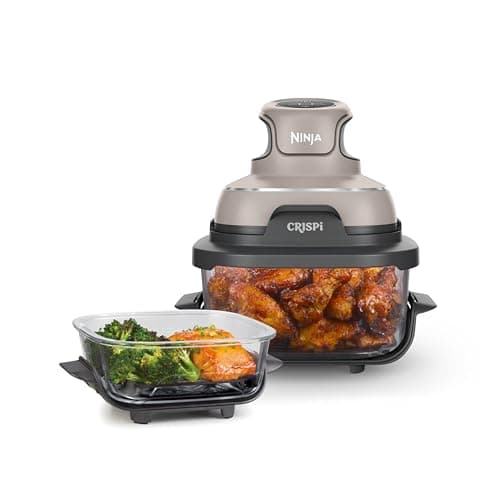
Before you spend money on a quieter machine, try the free fixes, because they routinely matter more than the model. Move it off a resonant surface — a thin floating shelf or a hollow cabinet top acts as a soundboard and can add more perceived noise than the difference between two machines. Give it clearance: most manuals ask for five inches behind and above, and a machine fighting a wall for airflow runs its fan harder. Stop opening it to check — every time you pull the basket the fan spikes back to full when it closes, which is where a lot of the “it is so loud” impression comes from. A model with a window, or the glass Crispi, removes that habit entirely; we rank those in the air fryers with a window roundup.
What quiet costs you
Being honest about the trade: at the moment, the quiet route means either paying a premium for a DC motor, buying a much larger oven-format machine, or accepting a smaller capacity. There is no cheap, large, quiet air fryer, and any listing promising all three is selling you an unverified claim. If your budget is the binding constraint, the sensible move is a well-reviewed mainstream machine from the budget roundup plus the placement fixes above, rather than paying extra for a “silent” label with nothing behind it.
How we picked
We did not lab-test this gear
Everyone in this category says they tested twenty air fryers. We have not lab-tested any of these, and we say so. What we did instead: compiled the published specifications — wattage, capacity, materials — worked out what each machine actually costs to run at the national electricity rate, read the manuals and owner reviews, and scored each one against a published rubric. The scores are judgments from documented research — not measurements we took, because we do not have a lab and we will not pretend we do. Where a number came from someone else's work, we name them in Sources.