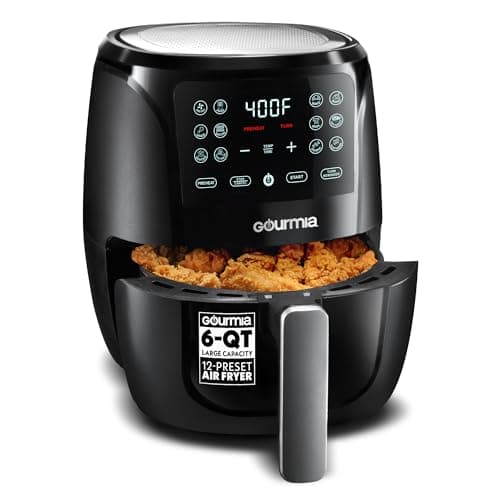
Gourmia is the brand you meet when you sort an air fryer search by price and then filter for a basket big enough to be useful. Its 6-quart machine routinely sells for less than compact 4-quart models from Ninja and Cosori, which raises the only question that matters with a value brand: what did they leave out, and will you notice?
The short answer is that Gourmia spends its money on the things you can see in a photograph — capacity, a preset-covered display, dishwasher-safe accessories — and saves it on the things you find out about over two years. That is a legitimate trade if you know you are making it, and this review is about making sure you do. For context on how the whole budget tier makes these decisions, our budget air fryer roundup ranks them by which corner each one cut.
Where the money was saved
Three places, and they are the same three places every value brand saves it. The fan and motor: a fixed-speed AC motor with no speed control, which is both louder and less adaptable than the DC motors on premium machines — this is the single biggest experiential difference and the reason it does not appear in our quiet air fryers roundup. The materials: thinner plastic in the body and a lighter basket, which affects how the machine feels rather than how it cooks, at least at first. The long tail: spare baskets, replacement crisper trays and support after the warranty are meaningfully harder to come by than with Ninja or Cosori, and that matters more than people expect, because a worn basket is the usual reason a working air fryer gets replaced.
What it does not compromise on
Crisping frozen food, which is genuinely most of what air fryers get used for. The FryForce 360 airflow arrangement is a marketing name for a conventional top-mounted fan and perforated basket, and it works — fries, nuggets, wings and vegetables come out the way they should. It also does not compromise on the thing that actually decides whether the machine gets used: a dishwasher-safe basket. Hand-washing a greasy basket is what kills the habit, and Gourmia did not cut that.
Running cost, worked out
Budget machines are not cheaper to run in any meaningful way — wattage tracks capacity, not price. A 6-quart air fryer in this class typically draws around 1,500 to 1,700 watts, which puts a twenty-minute cook at roughly eight to nine cents at the U.S. average residential electricity rate. That is the same as its expensive rivals doing the same job. Where a cheap machine can cost you more is time: a weaker fan sometimes means running five minutes longer for the same result, which is a cent, not a problem. Work out your own figure in the running-cost calculator.
Who should buy this, plainly
Someone who wants a 6-quart basket and has a firm budget. Someone furnishing a first apartment, a rental, a college kitchen or a second home, where the machine needs to be good enough rather than permanent. Someone who is not sure they will like air frying and does not want to spend mainstream money to find out — this is a genuinely sensible way to test the category, and if you love it, you will know exactly what to upgrade to. And anyone who has read our size guide, concluded they need six quarts, and found the mainstream 6-quart machines out of budget.
Who should spend more
If noise matters, spend more — this is the loud end of the category and no accessory fixes that. If you avoid nonstick coatings, spend more, because the coating-free options are all in the premium tier and are covered in the non-toxic roundup. And if you cook every day and expect the machine to be part of your kitchen for a decade, spend more — the Ninja AF141 is the value-for-longevity answer, and the gap in price is smaller than the gap in expected service life.
How we picked
We did not lab-test this gear
Everyone in this category says they tested twenty air fryers. We have not lab-tested any of these, and we say so. What we did instead: compiled the published specifications — wattage, capacity, materials — worked out what each machine actually costs to run at the national electricity rate, read the manuals and owner reviews, and scored each one against a published rubric. The scores are judgments from documented research — not measurements we took, because we do not have a lab and we will not pretend we do. Where a number came from someone else's work, we name them in Sources.