Skip to content
Preheat Club

Beyond air fryers · Kitchen Appliances

The best vacuum sealers, ranked on a suction number you can actually compare

This category publishes its one important specification in three different units, or not at all. We converted every figure into the same one, ranked on what each machine does with wet food, and checked which bags you are tied to — because the bags, not the electricity, are what a vacuum sealer costs to own.

By Stephen V.Updated How we review
#ad

We earn a commission when you buy through our Amazon links, at no extra cost to you. It never changes a verdict, and we say so when the cheaper product is the better buy. How this works.

A vacuum sealer has one job: pull the air out of a bag and close it before any gets back in. Everything that follows from that — a steak that keeps months rather than weeks in the freezer, a sous vide bag that sinks instead of bobbing, a Sunday batch that still tastes like food on Thursday — depends on how much air comes out and whether the seal holds. So there is really only one specification that matters, and this is the rare category that publishes it in two incompatible units — or, far more often, not at all.

Nesco states 25.1 inches of mercury. Inkbird states minus 80 kilopascals. Anova publishes an extraction rate in liters per minute and no pressure figure at all. FoodSaver, Avid Armor and Zwilling publish no suction number in any unit. That is not several kinds of rigor; it is one measurement in a handful of costumes, and a buyer comparing listings side by side has no way to line them up. So the first thing this page does is the arithmetic: everything converted into kilopascals, against the 101.3 kPa of atmospheric pressure at sea level, so you can read each claim as a share of a perfect vacuum rather than as a big number.

We ranked on four things, in this order. What happens when the food is wet, because that is where every external sealer struggles and the whole reason chamber machines exist — a marinade pulled toward the pump ends up in the seal, and a seal with liquid in it is not a seal. The suction figure, converted, and whether the maker publishes one at all. Which bags you are allowed to use, which is the single biggest cost decision here and the one nobody foregrounds: one machine on this page is documented as working with any brand, one tells you in its own manual to use only its own, and one works with nothing but its maker's valves. And what the maker publishes and warrants, because on a machine that is a pump, a heating strip and a gasket, the warranty is the closest thing to a durability claim you can hold anyone to.

A note on what we are not claiming. We have not lab-tested these machines and we have no way to verify a suction figure ourselves; what we can do is read what each manufacturer publishes, convert it, say plainly who publishes nothing, and pull the prices live and date-stamped on every card. The honest caveat on the whole exercise is that no maker here states where its figure was measured — at the pump port with nothing attached, or inside a loaded bag — and those are very different numbers.

And one thing worth knowing before you spend anything. A vacuum sealer is not a preservation method. FoodSaver says so in its own manual, in capitals, and two university extension services say it more bluntly than we would dare to: removing the oxygen helps some of the bacteria you least want. There is a section on that below the picks, along with the four common foods the manuals tell you never to seal, and it is the part of this page we would most like you to read.

The short answer

Quick picks

#ProductBest forScorePrice
01
Anova Culinary Anova Precision Vacuum Sealer Pro
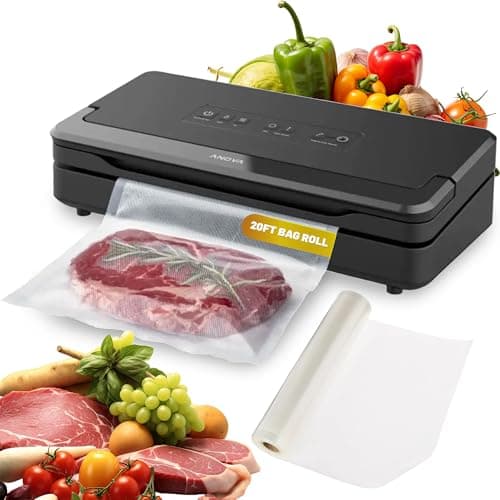
Anova Precision Vacuum Sealer Pro

The machine we would buy, and the one that publishes the figure that decides how long you stand there: 12 liters a minute of extraction, from a 110-watt motor, in a 14.75-inch-deep body. It has every control that matters — moist and dry settings, a pulse trigger for anything crushable, a double seal, an accessory port with the hose in the box, and a roll compartment with a cutter — and Anova backs it for two years, which is double what the chamber machine on this page offers at three times the price. What it will not tell you is how hard it sucks: Anova publishes no pressure figure in any unit.

Best overall — the most capable machine that still publishes its numbers
8.0
$100.99Amazon
02
Avid Armor Avid Armor USV20 Ultra Series Chamber Vacuum Sealer
Avid Armor USV20 Ultra Series Chamber Vacuum Sealer

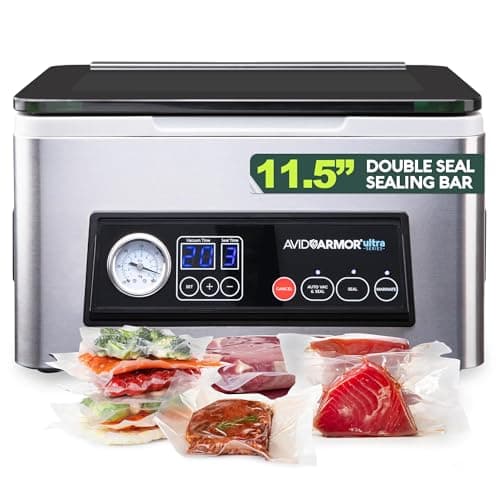
The only machine here that actually solves liquids, because it does not pull the air out of the bag — it takes the air out of the whole box the bag is sitting in, so the pressure on the soup matches the pressure above it and nothing climbs toward the seal. Avid Armor publishes the numbers that matter for one: an 11.5-inch seal bar, a chamber measuring 12.25 by 8.5 by 3 inches, pouches up to 11 by 10 inches, a dry rocker pump, and a vacuum time you set yourself from 15 to 60 seconds with a 3-to-9-second seal. It weighs 17.55 pounds and needs 17 inches of clearance to open the lid, and it costs what three of the other picks cost together.

Best for liquids, marinades and anyone who seals wet food weekly
7.8
$319.00Amazon
03
Nesco Nesco VS-12 Deluxe Vacuum Sealer
Nesco VS-12 Deluxe Vacuum Sealer

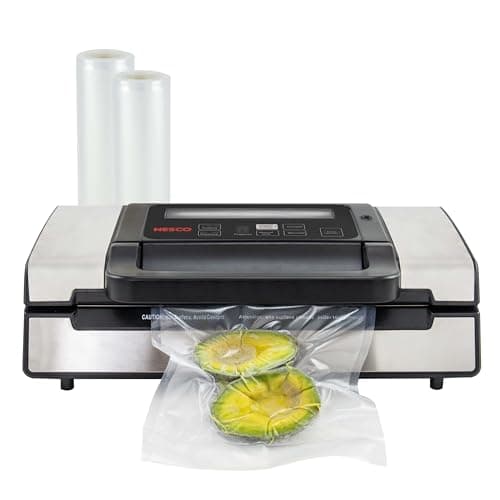
The pick for anyone who wants the suction number and the freedom to buy bags anywhere. The listing states a 130-watt, 25.1-inches-of-mercury double pump — which converts to about 85 kilopascals, the strongest published figure on this page — bags up to 11.8 inches wide, three settings in dry, moist and double, a choice of normal or gentle pressure for soft food, and a viewing window so you can see the bag is actually in the channel. Crucially, it is the one machine here whose listing states compatibility with any brand of vacuum sealer bag. The caveat is provenance: Nesco's own site returned an access error for us, so every figure on this card comes from the retail listing rather than from the manufacturer directly.

The strongest published suction, and any brand of bag
7.4
$133.99Amazon
04
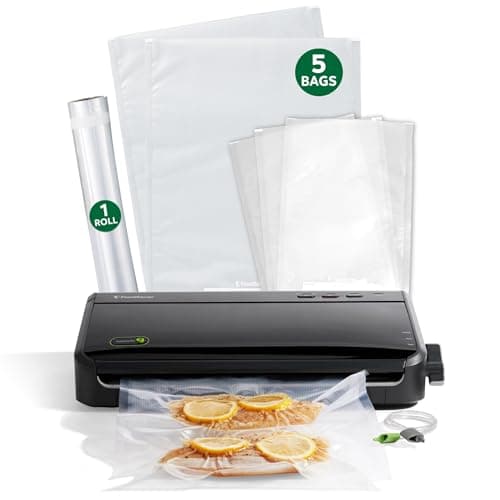
FoodSaver FoodSaver FM2100 Vacuum Sealing System
FoodSaver FM2100 Vacuum Sealing System

The most honest manual in the category, attached to the most locked-in machine. FoodSaver's own owner's guide for the FM2100 publishes a five-year limited warranty — comfortably the longest here — along with dry and moist settings, a seal button that stops the vacuum early so bread and cookies survive, an accessory port and hose for canisters and Mason jars, roll storage with a cutter bar, an extra-wide sealing strip and a drip tray you can actually clean. The same manual also tells you, in FoodSaver's words, to use only FoodSaver bags, rolls, containers and accessories. That is the trade on this card: the best warranty and the best documentation, in exchange for buying your consumables from one company.

Best warranty, and the best pick for jars and canisters
7.2
$99.99Amazon
05
Inkbird Inkbird Vacuum Sealer with Starter Kit
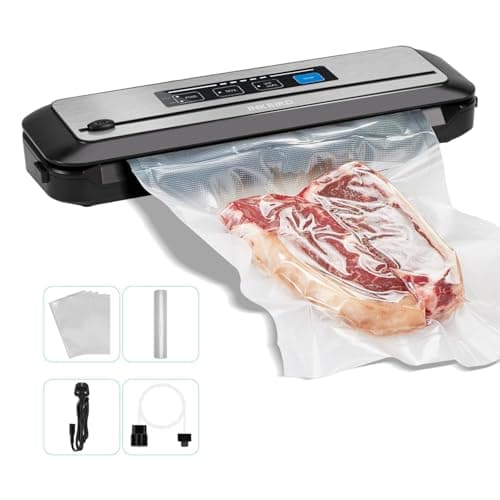
Inkbird Vacuum Sealer with Starter Kit

The cheapest machine here we would actually put on a counter, and the one that proves the point of this page. The listing gives you dry and moist sealing modes, a built-in cutter and a bag-and-roll starter kit for roughly a third of what the Anova costs. Inkbird publishes a suction figure of minus 80 kilopascals and a 12-inch bag width — but it publishes those for the INK-VS01, and this listing prints no model number at all, so we treat the figure as the brand's claim for this family of machines rather than a verified spec for this exact unit. That ambiguity is the honest reason it sits fifth rather than higher.

The cheapest sealer worth owning
6.8
$49.99Amazon
06
Zwilling Zwilling Fresh & Save Glass Vacuum Starter Set (7-piece)
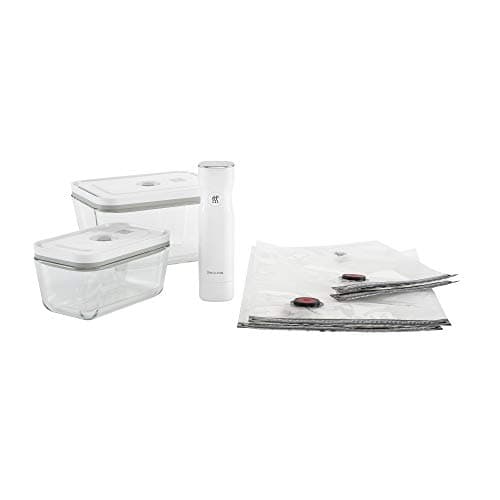
Zwilling Fresh & Save Glass Vacuum Starter Set (7-piece)

The pick for the reader who came to this site from the materials pages, because it is the only system here where the food does not have to touch a plastic bag at all. There is no heating strip: a rechargeable pump pulls air through a valve in a lid, and the lid sits on borosilicate glass containers or on reusable zip bags Zwilling publishes as BPA-free. Zwilling claims food stays fresh up to five times longer, states the containers as dishwasher, freezer and microwave safe with the vacuum released, and rates them from 0°F to 356°F without the lid. The catch is total: the pump works with Fresh & Save valves and nothing else.

Best without a heat seal — glass containers and reusable bags
5.6
$119.38Amazon

#ad · Live prices from the Amazon Product API, as of Oct 4, 2026. Where we have no verified live price, we show none — a gap beats a number that has rotted.

In detail

The picks, in full

01
Anova Culinary Anova Precision Vacuum Sealer Pro

Best overall — the most capable machine that still publishes its numbers

Anova Precision Vacuum Sealer Pro

110 W (published)12 L/min extractionAccessory port + hose2-year warranty
8.0/10

The machine we would buy, and the one that publishes the figure that decides how long you stand there: 12 liters a minute of extraction, from a 110-watt motor, in a 14.75-inch-deep body. It has every control that matters — moist and dry settings, a pulse trigger for anything crushable, a double seal, an accessory port with the hose in the box, and a roll compartment with a cutter — and Anova backs it for two years, which is double what the chamber machine on this page offers at three times the price. What it will not tell you is how hard it sucks: Anova publishes no pressure figure in any unit.

Vacuum & seal
9
Wet food
7
Bag freedom
7
What's published
8
Value
9

Pros

  • Anova publishes an extraction rate — 12 liters a minute — which is the only flow figure anyone on this page states, and it is what decides cycle length
  • Moist and dry settings plus a pulse mode, so delicate food is vacuumed by feel rather than by a fixed program
  • Double sealer, which is the external-machine answer to a bag with liquid near the top
  • Accessory port with the vacuum hose included, so canisters and jar sealers work out of the box rather than as an upsell
  • Built-in roll storage with an integrated sliding cutter — you make the bag the length of the food instead of buying pre-cut sizes
  • Anova states over 100 continuous vacuum seals, the highest duty claim here, and a two-year warranty
  • 110 W and 120 V published on Anova's own specification block, along with full dimensions and the body material

Cons

  • No published vacuum pressure in kilopascals, inches of mercury or anything else — on the specification this page is built around, Anova is silent
  • Anova publishes no statement about using other brands of bag or roll, so bag freedom here is an assumption rather than a documented feature
  • Plastic body, stated as such by Anova, on a machine that costs more than two of the picks below
  • At 14.75 inches deep it is a permanent counter resident or a two-handed lift out of a cupboard
  • 110 W is the smallest motor on this page; the flow rate is good, but there is no headroom claim to go with it

Don't buy this if…

…you seal soup, stock or anything with free liquid more than occasionally — no external sealer solves that, and the chamber machine below is the only thing here that genuinely does.

$100.99View on Amazon

$154.9935% off

Price as of Oct 4, 2026. Prices change — Amazon's at checkout is the one that counts.

#ad · we may earn a commission from this link to Anova Precision Vacuum Sealer Pro

02
Avid Armor Avid Armor USV20 Ultra Series Chamber Vacuum Sealer

Best for liquids, marinades and anyone who seals wet food weekly

Avid Armor USV20 Ultra Series Chamber Vacuum Sealer

11.5 in seal barChamber 12.25 × 8.5 × 3 inVacuum 15-60 s, seal 3-9 s17.55 lb
7.8/10

The only machine here that actually solves liquids, because it does not pull the air out of the bag — it takes the air out of the whole box the bag is sitting in, so the pressure on the soup matches the pressure above it and nothing climbs toward the seal. Avid Armor publishes the numbers that matter for one: an 11.5-inch seal bar, a chamber measuring 12.25 by 8.5 by 3 inches, pouches up to 11 by 10 inches, a dry rocker pump, and a vacuum time you set yourself from 15 to 60 seconds with a 3-to-9-second seal. It weighs 17.55 pounds and needs 17 inches of clearance to open the lid, and it costs what three of the other picks cost together.

Vacuum & seal
9
Wet food
10
Bag freedom
8
What's published
9
Value
3

Pros

  • Seals liquids properly — soups, stocks, brines and marinades — which is the one job no external sealer on this page can do
  • Adjustable vacuum time from 15 to 60 seconds, so you can stop short of the point where a warm liquid starts to bubble under low pressure
  • 11.5-inch seal bar and a 12.25-inch-wide chamber, published, which is a wider seal than any external machine here
  • Smooth chamber pouches cost less per bag in bulk than embossed channel rolls, which claws back some of the purchase price over years
  • A dry rocker pump, which by definition runs without pump oil — the reason a chamber machine like this can live in a kitchen
  • Accessory port for jars and canisters, flat tempered-glass lid so you can watch the cycle, ETL listed

Cons

  • Avid Armor publishes no vacuum level in any unit — on the headline specification, the most expensive machine here is as silent as the cheapest
  • One-year warranty, the shortest on this page, at the highest price on this page
  • 17.55 pounds and a 14-by-12-inch footprint that needs 17 inches of vertical clearance to open — this is not a machine you put away
  • The 3-inch chamber height is the real capacity limit: a thick cut or a tall container simply will not fit under the lid
  • It needs smooth chamber pouches, not the embossed bags every other machine here uses, so an existing bag stash does not transfer

Don't buy this if…

…you mostly seal dry portions for the freezer — you would be paying three times the price and giving up a cupboard shelf for a capability you will use twice a year.

$319.00View on Amazon

$349.009% off

Price as of Oct 4, 2026. Prices change — Amazon's at checkout is the one that counts.

#ad · we may earn a commission from this link to Avid Armor USV20 Ultra Series Chamber Vacuum Sealer

03
Nesco Nesco VS-12 Deluxe Vacuum Sealer

The strongest published suction, and any brand of bag

Nesco VS-12 Deluxe Vacuum Sealer

25.1 inHg (~85 kPa)130 WBags up to 11.8 inAny brand of bag
7.4/10

The pick for anyone who wants the suction number and the freedom to buy bags anywhere. The listing states a 130-watt, 25.1-inches-of-mercury double pump — which converts to about 85 kilopascals, the strongest published figure on this page — bags up to 11.8 inches wide, three settings in dry, moist and double, a choice of normal or gentle pressure for soft food, and a viewing window so you can see the bag is actually in the channel. Crucially, it is the one machine here whose listing states compatibility with any brand of vacuum sealer bag. The caveat is provenance: Nesco's own site returned an access error for us, so every figure on this card comes from the retail listing rather than from the manufacturer directly.

Vacuum & seal
8
Wet food
7
Bag freedom
10
What's published
6
Value
6

Pros

  • 25.1 inches of mercury, listed — about 85 kilopascals, or roughly 84 percent of a perfect vacuum, the highest figure published by anyone here
  • Stated as compatible with any brand of vacuum sealer bags, which is the single most valuable sentence on any listing in this category
  • Three settings — dry, moist and double — with the double heat seal aimed squarely at liquid-adjacent food
  • A gentle pressure option as well as normal, which is how you seal bread or berries without turning them into a brick
  • Takes bags up to 11.8 inches wide, the widest of the external machines here, and two rolls are included to start
  • Built-in roll storage, a sliding bag cutter, an easy-lock handle and a viewing window — the small things that decide whether seals fail

Cons

  • Nesco's own site was unreachable for us, so the wattage, the 25.1 inHg figure and the bag width are all retailer-listed rather than maker-verified
  • No published warranty term we could confirm from Nesco directly
  • Costs more than the Anova while publishing no flow rate, so you cannot tell whether a cycle is quick or slow
  • The listing names no accessory port or hose, so jar and canister sealing is not a documented use for this machine
  • A conversion like ours only goes so far: nobody states whether 25.1 inHg was measured at the pump or in a loaded bag

Don't buy this if…

…you want to seal jars of dry goods or use a marinating canister — the two machines above both publish an accessory port, and this one does not.

$133.99View on Amazon

Price as of Oct 4, 2026. Prices change — Amazon's at checkout is the one that counts.

#ad · we may earn a commission from this link to Nesco VS-12 Deluxe Vacuum Sealer

04
FoodSaver FoodSaver FM2100 Vacuum Sealing System

Best warranty, and the best pick for jars and canisters

FoodSaver FM2100 Vacuum Sealing System

5-year limited warrantyDry/moist settingsAccessory port + hose8 in and 11 in rolls
7.2/10

The most honest manual in the category, attached to the most locked-in machine. FoodSaver's own owner's guide for the FM2100 publishes a five-year limited warranty — comfortably the longest here — along with dry and moist settings, a seal button that stops the vacuum early so bread and cookies survive, an accessory port and hose for canisters and Mason jars, roll storage with a cutter bar, an extra-wide sealing strip and a drip tray you can actually clean. The same manual also tells you, in FoodSaver's words, to use only FoodSaver bags, rolls, containers and accessories. That is the trade on this card: the best warranty and the best documentation, in exchange for buying your consumables from one company.

Vacuum & seal
8
Wet food
6
Bag freedom
4
What's published
9
Value
9

Pros

  • Five-year limited warranty, published in FoodSaver's own manual — more than double the next-longest on this page
  • Accessory port and hose included, and FoodSaver's own jar sealers fit regular and wide-mouth Mason jars, which is the cleanest answer to the 'vacuum sealer for jars' question
  • A seal button that interrupts the vacuum on demand, which the manual explicitly recommends for delicate items — the cheap machines below give you no such escape
  • Dry and moist food settings, an extra-wide sealing strip, roll storage and a cutter bar for 8-inch and 11-inch rolls
  • An easy-clean drip tray, which matters more than it sounds: trapped juice is how an external sealer starts failing seals
  • The manual publishes a real storage guide and real warnings, including the anaerobic-bacteria exclusions we quote below the picks

Cons

  • FoodSaver's own manual says to use only FoodSaver bags, rolls, containers and accessories — the tightest documented lock-in of any heat-sealing machine here
  • No published vacuum figure in any unit; the 120-watt rating comes from the retail listings, and foodsaver.com itself refused our requests
  • The manual asks you to wait 20 seconds between seals and to let the machine cool after each use, which is slow going on a batch-prep afternoon
  • The handheld sealer that appears in the manual's feature diagram is an optional accessory sold separately on this model
  • No pulse control, so with anything crushable you are relying on your own timing of the seal button

Don't buy this if…

…the running cost of bags is what worries you — this is the one machine on the page whose manufacturer tells you to buy its own, and the Nesco above is documented to take anyone's.

$99.99View on Amazon

$144.6631% off

Price as of Oct 4, 2026. Prices change — Amazon's at checkout is the one that counts.

#ad · we may earn a commission from this link to FoodSaver FM2100 Vacuum Sealing System

05
Inkbird Inkbird Vacuum Sealer with Starter Kit

The cheapest sealer worth owning

Inkbird Vacuum Sealer with Starter Kit

Dry + moist modesBuilt-in cutterBrand publishes -80 kPaStarter kit included
6.8/10

The cheapest machine here we would actually put on a counter, and the one that proves the point of this page. The listing gives you dry and moist sealing modes, a built-in cutter and a bag-and-roll starter kit for roughly a third of what the Anova costs. Inkbird publishes a suction figure of minus 80 kilopascals and a 12-inch bag width — but it publishes those for the INK-VS01, and this listing prints no model number at all, so we treat the figure as the brand's claim for this family of machines rather than a verified spec for this exact unit. That ambiguity is the honest reason it sits fifth rather than higher.

Vacuum & seal
7
Wet food
6
Bag freedom
8
What's published
4
Value
9

Pros

  • Dry and moist modes at a price where several rivals give you one button and hope
  • Inkbird publishes minus 80 kilopascals and a 12-inch bag capacity for its INK-VS01 — about 23.6 inches of mercury, or roughly 79 percent of a perfect vacuum
  • Built-in cutter, so you make bags from a roll rather than buying pre-cut sizes at a premium
  • Bags and a roll in the box, which on a cheap machine is a meaningful share of the first year's consumables
  • Inkbird sells its own bags and rolls and states no restriction against using others, and its product page carries a one-year warranty badge

Cons

  • The Amazon listing carries no model number, so the specification sheet on Inkbird's site cannot be tied to this exact unit with certainty
  • No published wattage anywhere we could find — not on the listing, not on Inkbird's own page
  • Inkbird states 50 continuous vacuums for the INK-VS01 against Anova's claim of over 100, so this is not the machine for a freezer-filling afternoon
  • No accessory port documented, so no jars, no canisters, no marinating
  • No published dimensions or weight, which matters if your counter space is already accounted for

Don't buy this if…

…you are buying on the strength of the 80 kPa number — the figure belongs to a model name this listing does not print, and if that distinction bothers you, buy the Nesco, which states its number on the product you are actually ordering.

$49.99View on Amazon

$59.9917% off

Price as of Oct 4, 2026. Prices change — Amazon's at checkout is the one that counts.

#ad · we may earn a commission from this link to Inkbird Vacuum Sealer with Starter Kit

06
Zwilling Zwilling Fresh & Save Glass Vacuum Starter Set (7-piece)

Best without a heat seal — glass containers and reusable bags

Zwilling Fresh & Save Glass Vacuum Starter Set (7-piece)

No heat sealBorosilicate glass + reusable bagsUSB rechargeable pump0°F to 356°F (no lid)
5.6/10

The pick for the reader who came to this site from the materials pages, because it is the only system here where the food does not have to touch a plastic bag at all. There is no heating strip: a rechargeable pump pulls air through a valve in a lid, and the lid sits on borosilicate glass containers or on reusable zip bags Zwilling publishes as BPA-free. Zwilling claims food stays fresh up to five times longer, states the containers as dishwasher, freezer and microwave safe with the vacuum released, and rates them from 0°F to 356°F without the lid. The catch is total: the pump works with Fresh & Save valves and nothing else.

Vacuum & seal
6
Wet food
7
Bag freedom
2
What's published
7
Value
6

Pros

  • Glass, not plastic, against the food — borosilicate containers rather than a bag, which removes the materials question this site gets asked most
  • Reusable: the bags are designed to be washed and used again, so the ongoing cost is a fraction of a roll-and-cut machine's and the waste is close to nothing
  • A quiet cordless pump with a lithium-ion battery and USB charging, so there is no 17-pound box and no counter footprint at all
  • Containers are dishwasher safe, freezer safe, microwave safe with the vacuum released, and rated to 356°F without the lid — a sealer bag does none of that
  • Zwilling states all Fresh & Save pumps and lids are compatible, so the system extends without obsoleting what you already bought
  • Double seal on the container lids, and the set arrives with two glass containers, four reusable bags and the pump

Cons

  • The pump only works with Fresh & Save valves — you cannot seal an arbitrary bag, make a bag from a roll, or use this with any other brand's storage
  • No published vacuum figure of any kind, in any unit, so there is no way to compare its hold against the machines above
  • Not a heat sealer, so for long-term freezer storage of odd shapes it is the wrong tool and the picks above are not
  • Rigid glass takes fridge and freezer space a flat vacuum bag would not, which is the opposite of what people buy a sealer for
  • We found no published sous vide temperature rating for the bags on the page we read, so we would not assume a bath above a gentle temperature
  • A starter set costs more than a capable heat-sealing machine, and the glass containers are most of why

Don't buy this if…

…your actual problem is a chest freezer and a bulk meat order — this is a fridge-and-leftovers system, and the honest answer there is a heat sealer and a roll of bags.

$119.38View on Amazon

$155.9423% off

Price as of Oct 4, 2026. Prices change — Amazon's at checkout is the one that counts.

#ad · we may earn a commission from this link to Zwilling Fresh & Save Glass Vacuum Starter Set (7-piece)

Three units, one measurement, and most makers publish none of them

Suction is a pressure, and pressure has a ceiling. At sea level the air is pressing on everything at about 101.3 kilopascals, which is the same thing as 29.92 inches of mercury, so no pump can remove more than that and every claim is really a share of it. NIST's own conversion tables put one inch of mercury at 3,386.389 pascals, which is all the arithmetic anyone needs to make these listings comparable.

Run it across this page and the field shrinks to two numbers. Nesco's 25.1 inches of mercury is about 85 kilopascals, or roughly 84 percent of a perfect vacuum. Inkbird's minus 80 kilopascals is about 23.6 inches of mercury, or roughly 79 percent. Those two are close enough that neither is a reason to choose between them. And then there is everyone else: Anova, FoodSaver, Avid Armor and Zwilling publish no pressure figure at all, which includes the most expensive machine on this page and the brand that invented the category in most people's kitchens.

Two honest caveats, because the conversion is cleaner than the underlying data. First, nobody states where the figure was taken. A pump sealed to a gauge with nothing attached will post a much better number than the same pump pulling against a bag, a gasket and a wet chicken breast, and no maker here tells you which test produced its figure. Second, past a certain point more suction stops mattering: once the bag is tight against the food the remaining air is a rounding error, and what decides whether your steak survives six months is the integrity of the seal, not the last two percent of vacuum. We apply the same skepticism to published figures in the sous vide roundup, where every maker now claims a tenth of a degree and the specification has stopped telling you anything.

Flow rate is a different question, and only one maker answers it

Pressure tells you how tight the bag ends up. Flow rate tells you how long you stand there waiting. They are independent, and a machine can be good at one and mediocre at the other. Anova is the only brand here that publishes a flow figure — 12 liters a minute of extraction — and nobody on this page publishes both numbers, which means there is no machine in this field you can fully characterize from its own specification sheet.

Wattage is the usual stand-in and it is a weak one. The Nesco is listed at 130 watts and the Anova at 110, and that difference tells you almost nothing, because the pump design, the chamber volume and the gasket all sit between the motor and the result. We would rather a maker published a flow rate and a pressure and let us do the dividing, which is the same argument we make about watts per quart in the frozen-food air fryer picks and watts per slot in the toaster roundup.

Liquids are the problem this category is built around

An external sealer works by sucking air out through the open end of a bag. If there is free liquid in that bag, some of it comes along for the ride, lands in the sealing channel, and turns into a seal with a wet stripe through it — which is to say, no seal at all, and often a little liquid in the pump. Every machine above answers this in one of three ways.

A moist settingis the cheap answer: less aggressive suction and a longer or doubled seal, which buys you a margin on a marinade rather than solving anything. Nesco publishes a double heat seal as a separate third mode; Anova publishes a double sealer and a moist setting; FoodSaver's manual documents dry and moist settings and a seal button you can hit early. A chamber is the real answer. The Avid Armor does not pull air out of the bag at all — it removes the air from the whole box the bag is lying in, so the pressure above the soup and the pressure in the soup come down together and nothing is dragged anywhere. That is why it is the only machine here we would put a bag of stock into, and why its 15-to-60-second adjustable vacuum time exists: at low enough pressure a warm liquid will start to bubble, and the control lets you stop before it does. And then there is the freezer trick, which costs nothing: freeze the portion flat on a tray first, then seal the solid block. An external sealer handles frozen stew perfectly well, because frozen stew is not a liquid.

The bag is the real product, and the real running cost

Every one of these machines is sold once and then sells you plastic for years, so the consumable question deserves more weight than listings give it. External heat sealers need embossed or channeled bags — the texture is what gives the air a path out once the bag is pressed flat — while a chamber machine takes plain smooth pouches, which is why bag stashes do not transfer between the two formats. That incompatibility is published plainly on the pouches themselves: chamber pouch listings carry explicit notes that they are not compatible with FoodSaver-type sealers.

Then there is who you are allowed to buy from, and here the four machines diverge completely. The Nesco listing states compatibility with any brand of vacuum sealer bag. FoodSaver's own manual says to use only FoodSaver bags, rolls, containers and accessories. Inkbird sells its own and states no exclusion. Anova publishes nothing either way. Zwilling's pump fits Fresh & Save valves and nothing else, which is the tightest tie of all, though its bags are reusable so the comparison is not quite like for like. On price per bag, pre-cut pouches bought in boxes of a hundred or more generally work out cheaper per bag than cutting your own from a roll, while a roll is the only way to make a bag the length of a whole fillet. Neither is wrong; they are different habits.

What it costs to run: the electricity is free, the plastic is not

A vacuum sealer runs for seconds, so the power bill is a rounding error. Take the thirstiest external machine here at 130 watts and give it a generous 30-second cycle: that is about 0.001 kilowatt-hours, so at the US average residential rate we use throughout this site, one hundred seals cost under two cents of electricity. You can check that against your own rate in our running-cost calculator, but the conclusion will not move: there is no energy-efficiency argument to be had in this category, which makes it the exception on a site that usually finds one. We lay out where the real numbers are across the counter in the most energy-efficient kitchen appliances.

The actual running cost is bags, and it is worth doing your own arithmetic before you buy. A household sealing a few portions a week goes through a roll in a season; a household that buys meat in bulk twice a year goes through boxes. That is the number that should decide whether you pay more for a machine documented to take anyone's bags, and it is the reason the Nesco's one-line compatibility statement earns it a place above machines we otherwise rate more highly.

What a vacuum sealer does not do — and four foods the manuals say never to seal

This is the section we would keep if we had to delete the rest of the page. Removing the oxygen from a bag slows the spoilage you can see — the surface drying, the freezer burn, the oxidizing fat. It does nothing about the organisms that prefer no oxygen at all, and some of those are the ones that matter most.

FoodSaver publishes the warning itself, in the FM2100 owner's manual: “Vacuum sealing is NOT a substitute for the heat process of canning. Perishables still need to be refrigerated or frozen.” The same manual carries two blunt exclusions, both attributed to anaerobic bacteria: “Fresh mushrooms, onions and garlic should never be vacuum sealed” and “Soft cheeses should never be vacuum sealed.” It also tells you to blanch vegetables before sealing them. Four common foods, named by the biggest brand in the category, in the box — and we have never seen them mentioned in a roundup.

Two university extension services go further. Utah State University Extension states that vacuum packaging “is NOT a food preservation method by itself” and that it “will increase the ability of the botulism bacteria to grow by removing oxygen,” adding that food which needed refrigeration before sealing still needs it after. Diane Wright Hirsch, writing for UConn Extension, is more specific about the storage rule: “Perishable foods packed in a vacuum package must be refrigerated between 34 and 38°F or frozen at 0°F. They cannot be safely stored at room temperature.” She also makes the point that should decide how you treat the whole category — botulism is most likely in low-acid, moist foods sealed without air, and the food can look, smell and taste perfectly fine while it happens.

So the rule we would write on the lid: a vacuum sealer is a storage tool, not a preservation tool. Seal it, then put it where it was going to go anyway — the fridge or the freezer — and it will last longer there than it would have in a zip bag. Nothing about the vacuum moves anything out of the fridge and onto a shelf. If you want shelf-stable, that is canning or drying, and the food dehydrator roundup covers the drying route, including the USDA pre-heat rule for jerky that no dehydrator can perform for you.

Where the plastic sits, for readers from the materials pages

A large share of this site's readers arrive from the coatings questions — whether air fryers are toxic, where the plastic in a kitchen actually is — and a vacuum sealer puts that question in a sharper form than an air fryer ever does. With an air fryer, food sits on a coated basket for twenty minutes. With a sealer, food sits sealed against a plastic film for months, and in sous vide it sits against that film in warm water for hours. That is the argument we made from the other side in the sous vide roundup: the bag, not the basket, is where plastic, heat and moisture actually meet.

What the makers publish here is thinner than we would like. Zwilling states its reusable bags are BPA-free and sells the system around borosilicate glass containers, which is the only option on this page where the food can avoid film altogether. Bag brands commonly publish BPA-free claims on their listings, including the chamber pouches and rolls sold alongside these machines. None of the machine makers publishes the polymer stack in its own bags, which is why we will not tell you one brand's film is safer than another's. If the question bothers you, the honest options are glass containers for the fridge and short, cool sous vide cooks rather than long hot ones — and if it bothers you a lot, the Zwilling set exists for exactly that reason.

Do you actually need one?

Four cases where our answer is no. If your food reliably gets eaten inside a week, a zip bag with the air pressed out does most of this for nothing. If you have no freezer space, a sealer makes neater packages of a problem you cannot solve. If sous vide is the only reason you are shopping, you do not need a sealer at all — the water-displacement method closes a plain zip bag perfectly well, which we say in the sous vide roundup too. And if the plan is to put sealed food in a cupboard, re-read the section above, because that is the one thing this appliance must never be used for.

Where it genuinely pays: bulk meat and fish, which is where the maker's own storage tables claim months instead of weeks in the freezer; batch cooking, where portions that freeze flat stack and thaw fast, which is the same logic behind the best appliances for meal prep; garden gluts, with the blanching step the manual insists on; and anything you buy on offer and want to still be good in six months. If two or more of those describe your kitchen, the Anova at the top of this page is the machine we would put on the counter — and if one of them involves soup, the chamber machine is the one that will not let you down.
How we picked

We did not lab-test this gear

Everyone in this category says they tested twenty air fryers. We have not lab-tested any of these, and we say so. What we did instead: compiled the published specifications — wattage, capacity, materials — worked out what each machine actually costs to run at the national electricity rate, read the manuals and owner reviews, and scored each one against a published rubric. The scores are judgments from documented research — not measurements we took, because we do not have a lab and we will not pretend we do. Where a number came from someone else's work, we name them in Sources.

Questions

Frequently asked

What is the best vacuum sealer to buy?
For most kitchens the Anova Precision Vacuum Sealer Pro: moist and dry settings, a pulse trigger, a double seal, an accessory port with the hose included, a built-in roll cutter, and a two-year warranty, with Anova publishing both a 110-watt rating and a 12-liter-a- minute extraction rate. If you seal liquids regularly, buy the Avid Armor USV20 chamber machine instead, because no external sealer solves that problem. If buying bags from any brand matters most to you, the Nesco VS-12 is the one whose listing states that outright.
Chamber or external vacuum sealer — which do I need?
External sealers suck air out through the open end of the bag, which is cheaper, lighter and fine for dry and solid food. A chamber machine removes the air from the whole compartment the bag sits in, so the pressure equalizes and liquids stay put — it is the only format that genuinely seals soup, stock, brine or marinade. The trade-offs are weight, counter space and price: the chamber machine here is 17.55 pounds, needs 17 inches of clearance to open, and costs around three times what a capable external machine does. It also takes smooth chamber pouches rather than the embossed bags external sealers require, so the two consumables are not interchangeable.
How do I vacuum seal liquids with a normal sealer?
Freeze the liquid first. Portion the soup or stock into a container or flat on a lined tray, freeze it solid, then seal the block — an external sealer handles frozen liquid without difficulty because it is no longer a liquid. Failing that, use the machine's moist setting, which lowers the suction and strengthens the seal, and leave more headroom above the food than you think you need. If you do this weekly rather than occasionally, buy a chamber machine; the workaround is a workaround.
Can I use any brand of vacuum sealer bags?
It depends on the machine, and the makers' published positions differ sharply. The Nesco VS-12 listing states compatibility with any brand of vacuum sealer bag. FoodSaver's own manual instructs you to use only FoodSaver bags, rolls, containers and accessories. Inkbird sells its own and publishes no exclusion. Anova publishes no statement either way. Zwilling's pump works only with Fresh & Save valves. What is not negotiable is the bag type: external sealers need embossed or channeled bags, and chamber machines use smooth pouches, which are sold with explicit notes that they do not work in FoodSaver-type machines.
Does vacuum sealing mean food lasts without refrigeration?
No, and this is the most important thing on this page. FoodSaver's own manual states that vacuum sealing is not a substitute for the heat process of canning and that perishables still need to be refrigerated or frozen. Utah State University Extension states that vacuum packaging is not a food preservation method by itself and that removing the oxygen increases the ability of botulism bacteria to grow. UConn Extension puts the storage rule precisely: perishable vacuum-packed food must be refrigerated between 34 and 38°F or frozen at 0°F, and cannot be safely stored at room temperature. Seal it, then refrigerate or freeze it.
What should you never vacuum seal?
FoodSaver's own manual names four, all for the same reason — the risk of anaerobic bacteria. Fresh mushrooms, onions and garlic should never be vacuum sealed, and neither should soft cheeses. The same manual tells you to blanch vegetables before sealing them, because blanching stops the enzyme activity that would otherwise degrade flavor, color and texture in storage. More broadly, low-acid moist foods are where botulism is most likely in an air-free package, and the food can look, smell and taste perfectly normal while that happens — which is exactly why the rule is to refrigerate or freeze rather than to judge by the sniff test.
How much does a vacuum sealer cost to run?
Almost nothing in electricity, and real money in bags. A 130-watt machine running a 30-second cycle uses about 0.001 kilowatt-hours, so a hundred seals is under two cents at the US average residential rate — put your own rate into our running-cost calculator if you want the exact figure. The ongoing cost is entirely the consumables, which is why the bag-compatibility question above matters more than the wattage, and why a reusable system like the Zwilling set does the arithmetic differently from a roll-and-cut machine.
Do I need a vacuum sealer for sous vide?
No. The water-displacement method — lowering a zip bag into the bath until the water pushes the air out, then sealing the last inch — works for most sous vide cooking and costs nothing. A sealer is worth it if you batch and freeze portions ahead, because then the bag has to survive months rather than hours. If you are shopping for the circulator as well, our sous vide roundup ranks those on what their makers actually publish, and covers which bag materials are documented for a warm bath.

Keep reading

Receipts

Sources

We do not run a testing lab, and we do not pretend to. Where a measured number came from someone else's work, we name them and link them. Where we could not verify something, we say so on the page rather than quietly leaving it out. Read our full method.