Ask people what they cook in an air fryer and the honest answer, most nights, is something that came out of a freezer. Fries, nuggets, wings, breaded fish, a pizza when nobody can face cooking. The category is sold on fresh food and used on frozen, and that gap matters, because the specification that decides frozen-food results is not the one printed on the box.
Frozen food arrives wet, cold and coated. The moment it hits the basket it dumps a load of moisture into the chamber, and whether the result is crisp or soggy comes down to whether that moisture can get away from the surface. Pile frozen fries two deep and they steam each other; lay the same fries in one layer with gaps and they crisp. So the number you should be shopping on is how much food fits in a single layer — and none of these manufacturers publishes it.
What we ranked on, and where the makers go quiet
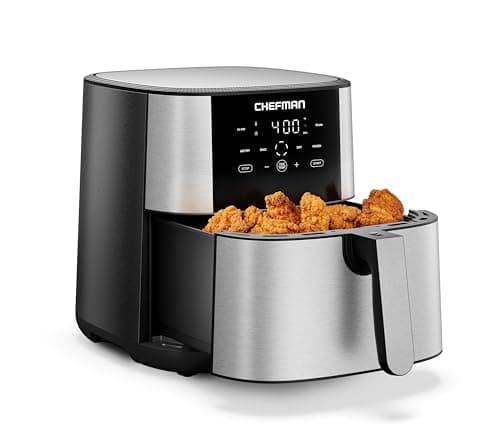
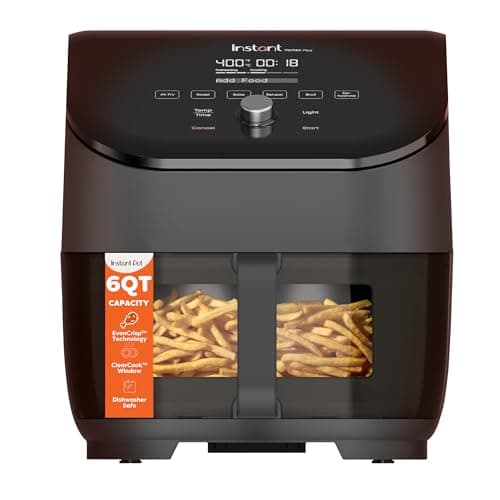
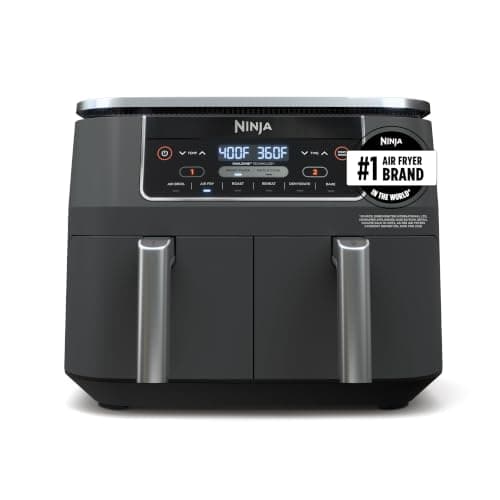
Since nobody publishes usable single-layer area, we ranked on the closest checkable things: the format (one basket, two independent baskets, or oven racks), the published capacity, the published temperature ceiling where there is one, and the published wattage where there is one. Where a maker publishes nothing we say so rather than estimating, because an invented number would be worse than no number.
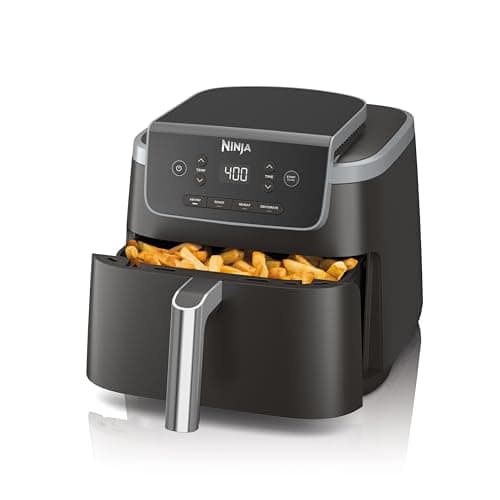
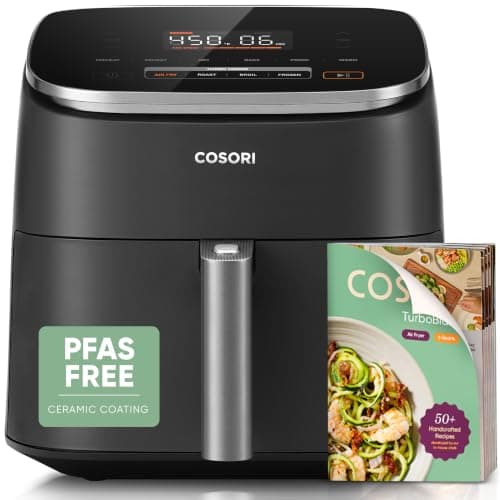
Two figures on this list are worth pulling out because they are the only power ratings any of these six makers publish. The Ninja AF141 is 1,750 watts over a 5-quart basket, which works out at 350 watts per quart. The Cosori TurboBlaze is 1,725 watts over 6 quarts, or 288 watts per quart. That division is not a spec anyone prints, and for frozen food it is the most useful one there is: it is a proxy for how quickly the chamber gets back to temperature after you drop a tray of frozen food into it. Ninja, Instant and Chefman publish no wattage for the other four machines here, so we have not guessed at theirs.
Frozen food: starting temperatures and times
These are starting points for food straight from the freezer, in a single layer, in a preheated machine. They are not laws — every chamber differs, which is exactly why we publish a chart and then tell you to check early. The full reasoning, and the case for cooking to temperature rather than to time, is in air fryer cooking times.
| Frozen food | Temp | Time | Note |
|---|
| French fries and chips | 400°F | 14-18 min | Single layer, shake twice; no oil needed |
| Chicken nuggets and tenders | 400°F | 10-12 min | Turn once; check 165°F in the thickest piece |
| Chicken wings | 390°F | 22-26 min | Space them out; they render a lot of fat |
| Breaded fish fillets | 390°F | 12-15 min | Do not crowd; turn once, carefully |
| Mozzarella sticks | 360°F | 6-8 min | Lower and shorter, or the cheese escapes |
| Frozen pizza (personal size) | 375°F | 8-12 min | Needs a flat surface - basket machines struggle here |
| Onion rings | 400°F | 8-10 min | The most crowding-sensitive item on this list |
| Frozen vegetables | 400°F | 10-14 min | Do not thaw; thawed veg steams instead of roasting |
Four rules that matter more than the machine
Never thaw first. Frozen food is designed to go in frozen. Thawing releases the moisture into the coating rather than into the air, and the coating is the bit you wanted crisp.
Preheat, properly. Frozen food into a cold chamber is the single most common cause of a soggy result, because the food spends the warm-up period steaming rather than crisping. Three minutes is usually enough; when it helps and when it does not is worked through in how to preheat an air fryer.
One layer, always. If you can see basket through the gaps, you are doing it right. Two batches of a single layer beat one batch of a double layer on both time and result, and the mechanism is explained in why your air fryer is not crisping.
No extra oil on breaded food. Frozen breaded products are already oiled at the factory. Adding more is the usual reason a basket starts smoking, which is cause number two in why your air fryer is smoking.
What it costs to cook frozen food this way
A 1,750-watt machine running fifteen minutes uses about 0.44 kWh, which is roughly 7 centsat the U.S. average residential electricity rate. The same tray of fries in a full-size electric oven needs a preheat first, and a 2,500-watt oven run for 30 minutes comes to about 21 cents. Frozen food is where the air fryer's running-cost advantage is largest, because the portion is small and the oven would have been heated for it anyway. Put your own rate in on what an air fryer costs to run.
Frozen chips are the one frozen food that now has a page of its own, because the decider there is basket floor rather than recovery: the best air fryer for french fries ranks the same field on usable single-layer area and two-stage temperature control, and carries the FDA guidance on cooking cut potato to a golden yellow rather than a brown.
If a frozen pizza is the point
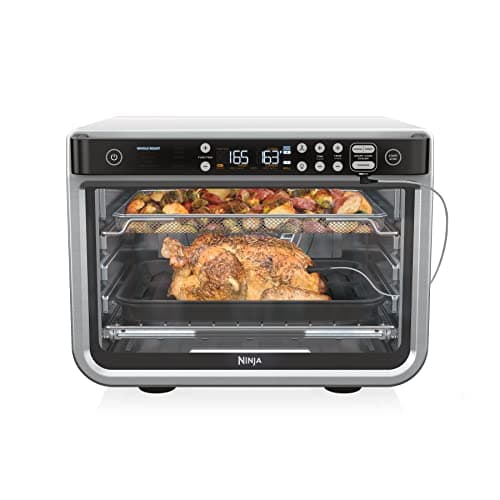
Be realistic about geometry. A basket is a bucket, and a 10-to-12-inch pizza is a plane. You can buy personal-size pizzas that fit a 6-quart basket, or you can buy an oven-format machine and put a full one on a rack. There is no third answer, and no amount of wattage changes it. The trade-offs between the two formats, beyond pizza, are in basket vs oven-style air fryers.