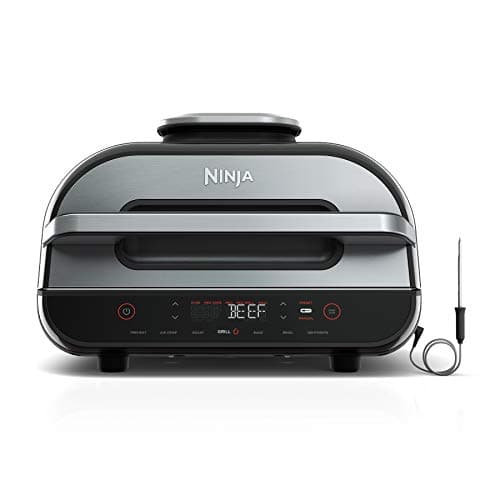
If you already own an air fryer, the case for an indoor grill is narrow and specific: sear. An air fryer surrounds food with moving air, which browns every surface gently and evenly. A grill presses a 500°F plate against one face of the food, which crusts it and leaves marks. Those are different physical processes and neither substitutes for the other, which is the whole of air fryer vs indoor grill.
The category divides into three formats. Open grills and griddles, where food sits on a hot plate under an extractor or a mesh lid. Contact grills, where a hinged top plate cooks both sides at once — faster, and the reason a panini press exists. And combo machines that grill and air-fry in one cavity, which is the honest answer for a kitchen with exactly one free slot.
On the word smokeless: every machine here makes some. Fat rendering onto a 500°F surface produces smoke, and no marketing department repeals that. What separates the good machines is how they manage it — a temperature-controlled grate that keeps the plate below the fat’s smoke point, a cool zone the grease drains into, a splatter shield, a mesh lid. We rank on those mechanisms rather than on the claim.
Smoke: what the good machines actually do
Fat dripping onto a surface hotter than its smoke point makes smoke. Every mechanism in this category is an attempt to break that chain, and they are worth understanding because they tell you how a machine will behave in your kitchen.
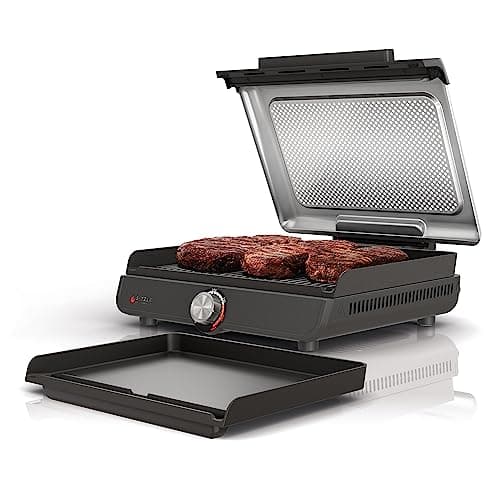
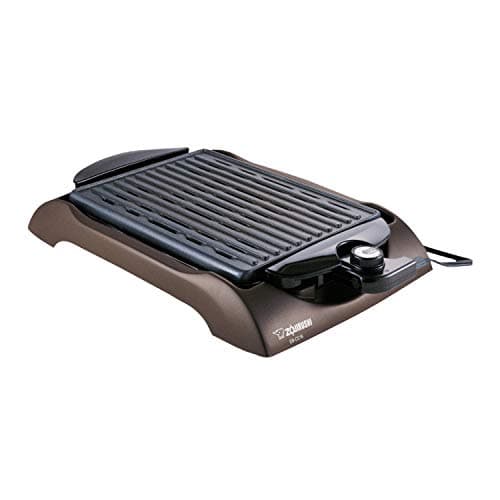
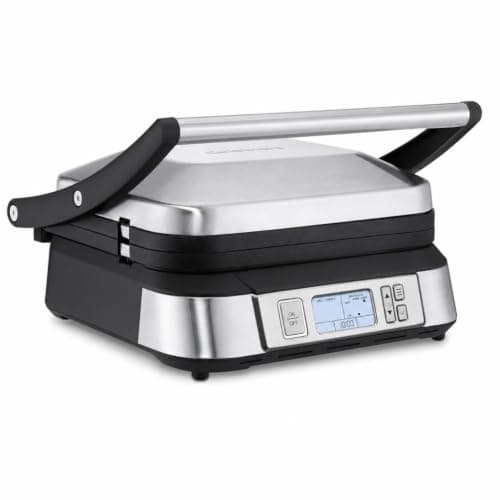
Ninja’s approach on the Foodi Smart XL is a combination the company describes explicitly: a temperature-controlled grill grate, a splatter shield and a cool-air zone that keeps rendered fat away from the hottest surface. Zojirushi’s tabletop design drains fat down and out into a drip pan before it can sit and burn. Cuisinart runs a smoke-less mode on its Griddler. Ninja’s Sizzle uses a perforated mesh lid to contain smoke and splatter while still venting steam.
What none of them does is eliminate smoke on a fatty ribeye at maximum heat. Plan for ventilation — a hood, an open window, and the machine sited where the extractor can reach it. Placement rules, including clearance, are in air fryer clearance and placement.
Temperature is the specification that separates them
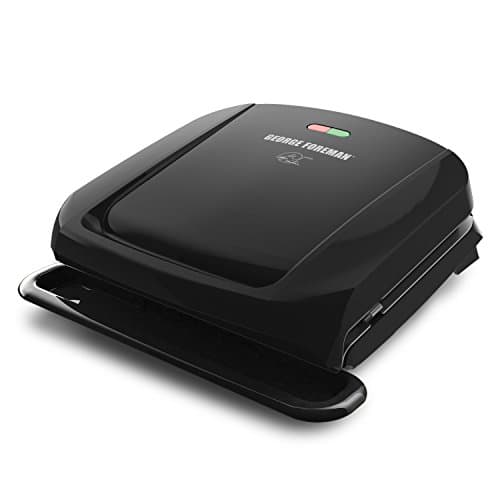
A steakhouse crust needs a genuinely hot surface. The two Ninjas publish up to 500°F, and that is the threshold where searing rather than browning happens. The Zojirushi publishes 176 to 410°F, which is excellent control across a lower range and will not produce the same crust. The George Foreman is lower still. If sear is the reason you are buying a grill, buy on plate temperature and treat everything else as secondary.
Contact, open or combo
Contact grills close over the food and cook both sides at once, halving the time and pressing the food flat. Perfect for burgers, sandwiches and chicken breasts; wrong for anything you want thick and unpressed.
Open grills and griddles cook one side at a time and let you see and turn the food. Slower, more control, better crust, more smoke. Interchangeable griddle plates make them a breakfast machine as well.
Combos add air frying in the same cavity. Worth it if you own neither appliance and have one slot. Not worth it if you already own an air fryer you like — a dedicated grill costs less and does the searing just as well, which is the conclusion of air fryer vs indoor grill.
Cook to temperature, not to marks
Grill marks are a surface phenomenon and tell you nothing about the inside. USDA safe minimum internal temperatures still apply: 165°F for poultry, 145°F for whole cuts of beef, pork, veal and lamb with a three-minute rest, and 160°F for ground meat. The Foodi Smart XL’s built-in thermometer does this for you with four protein settings and nine doneness levels; on any other machine, use an instant-read thermometer. It is the same principle we apply to air frying in air fryer cooking times.
There is one way to take the guesswork out entirely, and it uses a contact grill for what it is best at. Cook the protein to its exact finished temperature in a water bath first, then give it sixty to ninety seconds between hot plates purely for color — the grill never has to reach the inside, so there is nothing to overshoot. The machines that do the first half are ranked in the best sous vide machines, which also covers the time-and-temperature rules that make cooking below 140°F safe.
Cleaning decides whether you keep using it
The reason indoor grills end up in cupboards is not performance — it is that cleaning a hinged, non-removable plate over a sink is miserable. Removable, dishwasher-safe plates and a drip tray that lifts out are the features that keep a grill in service. Every machine here has removable plates or a removable pan; the flat formats are the easiest, and the hinged contact grills the fiddliest.
What it costs to run
Zojirushi publishes 1,300 watts, which is a useful reference for the category. Twenty minutes at that rating is 0.43 kWh — about seven cents at the US average residential rate. Grills tend to be run in longer sessions than air fryers, batch after batch, so a meal costs more than a single air-fryer cook and still far less than heating a conventional oven. Put your own rate into what an air fryer costs to run.