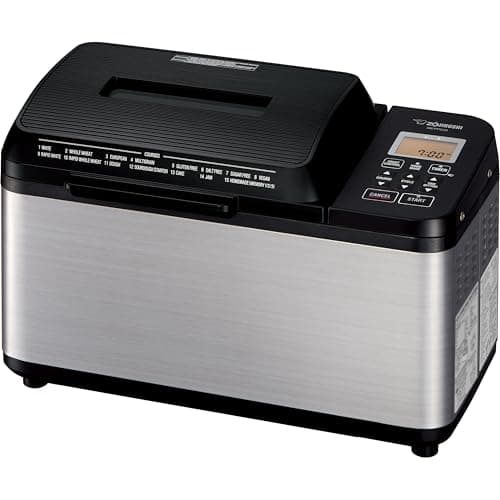
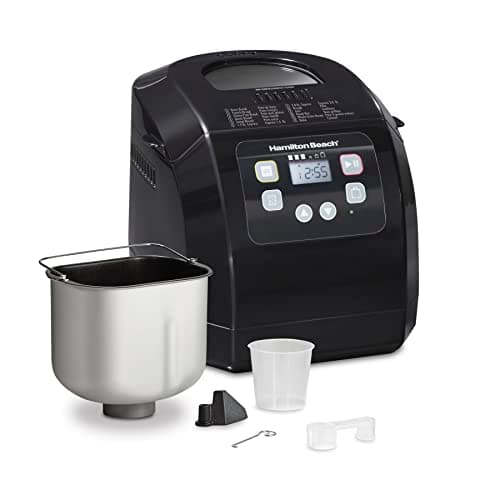
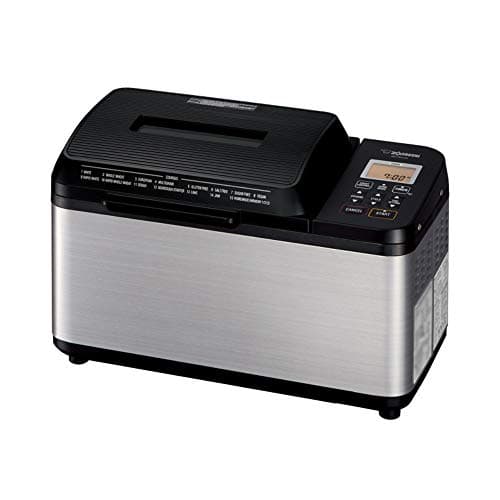
The honest shape of this category: one maker builds the machine that makes bread the shape of bread, and it costs four times what everything else on this page does. Zojirushi publishes two kneading blades, a heater in the lid as well as the base, and a “large traditional rectangular shaped loaf.” Nobody else here publishes any of the three — the closest is a budget machine advertising a “dual heater” without saying where the second one is. If four hundred dollars for a bread machine strikes you as absurd, it is a reasonable reaction — skip to the Hamilton Beach, third on this list, which is the only machine under $150 that will tell you what its pan is coated with.
What follows is not a list of twenty machines with the same photo. It is six, ranked on three published facts that decide what comes out, and we say “not published” in the table wherever a maker leaves one blank — which is most of them, most of the time.
The three specs that decide the loaf
- How many kneading blades, and which way the pan sits.A single paddle in a tall, narrow pan produces the loaf everyone pictures when they think “bread machine”: a chimney, taller than it is wide, with too much crust for its crumb and slices that do not fit a toaster. Two blades in a horizontal pan produce a rectangle. This is the single biggest difference in outcome in the whole category and it has nothing to do with the motor.
- Whether there is a heater in the lid.A bread machine bakes inside a box with a cold window on top. Heat comes from the base, so the top of the loaf browns last and least — which is why so many machine loaves come out with pale, soft, slightly wrinkled tops. Zojirushi publishes “dual heaters on the bottom and lid.” One budget machine here publishes a dual heater without saying where the second one is. The rest publish nothing, and a pale top is the result you should expect.
- What the pan is coated with. Of every appliance in this hub, a bread pan has the worst contact profile there is: wet dough sitting against the surface for three to four hours, heated to baking temperature, then levered out with a spatula. That is the case our non-toxic kitchen appliancespage says matters most — hot, wet, and long. So the useful question is not whether the pan is nonstick, because all of them are. It is whether the maker will name the coating. Two of the six do.
Two things we deliberately ignored
The program count.One machine here advertises 20-in-1 and another advertises 12, and they bake the same bread. Beyond a basic cycle, a whole-wheat cycle, a dough-only cycle and a gluten-free cycle, the programs are mostly the same timings with different names. What matters is whether a named program has a genuinely different knead and rise profile behind it — which is true of gluten-free and is usually not true of “sweet” or “sandwich.”
Whether a bread machine saves money. It does not, reliably, and anyone telling you otherwise is doing arithmetic that leaves out the machine. Flour, yeast and three hours of a 500-to-700-watt element are cheap; the appliance is not, and a bread machine is one of the most commonly abandoned objects in a kitchen. Buy one because you want fresh bread on a timer and control over what is in it. If the reason is savings, buy the cheapest machine here rather than the best one, and be honest with yourself about how often you will run it.
The course that keeps people using theirs
If you ask people who still use a bread machine years later what they use it for, a surprising number say dough. The machine kneads and proves — the two jobs that need time and a warm box rather than skill — and then you shape the dough yourself and bake it in your oven. That removes the paddle hole, removes the pan shape, and turns the machine into a proofing box that does the kneading. Both Virtuoso Plus models and the Hamilton Beach publish a dough-only course, and the Hamilton Beach is the cheapest machine here. If you own a stand mixer already, this is the honest argument for buying a cheap bread machine rather than an expensive one.
What each maker actually publishes
Every cell below is the manufacturer's own published specification for that exact model, or “Not published” where we could not find one. We did not read a figure off a product photograph and we did not estimate anything. The number of blanks is the point of the table.
| Machine | Loaf shape | Kneading blades | Lid heater | Pan coating named | Watts |
|---|
| Zojirushi BB-PDC20 | Traditional rectangular | Double | Yes, base and lid | “Nonstick coated” only | 700 W |
| Zojirushi BB-PPC20 | Traditional rectangular | Double | Yes, base and lid | Ceramic, PFAS-free | 700 W |
| Hamilton Beach 2 lb | Not published | Single paddle | Not published | PFAS-free nonstick | Not published |
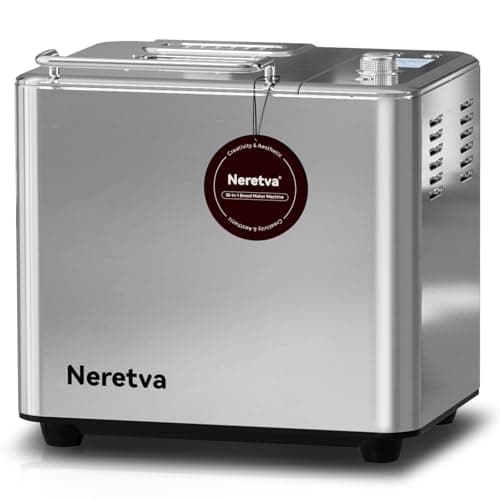
| Neretva 20-in-1 | Not published | Not published | Dual heater, position not stated | Not published | Not published |
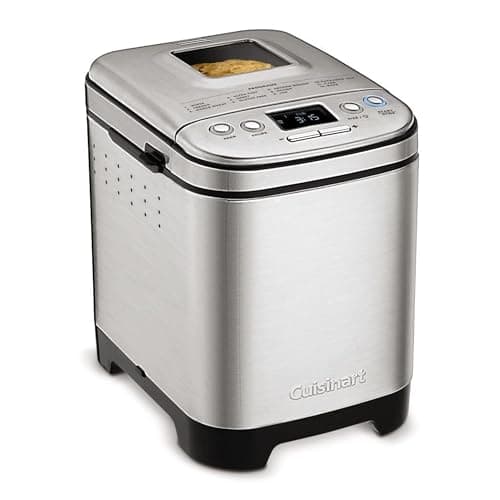
| Cuisinart 12-program | Not published | Single paddle | Not published | “Nonstick” only | Not published |
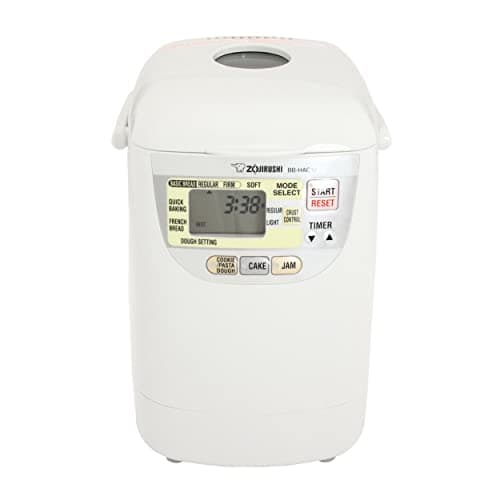
| Zojirushi BB-HAC10 | Not published | Not published | Not published | Not published | 450 W |
Read the last four columns together and the price of the Virtuoso stops looking arbitrary. You are not paying for programs — the cheap machine advertises more of them. You are paying for the two mechanical facts that change what comes out of the pan, and for a maker willing to print them.
Why your loaf has a hole in the bottom, and whether it matters
The kneading blade sits on a drive shaft in the base of the pan and stays there through the bake. When you turn the loaf out, the blade either comes with it — leaving a socket in the base of the bread — or stays in the pan and leaves the same hole. There is no machine that avoids this, and a two-blade machine leaves two smaller holes rather than one big one. It is a cosmetic cost on a sandwich loaf and a non-issue if you slice from the top. The only way to get a loaf with no hole at all is the dough course: let the machine knead and prove, then shape and bake in the oven.
The pan is the consumable, so ask whether you can buy another
Nothing else in this hub puts food against a coated surface for as long as a bread pan does — three to four hours, wet, at baking temperature, then scraped. Coatings do not survive that forever. The progression is the same one we document for air fryer baskets: it releases perfectly, then it does not quite, then dough tears off the corners, then it is flaking. On a bread machine the pan is a removable part, so a worn pan does not have to end the machine — but only if the maker still sells one. So run this check before you buy anything on this page: search the manufacturer's own parts store for a replacement pan for that exact model number. It takes two minutes, it is the single best predictor of how long the machine will last you, and it is the check that most often argues against the cheapest option on a list like this one.
Two habits roughly double a pan's life. Never cut bread inside the pan, and never use a metal utensil to lever a stuck loaf out — soak it in warm water for twenty minutes and it will come free on its own. The same reasoning as the dishwasher question on air fryer baskets applies to the pan, too: being dishwasher safe is a claim about the part surviving, not about the coating being unaffected.
Gluten-free is a course, not a setting
Gluten-free dough does not behave like wheat dough: there is no gluten network to develop, so a long knead does nothing useful, and there is only one rise. A real gluten-free course is a different timing profile, not a label on the same cycle. Three of the six machines here publish one: both Virtuoso Plus models and the Hamilton Beach. Neretva advertises twenty programs without publishing the list, and the published menus for the Zojirushi Mini and the Cuisinart do not include a gluten-free cycle. If gluten-free is why you are here, that is the one specification to confirm before you spend anything.
What a bread machine will not do
It will not make an open-crumb, blistered-crust artisan loaf. That needs steam, a hot surface and a shaped dough, and a bread machine has none of the three — which is why the dough course and your oven are the honest route to that bread. It will not knead a double batch; the pan size is the capacity, full stop. And it will not make bread you like on the first attempt, because flour absorbs moisture differently in different kitchens. The first three loaves are calibration. Machines with a custom-memory function, which on this page means the two Virtuoso Plus models, are the ones that let you keep what you learn.
Where this belongs in the kitchen
A bread machine is the second-largest thing in this hub after a full-size toaster oven, and the Virtuoso is 18 inches wide. If counter space is the constraint rather than money, the Mini is the only machine here that fits in a galley kitchen without displacing something — which is the same calculation we run in appliances for small kitchens. And if you bake on a schedule rather than on a whim, the delay timer on every machine here is the feature that puts it in the same category as the meal-prep appliances: you load it tonight and the bread is finished in the morning.
For contrast, the appliance at the other end of this hub's footprint scale is the one we ranked in the same week: an immersion blender costs a fraction of any machine on this page, stores in a drawer, and gets used more often for exactly that reason. If you are weighing one big purchase against several small ones, that is the comparison worth making.
The short version
If you want sandwich bread, only the Virtuoso Plus makes it, and the ceramic BB-PPC20 is the version to pick if the coating is your sticking point. If you are not sure the habit will stick, buy the Hamilton Beach, use the dough course, and spend the difference on better flour.