Count the functions on the box of any air fryer and you are counting marketing. A nine-in-one and a four-in-one usually have identical hardware: one element, one fan, one basket. What differs is how many time-and-temperature pairs the manufacturer chose to print on the panel. Set a four-in-one to 380°F for eighteen minutes and it will bake exactly as well as the nine-in-one’s Bake button.
So this roundup asks a narrower question than “which has the most presets.” It asks which presets encode something you could not easily do yourself. There are only four answers worth paying for, and we rank on them: a genuinely low temperature floor, which makes proofing and dehydrating possible rather than nominal; a finishing burst above the machine’s normal maximum; a shake or turn reminder, which changes results because people forget; and toast or bagel functions, which stage the elements rather than just picking a number.
Everything else — Frozen, Fries, Chicken, Steak — is a saved dial position with a picture next to it. Convenient, occasionally, and never a reason to choose one machine over another. If you want the underlying numbers instead of trusting anyone’s presets, they are in air fryer cooking times.
The four presets worth paying for
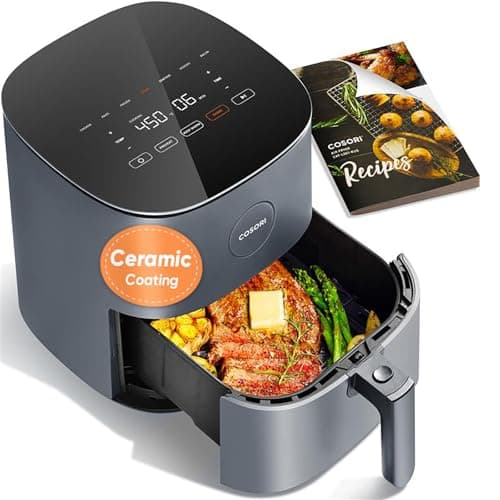
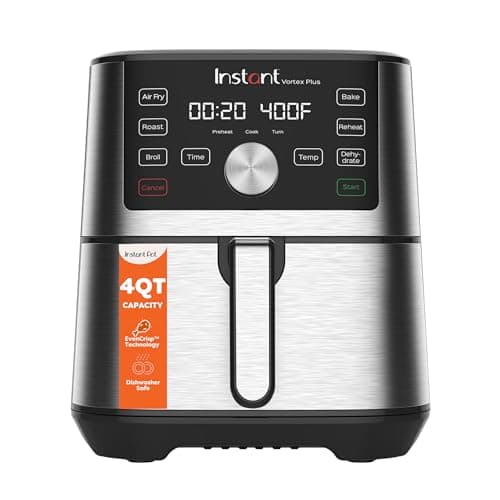
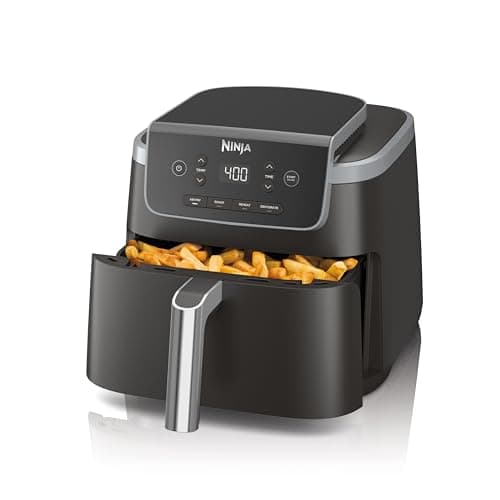
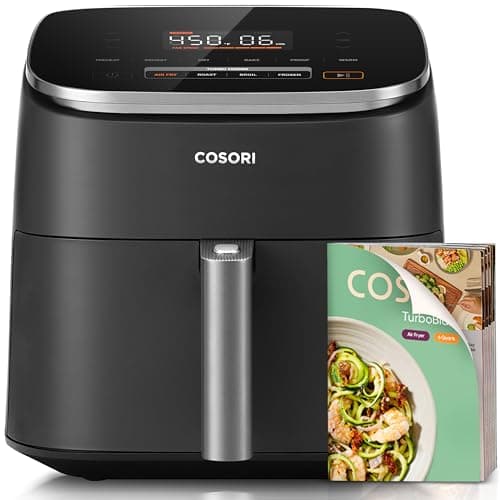
A low temperature floor. Anything below about 105°F makes proofing and dehydrating real. The Instant Vortex Plus Mini publishes 95°F, the Cosori Pro LE 90°F, and the Ninja AF101 105°F. Machines that start at 170 or 200°F are cooking-only, whatever the Dehydrate button implies. If drying is going to be a habit rather than an occasional tray of apple rings, the capacity limit arrives long before the temperature one — that is what the best food dehydrators are for.
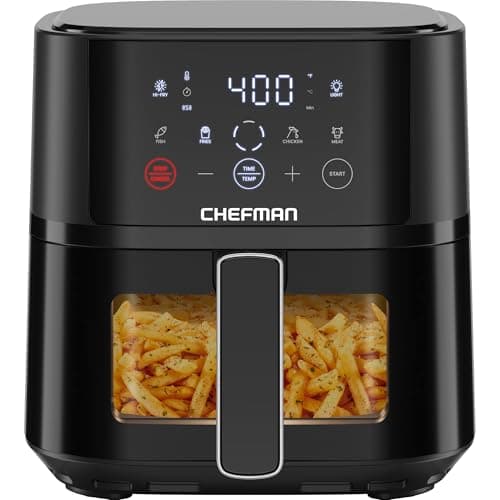
A finishing burst above the normal maximum. Chefman’s Hi-Fry goes to 450°F for the last two minutes on a machine that otherwise stops at 400°F. That is a preset with access to something the dial does not have, and it fixes the most common air-fryer disappointment — cooked-through but pale. The manual technique is in air fryer not crisping.
A shake or turn reminder. The single biggest determinant of even chips is whether the basket got shaken halfway. A machine that beeps at you beats a machine that assumes you remembered, and it is the reason the Cosori Pro LE ranks where it does here despite a modest spec sheet.
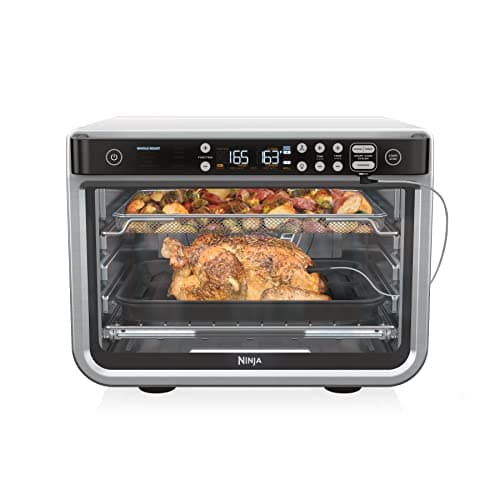
Element staging. Toast, Bagel and Pizza on an oven-style machine like the Ninja DT251 fire the top and bottom elements differently rather than choosing a number. That is real programming, and it is why oven-style machines are the only ones where a high function count means much.
The presets that are just numbers
Frozen, Fries, Chicken, Steak, Fish, Vegetables, Bake, Roast, Reheat, Keep Warm. Every one of these is a time and a temperature the machine has saved for you, and every one is a compromise across every version of that food — a preset for Chicken cannot know whether you have wings or a whole breast. Cook to a temperature rather than to a program, and use a thermometer for protein: the argument, and the chart, are in air fryer cooking times.
The exception is a probe. A machine with a temperature probe — the Typhur Sync, the Ninja SL451, the DT251 — turns a preset from a guess into a measurement, which is the one automation in this category that improves the food. The rest of the connected-machine question is in best smart air fryers.
How to test a preset claim before you buy
Look for the temperature range first. If the machine’s published low end is 170°F or higher, every low-temperature program on it is nominal. Then look for a fan-speed claim: a DC motor with selectable speeds means the machine can actually behave differently, and a single-speed AC motor means Dehydrate is Bake with a smaller number. Then ignore the function count entirely. It is the least informative number on the box, and the one printed largest.