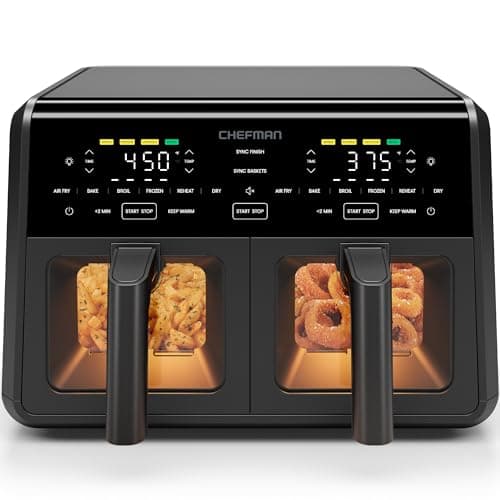
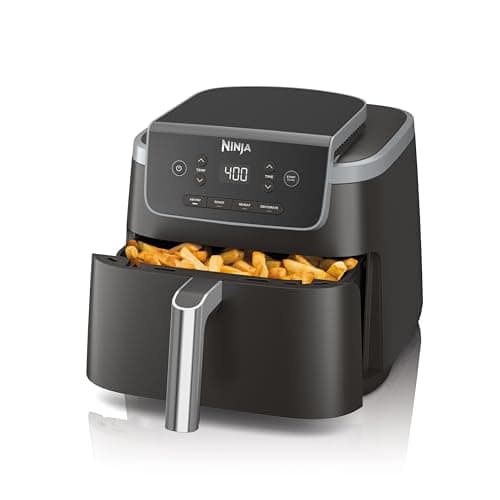
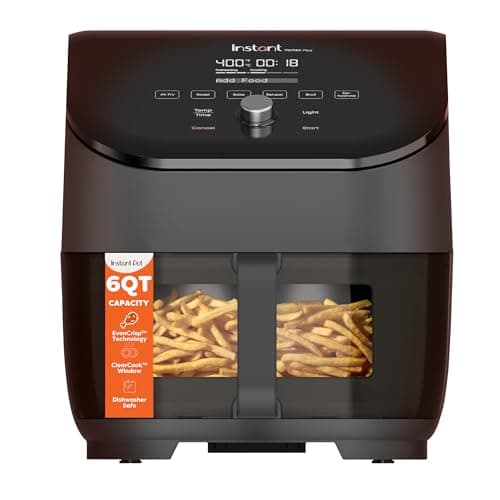
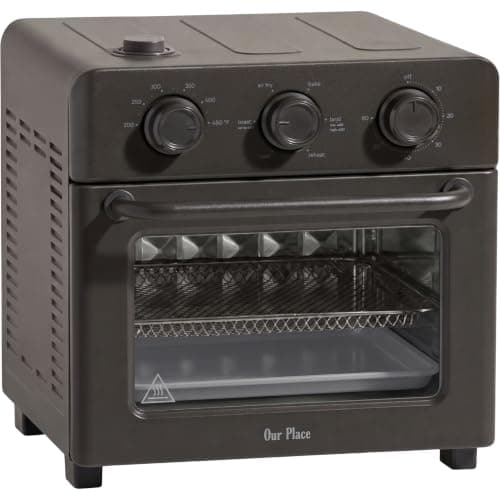
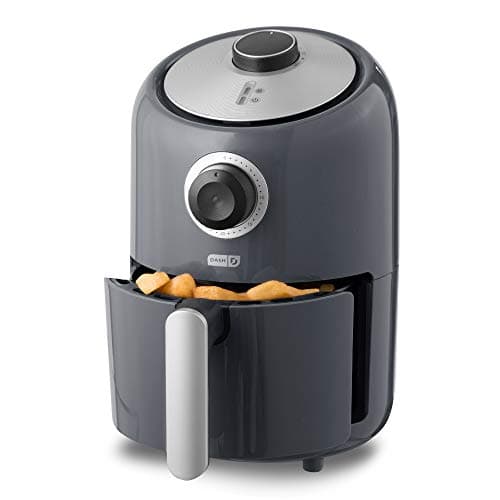
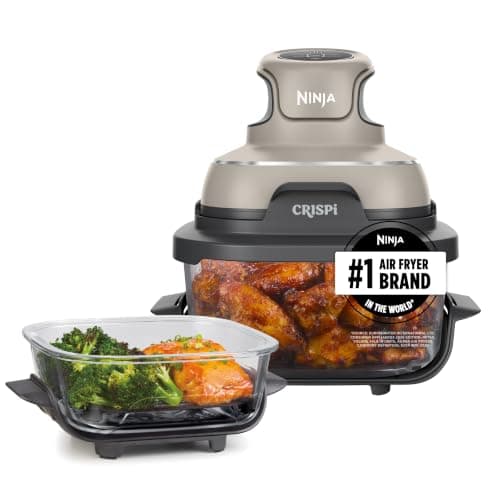
Buy the Ninja Crispi 4-in-1 Glass Air Fryer. If the coating is why you were looking at Cosori in the first place, the Crispi does not answer the question — it removes it. Food sits in glass containers inside a heated unit, so the food path is glass and stainless with no coating anywhere, and it reaches 450°F like the TurboBlaze does. It suits one to three people. The budget pick is the Dash Compact Air Fryer — the cheapest machine here that genuinely does the job, two dials and nothing to learn, for one person. If what you wanted was specifically the TurboBlaze's named PFAS-free ceramic, the Chefman TurboFry 9 Qt Dual Basket at number two is the only other machine in this registry that names the same material — and unlike the TurboBlaze, it publishes a wattage.
What Cosori is actually known for
A page like this is worthless if it is not fair about the original, so here is the honest version. Cosori's advantage in this category is not a feature, it is disclosure, and there are four parts to it.
- It names the coating. Cosori publishes “PFAS-free ceramic” on the TurboBlaze, the Iconic and the TWINFRY. Most makers publish the word “nonstick”, which is not a material. That difference is the whole reason people shop this brand, and it is a real difference.
- It publishes a temperature floor. Everyone prints a ceiling; hardly anyone prints the bottom of the range. A published 90°F floor is what makes proving dough and dehydrating genuinely available rather than a label on a button.
- It publishes wattages on some models. 1,500 W on the Pro LE and 1,725 W on the Iconic, which makes their running cost arithmetic rather than an estimate — 300 and 265 watts per quart respectively.
- The TurboBlaze is the quietest machine we have ranked, and it is the only one in that range with fan-speed control. Cosori also publishes a five-year warranty on the Iconic, against the one-year category standard.
The honest reasons people look elsewhere are just as specific: the TurboBlaze does not publish a wattage, so its running cost cannot be checked; ceramic coatings are generally considered shorter-lived than PTFE under hard use; and the brand charges more than Ninja or Chefman for similar frying. Each pick below answers one of those, or beats Cosori on a stated specification. Where a pick is cheaper we say by what and what it costs you. We have not lab-tested any of these — how we review sets out what we did instead. If you have not ruled Cosori out yet, the Cosori lineup ranks the brand's own six machines, and Ninja versus Cosori settles it at brand level.
Matched to the Cosori you were looking at
Cosori's range is not uniform, so “a Cosori alternative” means different machines depending on which one was in your basket. Each row names the swap and what it costs you, because a recommendation without a cost is a sales pitch.
| If you were buying | Consider instead | What changes |
|---|
| TurboBlaze 6 Qt (ceramic) | Ninja Crispi | No coating at all rather than a named one, same 450°F ceiling. Loses roughly two quarts of working space. |
| TurboBlaze 6 Qt (ceramic) | Chefman TurboFry 9 Qt Dual | Same PFAS-free ceramic claim, plus a published 1,750 W and two zones. Loses the single large basket and the published 90°F floor. |
| Pro Gen 2 5.8 Qt (value) | Ninja AF141 | Cheaper, with a published wattage and faster recovery. Loses 0.8 quarts and 50°F of ceiling. |
| Any 6 qt Cosori | Instant Vortex Plus ClearCook | A window and interior light at the same size. Loses the named coating. |
| Iconic 6.5 Qt (stainless) | Our Place Wonder Oven | Stainless and PTFE-free in an oven format with steam. Loses the basket geometry and the published five-year warranty. |
| Lite 4.0 Qt (smallest) | Dash Compact Air Fryer | About a third of the price. Loses the app, the presets and two quarts. |
The two things none of these match
First, the published temperature floor. Not one alternative on this page publishes one. Cosori prints 90°F on the TurboBlaze, the Pro LE and the Iconic, and that single number is what turns a one-job appliance into a three-job one — proving dough and dehydrating are either documented or they are a button with a word on it. If you actually use those settings, that is a real reason to stay, and air fryer versus dehydrator explains why the floor is the specification that decides it.
Second, the published five-year warranty on the Iconic. A warranty is the only forward-looking number a maker will put in writing, and five years against the category's one is the manufacturer pricing its own failure rate. Nothing here comes close. Set against that, how long air fryers last and why baskets peel are the two pages that decide whether a longer warranty is worth the premium for how you cook.
What a Cosori alternative costs you on running cost
Almost nothing, and it is worth saying so plainly because “efficiency” gets used to sell air fryers. Of the six picks here, only the Chefman dual and the Ninja AF141 publish a wattage — 1,750 W each — so those are the only two we will quote. At the U.S. average residential rate, a twenty-minute cook on either is roughly 8 to 10 cents. Across a year of cooking four times a week, the gap between the thriftiest and the thirstiest air fryer we rank anywhere on this site is about three dollars. Put your own tariff into the running-cost calculator if you pay more than average, and then let the coating, the capacity and the format decide, because they are the things that actually differ.
For the other four picks the makers publish no wattage we can cite, so we quote no running cost for them rather than estimating one. The rating plate on the underside of each machine carries the real figure once it arrives.
How we picked
We did not lab-test this gear
Everyone in this category says they tested twenty air fryers. We have not lab-tested any of these, and we say so. What we did instead: compiled the published specifications — wattage, capacity, materials — worked out what each machine actually costs to run at the national electricity rate, read the manuals and owner reviews, and scored each one against a published rubric. The scores are judgments from documented research — not measurements we took, because we do not have a lab and we will not pretend we do. Where a number came from someone else's work, we name them in Sources.