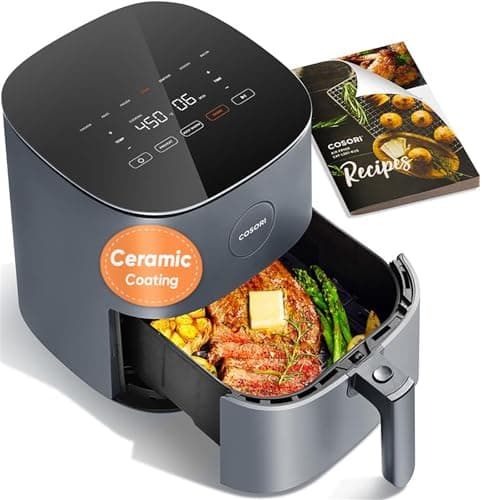
Buy the Cosori Pro LE 5 Qt.It publishes the full 90°F to 450°F range that machines at twice its price publish, it publishes its wattage so you can check what it costs you, and it does both in the lower half of this category's price range. If you need more basket than five quarts, skip to the Chefman 8 Qt at number two. If you would rather spend once and keep it, the Cosori Iconic at number four is the only pick here with a published five-year warranty.
That is the shopping answer. The more useful answer is that “price-to-performance” is not one ratio, and the reason people search for it and come away confused is that its two halves pull in opposite directions. So before the picks, here is what we ranked on and what each figure actually buys.
The three published numbers that decide value
- Watts per quart.Divide the published wattage by the published capacity and you get the only available proxy for how fast a machine recovers its heat after you open it. Across our six picks that figure runs from 265 W/qt to 387.5 W/qt — the top of that range is 46 percent above the bottom. It is also the figure that decides your electricity, which is why it cuts both ways: more watts per quart is a faster recovery and a dearer cook, fewer is a cheaper cook and a slower one. There is no setting of this dial that is simply “better value”; there is only the one that matches how you cook. We introduced this method on the frozen-food roundup, where recovery is the whole game.
- The published temperature range — both ends.Everyone prints the ceiling. Hardly anyone prints the floor, and the floor is what decides whether a machine can hold 90°F to prove dough or dehydrate, or whether its lowest setting is 200°F and those jobs are off the table. Three picks here publish a 90°F floor. One publishes 105°F. Two publish no floor at all. A machine that does three jobs for the price of one is better value than a machine that does one job cheaply, and this is the spec that tells you which you are looking at.
- Published warranty years. The most boring value number in the category and the one that moves five-year arithmetic the most. Our picks run from the one-year standard to a published five years. A machine that costs half as much and is replaced twice as often is not cheaper.
The number that turns out not to matter: electricity
This site publishes running cost on every page, so it would be convenient for us if electricity separated these machines. It does not, and the arithmetic is short enough to check. Using the cited U.S. average residential rate of 17¢/kWh and a 20-minute cook, the thriftiest pick here — the 1,500-watt Cosori Pro LE — costs about 9¢ a cook. The thirstiest — the 1,750-watt Ninja AF141 — costs about 10¢. Run either of them four times a week for a year and the gap is roughly three dollars. Over five years it is about fifteen.
So anyone ranking air fryers by energy efficiency is sorting on a three-dollar axis. The reason to care about wattage is recovery speed, and the reason to care about a publishedwattage is that it makes the maker checkable — not because one machine will quietly cost you money. The full method, with a calculator you can put your own rate into, is on how much an air fryer costs to run.
Two neighboring pages do different jobs on purpose. If your constraint is the sticker price and you want to know which corner each cheap machine cut, that is the budget roundup. If you are still deciding whether to spend more at all, cheap versus expensive air fryers answers that as a yes or no. This page assumes you have a bracket in mind and want the most capability inside it. Whichever you choose, check the deals page before you buy, because every ranking below is about what a machine publishes, not about who is cheapest this morning.
The short answer
Quick picks
| # | Product | Best for | Score | Price |
|---|
| 01 | Cosori Pro LE 5 Qt (Ceramic)The best price-to-performance air fryer on the market right now, because it is the cheapest machine here that gives up nothing measurable. Cosori publishes 1,500 watts, 5 quarts, a full 90°F to 450°F range and a ceramic coating — the same four facts the most expensive pick on this page publishes, at a fraction of the outlay. Nothing it lacks is a cooking specification. | Best value overall | | $89.95·Amazon |
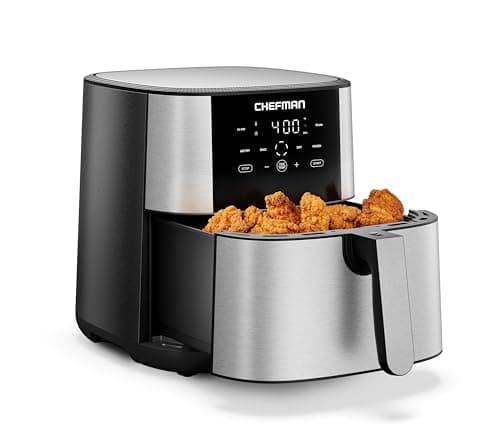
| 02 | Chefman TurboFry 8 QtThe most capacity per dollar in the category, and the pick for anyone whose value question is really a size question. Eight quarts with a 450°F Hi-Fry setting, a dishwasher-safe basket and a stainless exterior, in a bracket where five quarts is normal. The honest catch is that Chefman publishes no wattage, so its running cost cannot be checked — only estimated. | Most quarts per dollar | | $79.93·Amazon |
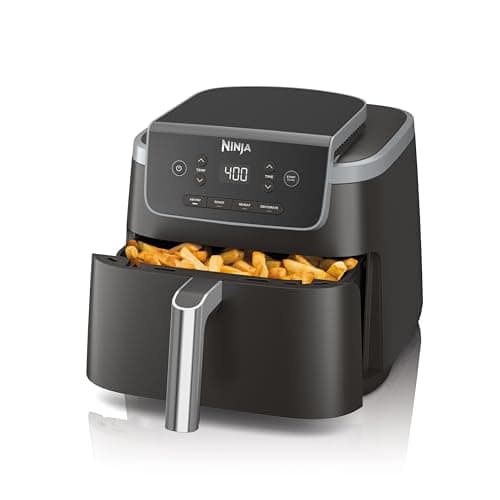
| 03 | Ninja Air Fryer Pro 4-in-1 (AF141)The pick where the brand premium is smallest, and the one to buy if recovery speed is what you want from the money. At 1,750 watts across 5 quarts it is 350 W/qt — the second-highest figure here — which is why it comes back up to temperature quickly after you open it. What you pay for is that element and the controls; what you do not get is a 450°F ceiling. | Recovery per dollar | | $129.99·Amazon |
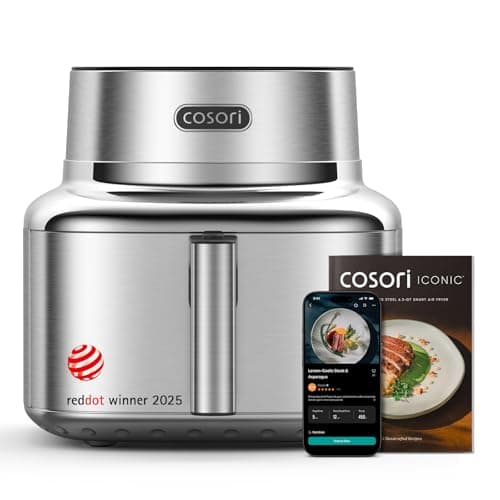
| 04 | Cosori Iconic 6.5 Qt Stainless SteelThe buy-it-once pick, and the only one here whose value argument is a warranty. Cosori publishes five years on this machine against the one-year standard everywhere else in the category. It is also the most efficient per quart of anything we rank — 1,725 watts across 6.5 quarts is 265 W/qt — and the only pick with a stainless shell and a PFAS-free ceramic basket together. | Lowest five-year cost | | $249.00·Amazon |
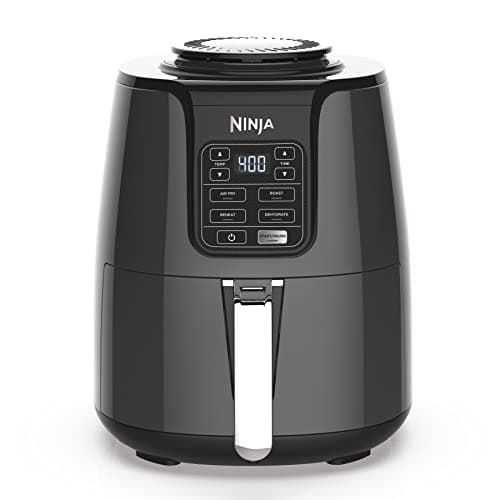
| 05 | Ninja Air Fryer 4 Qt (AF101)The best value at the small end, and the clearest illustration of why watts per quart is not a scoreboard. At 1,550 watts across 4 quarts it is 387.5 W/qt — the highest figure on this page — which makes it the quickest to recover and the most expensive per quart to heat. For one or two people that trade is the right way round. | Best value for one or two | | $119.99·Amazon |
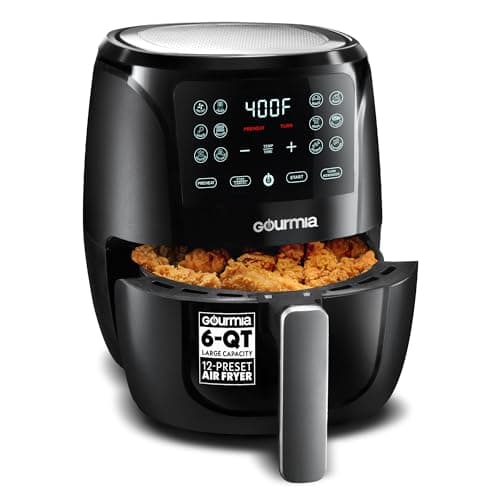
| 06 | Gourmia 6 Qt Digital Air FryerThe cheapest honest route to six quarts, and the pick that shows what the bottom of the market really charges you. Gourmia publishes a 90°F floor — which two machines here costing considerably more do not — and then publishes no wattage at all, so you cannot check what it costs to run or how quickly it recovers. Twelve presets are not compensation for that. | Cheapest 6 qt | | $69.99·Amazon |
#ad · Live prices from the Amazon Product API, as of October 18, 2026. Where we have no verified live price, we show none — a gap beats a number that has rotted.
In detail
The picks, in full
Best value overall
Cosori Pro LE 5 Qt (Ceramic)
5 qt basket1,500 W90°–450°FCeramic coating
The best price-to-performance air fryer on the market right now, because it is the cheapest machine here that gives up nothing measurable. Cosori publishes 1,500 watts, 5 quarts, a full 90°F to 450°F range and a ceramic coating — the same four facts the most expensive pick on this page publishes, at a fraction of the outlay. Nothing it lacks is a cooking specification.
- Specs per dollar
- 9
- Temp range
- 9
- Recovery
- 7
- Materials
- 8
- Longevity
- 7
Pros
- +300 watts per quart — mid-pack recovery with the lowest running cost on this page
- +Publishes a 90°F floor, so proving and dehydrating are genuinely available
- +Genuine 450°F ceiling, which two pricier machines here do not reach
- +Ceramic food-contact surface rather than PTFE, at a price where PTFE is the norm
- +Publishes its wattage, so you can check its running cost instead of trusting ours
Cons
- −Ceramic coatings are generally considered shorter-lived than PTFE under hard use
- −Five quarts is a two-to-four-person basket, not a family-of-five basket
- −Plastic body and a glass touch panel — it looks its price
- −Only the standard warranty, where our number-four pick publishes five years
Don't buy this if…
…you cook for more than four people. No amount of value per dollar survives running the machine twice for one dinner — size up to the Chefman below instead.
We review this one in full here. The value case is a subtraction exercise: list what the most expensive machine on this page publishes, then cross off everything the Pro LE also publishes. The 450°F ceiling comes off. The 90°F floor comes off. The ceramic food-contact surface comes off. A printed wattage comes off. What is left on the expensive machine is a stainless shell, a five-year warranty, a quieter motor and a quart and a half. Those are real things — they are just not cooking things, and that distinction is this whole page.
At 1,500 watts it is also the cheapest machine here to run, which is worth exactly the three dollars a year the arithmetic above gives it. We mention it only because the figure is published: a maker that prints the number is a maker you can check.
Most quarts per dollar
Chefman TurboFry 8 Qt
8 qt basket450°F Hi-FryDishwasher-safe basketStainless exterior
The most capacity per dollar in the category, and the pick for anyone whose value question is really a size question. Eight quarts with a 450°F Hi-Fry setting, a dishwasher-safe basket and a stainless exterior, in a bracket where five quarts is normal. The honest catch is that Chefman publishes no wattage, so its running cost cannot be checked — only estimated.
- Specs per dollar
- 9
- Temp range
- 7
- Recovery
- 6
- Materials
- 6
- Longevity
- 7
Pros
- +Eight quarts at a price most makers charge for five — the biggest single value gap here
- +450°F Hi-Fry option, so the ceiling is not what you trade for the capacity
- +Stainless exterior rather than painted plastic, which is the part of an air fryer that ages first
- +One basket rather than two, so the capacity does not double the washing up
Cons
- −Chefman publishes no wattage, so we will not quote a running cost for it
- −Nonstick PTFE basket, with no ceramic or uncoated option in the line
- −A deep eight-quart bucket steams what a wider, shallower basket crisps
- −Big single baskets take longer to come back up to temperature after loading
Don't buy this if…
…you cook for one or two. An eight-quart basket that is a quarter full is the slowest way to make dinner, and the Ninja AF101 at number five is the pick at that end.
The full review is here. On a value page this one needs its missing number stated plainly rather than filled in: Chefman does not print a wattage for this model, so the watts-per-quart figure that ranks everything else here cannot be calculated for it, and we are not going to invent one. Large baskets generally sit at the upper end of the usual 1,400 to 1,800 watt band, which is a range and not a fact. If a checkable running cost matters to you, that absence counts against an otherwise excellent buy — and the rating plate on the underside of the machine carries the real figure once it arrives.
Recovery per dollar
Ninja Air Fryer Pro 4-in-1 (AF141)
5 qt basket1,750 W400°F max4-in-1, dishwasher-safe
The pick where the brand premium is smallest, and the one to buy if recovery speed is what you want from the money. At 1,750 watts across 5 quarts it is 350 W/qt — the second-highest figure here — which is why it comes back up to temperature quickly after you open it. What you pay for is that element and the controls; what you do not get is a 450°F ceiling.
- Specs per dollar
- 7
- Temp range
- 6
- Recovery
- 9
- Materials
- 6
- Longevity
- 8
Pros
- +350 watts per quart — fast recovery, which is what the extra wattage actually buys
- +Printed wattage makes the running-cost arithmetic checkable rather than estimated
- +Controls that are hard to misread, which is why it also wins our beginner roundup
- +The most widely stocked machine here, so replacement baskets are easy to find
Cons
- −400°F ceiling, where the cheaper Cosori Pro LE publishes 450°F
- −No published temperature floor below 105°F anywhere in this model line
- −PTFE nonstick basket at a price where ceramic exists
- −Roughly a dollar a year more electricity than the Pro LE — real, and trivial
Don't buy this if…
…you want the highest ceiling for the money. The 50 degrees between 400 and 450 is the clearest thing this machine gives up to its cheaper rival, and if you cook wings or fries often it shows.
Our full AF141 review explains why this is the machine we put at the top of the main roundupand only third here. The two rankings are not in conflict: the best air fryer and the best value air fryer are different questions, and the AF141 wins the first on recovery and control layout while losing the second on a ceiling 50 degrees lower than a cheaper machine's. If you are weighing it against its own smaller sibling, AF141 versus AF101 settles the one quart and 200 watts between them.
Lowest five-year cost
Cosori Iconic 6.5 Qt Stainless Steel
6.5 qt / 6.2 L1,725 W90°–450°F5-year warranty
The buy-it-once pick, and the only one here whose value argument is a warranty. Cosori publishes five years on this machine against the one-year standard everywhere else in the category. It is also the most efficient per quart of anything we rank — 1,725 watts across 6.5 quarts is 265 W/qt — and the only pick with a stainless shell and a PFAS-free ceramic basket together.
- Specs per dollar
- 6
- Temp range
- 9
- Recovery
- 8
- Materials
- 9
- Longevity
- 10
Pros
- +Published five-year warranty — five times the category standard, and the real value case
- +265 watts per quart, the lowest figure here, so the biggest basket is also the cheapest per quart to heat
- +Full 90°F to 450°F range, so proving, dehydrating and hard searing are all available
- +Stainless exterior and PFAS-free ceramic interior — the two surfaces that age worst, both solved
Cons
- −By far the highest outlay here; the five-year case only works if you keep it five years
- −Stainless shows every fingerprint — it wipes clean, but it asks to be wiped
- −At 1,725 watts it draws about 14 amps, so it wants an outlet without a kettle on it
- −Ceramic is easier to clean than PTFE and no more scratch-resistant
Don't buy this if…
…you replace appliances every couple of years anyway, or you are not yet sure an air fryer will stick in your kitchen. The entire premium here is a bet on year three onward.
The full review is here, and it is also our easiest air fryer to clean. On a value page the interesting thing about it is the warranty, because a warranty is the only forward-looking number a maker will put in writing. Five years against one is not a marketing flourish; it is the manufacturer pricing its own failure rate, and it is the single most informative spec on this page. The arithmetic only works if you keep the machine — which is exactly the condition we would attach to it.
Best value for one or two
Ninja Air Fryer 4 Qt (AF101)
4 qt basket1,550 W105°–400°F4-in-1, dishwasher-safe
The best value at the small end, and the clearest illustration of why watts per quart is not a scoreboard. At 1,550 watts across 4 quarts it is 387.5 W/qt — the highest figure on this page — which makes it the quickest to recover and the most expensive per quart to heat. For one or two people that trade is the right way round.
- Specs per dollar
- 7
- Temp range
- 7
- Recovery
- 9
- Materials
- 6
- Longevity
- 8
Pros
- +387.5 watts per quart, the fastest recovery here, in the smallest basket here
- +A genuine 105°F floor, so it really does dehydrate rather than claiming to
- +Printed wattage, so the running cost is arithmetic rather than a guess
- +The cheapest route into a brand whose replacement parts you can still buy in five years
Cons
- −Four quarts is a hard ceiling on who it suits — two people, at most three
- −400°F maximum, the same limitation as its larger sibling
- −Highest cost per quart to heat of anything we rank, though the absolute figure is still cents
- −PTFE nonstick basket
Don't buy this if…
…there are three or more of you. Batch cooking is how an air fryer ends up in a cupboard, and the quarts-per-dollar math on a machine you stop using is infinite.
The AF101 review covers it in full, and the small air fryer roundup has the alternatives at this size. It earns a place on a value page for a slightly contrarian reason: it posts the worst number on our headline metric and is still the right buy for a one-or-two-person kitchen, because 387.5 watts per quart in a four-quart basket means it is back at temperature almost immediately. Watts per quart tells you what kind of machine you are buying. It does not tell you which kind you need.
Cheapest 6 qt
Gourmia 6 Qt Digital Air Fryer
6 qt basket90°–400°F12 presetsDishwasher-safe basket and tray
The cheapest honest route to six quarts, and the pick that shows what the bottom of the market really charges you. Gourmia publishes a 90°F floor — which two machines here costing considerably more do not — and then publishes no wattage at all, so you cannot check what it costs to run or how quickly it recovers. Twelve presets are not compensation for that.
- Specs per dollar
- 8
- Temp range
- 6
- Recovery
- 5
- Materials
- 5
- Longevity
- 5
Pros
- +Six quarts at the lowest outlay here — genuine family-sized capacity on a small budget
- +Publishes a 90°F floor, so low-temperature work is actually on the menu
- +Basket and crisper tray are both dishwasher-safe, which is one cleaning job and not two
- +Nothing about it is pretending to be a premium machine
Cons
- −No published wattage, so recovery speed and running cost are both unknowable
- −400°F ceiling — the capacity is cheap, the top end is not there
- −Twelve presets are saved dial positions, not programs that change the cooking
- −Plainest build and shortest warranty on this page
Don't buy this if…
…you want to be able to check the maker's claims. This ranking rewards published specifications, and this is the one pick whose central number is simply absent.
Our Gourmia review is blunt about the preset question, and the presets roundup separates the four programmed functions worth paying for from the nine saved dial positions printed on a box. On value specifically, this machine is the test case for the whole page: it is cheap, it is six quarts, and the thing it withholds is information. That is a real cost, and it is why a 1,500-watt machine that prints its figure ranks above a machine that prints nothing.
The watts-per-quart table, in full
Four of our six picks publish both a wattage and a capacity, so their power per quart is arithmetic. Two publish a capacity only. That split is the most useful thing on this page.
| Machine | Published watts | Quarts | Watts per quart | Cost per 20-min cook |
|---|
| Cosori Iconic 6.5 Qt | 1,725 W | 6.5 | 265 | About 10¢ |
| Cosori Pro LE 5 Qt | 1,500 W | 5 | 300 | About 9¢ |
| Ninja AF141 5 Qt | 1,750 W | 5 | 350 | About 10¢ |
| Ninja AF101 4 Qt | 1,550 W | 4 | 387.5 | About 9¢ |
| Chefman TurboFry 8 Qt | Not published | 8 | Cannot be calculated | Not quoted |
| Gourmia 6 Qt | Not published | 6 | Cannot be calculated | Not quoted |
Read the fourth column as a description rather than a score. The Cosori Iconic at 265 W/qt is the cheapest basket here to bring up to temperature; the Ninja AF101 at 387.5 W/qt is the quickest to get back there after you open it. Both are defensible ways to spend money. What is not defensible is a maker declining to publish the figure at all, which is why the last two rows read the way they do. The final column uses the method on our running-cost pageat the cited 17¢/kWh national average; put your own rate in and the ordering does not change.
What each price bracket actually buys
Prices move, so these are brackets rather than numbers — check the live figure on any pick above before you decide.
- The bottom bracketbuys capacity and a digital panel, and withholds information. You get the quarts. You do not get a published wattage, a long warranty or a 450°F ceiling. The Gourmia is the honest version of this bracket; plenty of machines in it are not.
- The lower-middle bracketis where the value is, and it is the only bracket where that is true. The Cosori Pro LE sits here with a published wattage, a full 90°F to 450°F range and a ceramic coating. Nothing above it publishes a cooking specification the Pro LE lacks.
- The upper-middle bracket buys recovery speed and control layout. The AF141 is the clean example: 350 watts per quart and a panel that is hard to misread. That is a real improvement in how a machine feels to use, and it is not a wider range of jobs.
- The top bracketbuys durability and materials — stainless, ceramic, a quieter motor and, in the Cosori Iconic's case, a published five-year warranty. This bracket is only good value on a long time horizon, and it is honest about that.
The four upgrades that cost money and change nothing
Every one of these is sold as a reason to move up a bracket. None of them changes what comes out of the basket.
- Preset count.Nine presets, twelve presets, seventeen presets — these are saved time-and-temperature pairs. Four kinds of preset do encode something real, and we name them; a count on a box is not one of them.
- App connectivity.A recipe library on your phone is a recipe library. The one piece of connectivity that changes food is a wireless temperature probe, which is a different feature at a higher price — the smart roundup separates the two.
- Screen quality. A crisper display is pleasant. It is not a cooking specification, and on several machines it is the entire difference between two model numbers.
- Function count.“9-in-1” and “4-in-1” frequently describe identical hardware with different labels on the panel. Air fry, roast, bake, reheat and dehydrate are a fan and an element at various temperatures. Read the published temperature range instead; that tells you which of those the machine can actually do.
The three upgrades that are worth money
- A lower published floor.90°F versus 200°F is the difference between a machine that proves dough and dehydrates and one that does not. It is the most under-advertised capability in the category.
- A higher published ceiling.450°F versus 400°F changes wings, fries and anything you want colored rather than merely cooked. It is also the one spec where our cheapest good pick beats the category favorite.
- A longer published warranty. One year is the standard. Five years is a maker putting its own reliability estimate in writing, and over a five-year horizon it moves total cost more than any feature on this page.
How to do this yourself on any machine
The method is four lookups and one division, and it works on any air fryer in any store:
- Find the published wattage. If there is not one, that is your first answer.
- Divide it by the published quarts. Under 300 is a thrifty, slower-recovering machine; over 350 is a thirstier, faster one.
- Find both ends of the temperature range. A missing floor means the low-temperature functions printed on the panel are decorative.
- Find the warranty in years, then multiply the sticker price by the number of times you expect to buy the machine over the next decade. That is the real price.
Everything else — presets, apps, screens, the number before “-in-1” — is marketing copy with a price attached. And if you have not settled on a size yet, which is where this should start, what size air fryer you need is the page to read before any of this arithmetic matters.
How we picked
We did not lab-test this gear
Everyone in this category says they tested twenty air fryers. We have not lab-tested any of these, and we say so. What we did instead: compiled the published specifications — wattage, capacity, materials — worked out what each machine actually costs to run at the national electricity rate, read the manuals and owner reviews, and scored each one against a published rubric. The scores are judgments from documented research — not measurements we took, because we do not have a lab and we will not pretend we do. Where a number came from someone else's work, we name them in Sources.
Questions
Frequently asked
What is the best value air fryer?+
The Cosori Pro LE 5 Qt. It publishes the same four cooking specifications as the most expensive machine we rank - 1,500 watts, 5 quarts, a 90°F to 450°F range and a ceramic food-contact surface - in the lower half of the category's price range. What it lacks next to pricier machines is a stainless shell, a longer warranty and a quieter motor, none of which is a cooking specification.
How do you find the air fryer with the best price-to-performance ratio?+
Divide the published wattage by the published capacity to get watts per quart, then check both ends of the published temperature range and the warranty length in years. Those three figures separate machines; preset counts, app support and screen quality do not. If a maker does not publish a wattage you cannot calculate the ratio at all - and that absence is itself a reason to look elsewhere.
Are expensive air fryers cheaper to run?+
Barely. Across our six picks the published wattages run from 1,500 to 1,750, which at the cited 17¢/kWh U.S. average works out to about 9¢ versus 10¢ for a 20-minute cook. Four cooks a week for a year puts roughly three dollars between the thriftiest and the thirstiest machine here. Energy efficiency is not where the value difference in this category lives.
Is watts per quart a measure of efficiency?+
No, and treating it as one is the usual mistake. A higher watts-per-quart figure means the machine recovers its heat faster after you open it and costs marginally more per cook; a lower figure means the opposite. Our most expensive pick has the lowest figure on the page and our cheapest Ninja has the highest. It describes what kind of machine you are buying, not how good it is.
Does a longer warranty actually make an air fryer better value?+
It is the strongest value signal a maker will put in writing, because a warranty is the manufacturer pricing its own failure rate. One year is the category standard; the Cosori Iconic publishes five. Over a five-year horizon that difference moves the total cost of ownership more than any feature on the spec sheet - provided you actually keep the machine that long.
Should I just buy the cheapest air fryer that fits my kitchen?+
Only if it publishes a wattage and a full temperature range. The cheapest machines are usually fine cookers, and our budget roundup ranks them by which corner each one cut. What the bottom of the market reliably withholds is information - and a machine whose running cost and recovery speed cannot be checked is a machine you are buying on trust.
Receipts
Sources
We do not run a testing lab, and we do not pretend to. Where a measured number came from someone else's work, we name them and link them. Where we could not verify something, we say so on the page rather than quietly leaving it out. Read our full method.