Skip to content
Preheat Club

Beyond air fryers · Kitchen Appliances

Crock-Pot alternatives: what to buy instead of a slow cooker

A Crock-Pot does one thing extremely well for very little money, so an alternative has to earn its place on a different axis. Five picks ranked on slow-cook fidelity, pot material and the jobs they retire.

By Stephen V.Updated How we review
#ad

We earn a commission when you buy through our Amazon links, at no extra cost to you. It never changes a verdict, and we say so when the cheaper product is the better buy. How this works.

Buy the Ninja PossibleCooker PRO 8.5 Qt. It is the alternative that keeps what a Crock-Pot is for and adds the one step a Crock-Pot cannot do: you brown the meat in the same vessel you then slow cook in, so the flavor you usually leave in a skillet stays in the pot. At 8.5 quarts it is genuinely large-batch, the insert is oven-safe, and it goes from hob to oven to table. It suits a household that slow cooks weekly and resents washing a second pan. The budget pick is the Cosori Pressure Cooker 6 Qt: the cheapest capable machine here, with a ceramic-coated pot that releases a sauté cleanly instead of welding it on. If the reason you are replacing a Crock-Pot is that you keep forgetting to start it at breakfast, the Instant Pot Duo 6 Qt is the answer — it slow cooks, and it also pressure cooks the same braise in a fraction of the time when the morning got away from you.

First, what the original is actually good at, because this page is not a case against it. A Crock-Pot is the most reliable appliance in this part of the kitchen: a dial, a stoneware crock heated through its walls, and decades of sold machines behind it. The manual models have almost nothing in them to fail, the programmable Cook & Carry models add a timer that shifts to warm and a lid that genuinely locks for transport, and the whole line costs a fraction of everything on this page. Our slow cooker roundup ranks those machines on their own terms and recommends them without reservation for what they do. If what you want is eight hours of unattended low heat for the lowest possible outlay, buy a Crock-Pot and stop reading.

So why look for an alternative at all?

Four real reasons, and this page is organized around them.

  • The second pan. Browning meat and softening onions happens in a skillet, and then you wash the skillet. Every alternative here sears in the same vessel.
  • The forgotten start. A slow cooker needs eight hours you decided on at breakfast. A pressure cooker gives you the same braise at 6pm.
  • The crock itself. Stoneware is heavy, it chips, and it is the part that ends a Crock-Pot's life. The alternatives use bare stainless, a ceramic coating or aluminum, and those are genuinely different propositions — we name which is which on every pick.
  • Counter space arithmetic. If a machine can slow cook, pressure cook, sauté, steam and cook rice, it retires two or three other appliances. That is the strongest argument against single-function gear, and it is the one the small-kitchen roundup makes in general.

What we rank these on

  • Slow-cook fidelity. The most important column and the one the category glosses over. A dedicated slow cooker heats through the walls of the crock; most electric multi-cookers heat from a plate underneath, with an unsealed lid for slow cooking, and aggregated owner reports consistently describe their low setting as running cooler than a Crock-Pot's. We rank the purpose-built machines above the ones with a slow-cook preset, and we say so rather than pretending a preset is a mechanism.
  • Inner pot material, as published. Bare stainless has nothing on it to wear through. A ceramic coating releases food better and is a wear item. Aluminum heats faster and more evenly and is a material some buyers specifically do not want against a long acidic braise. All three appear on this page.
  • Jobs retired. Counted honestly: a function that changes how the machine cooks counts, a saved preset does not. “14-in-1” is marketing arithmetic everywhere in this category, including on our top pick.
  • Capacity against the fill rule. A slow cooker should be filled between a half and two thirds, so a 6-quart pot has a working window of 3 to 4 quarts. What size slow cooker do I need does that arithmetic properly — it is why a too-big machine is a cooking problem and not just wasted counter.

We have not lab-tested these machines. Specifications are each maker's published figures, qualitative behavior comes from aggregated owner reports and manuals, and how we review says so in those words. Prices come from the live price layer with the date they were checked, and availability was verified through the price pipeline before anything was featured.

The short answer

Quick picks

#ProductBest forScorePrice
01
Ninja Ninja PossibleCooker PRO 14-in-1, 8.5 Qt (MC1001)
Ninja PossibleCooker PRO 14-in-1, 8.5 Qt (MC1001)

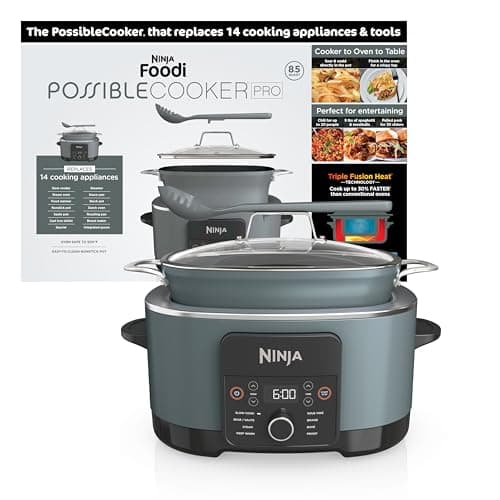
The best Crock-Pot alternative, because it is the only machine here designed around slow cooking rather than around pressure. You sear in the pot and then slow cook in the same pot, which is the biggest available flavor win in this category, and 8.5 quarts is a genuine large-batch capacity. The insert is oven-safe, so it finishes under a broiler and goes to the table.

Best overall — searing and slow cooking in one vessel
8.2
$119.95Amazon
02
Instant Instant Pot Duo 7-in-1, 6 Quart
Instant Pot Duo 7-in-1, 6 Quart

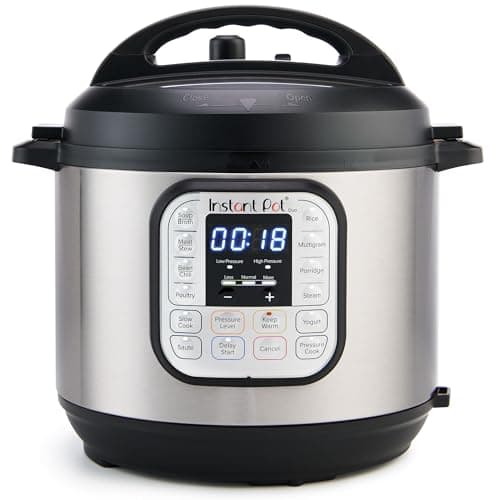
The alternative for anyone whose real complaint is the eight hours of notice a slow cooker demands. It slow cooks, sautés and cooks rice, and it pressure cooks the same braise in well under an hour when the morning got away from you. The inner pot is bare stainless — nothing coated sitting against acidic food for hours — and sealing rings and spare pots are stocked everywhere.

Replacing the eight hours of notice with forty minutes
8.0
$109.99Amazon
03
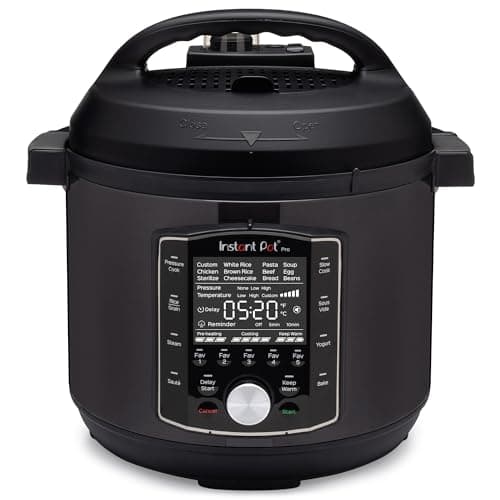
Instant Instant Pot Pro 10-in-1, 8 Quart
Instant Pot Pro 10-in-1, 8 Quart

The batch answer. Eight quarts is a real capacity change rather than a marketing one — stock, chilli for a crowd, a whole chicken with room to spare — on the same bare stainless inner pot and the same parts supply as the Duo, with sous vide and lower-temperature control the Duo does not have.

Big batches and a cook who wants finer temperature control
7.8
$199.99Amazon
04
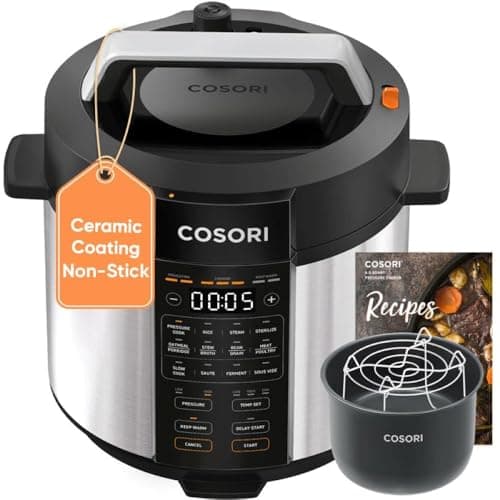
Cosori Cosori Pressure Cooker 6 Qt (9-in-1, Ceramic-Coated Pot)
Cosori Pressure Cooker 6 Qt (9-in-1, Ceramic-Coated Pot)

The budget pick — the cheapest capable machine here, and the easiest of them to clean. Cosori uses a ceramic-coated inner pot rather than bare stainless, which is a real trade rather than an upgrade: the sauté step releases cleanly instead of welding on, and a coating is a wear item where bare steel is not. Cosori publishes a 12-item safety list rather than a bare preset count.

Budget pick — cheapest capable multi-cooker
7.0
$75.99Amazon
05
All-Clad All-Clad 7 Qt Stainless Electric Slow Cooker
All-Clad 7 Qt Stainless Electric Slow Cooker

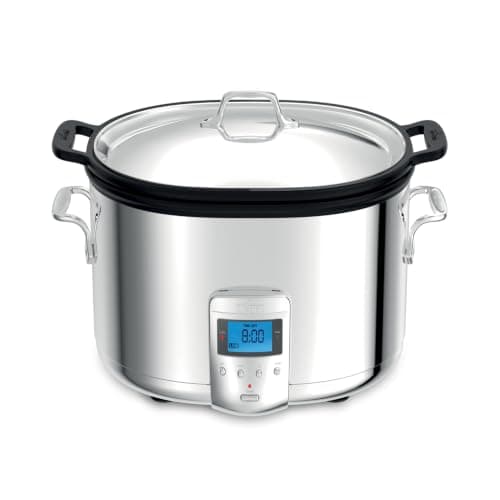
The splurge, and an honest one: this is a dedicated slow cooker rather than a multi-cooker, with an aluminum insert instead of stoneware. Aluminum heats faster and more evenly and is dramatically lighter to lift when full, which is a real accessibility argument, in a build on a different level from everything else here. It is also six times the price of a machine that makes very similar food.

Buy-it-once kitchens, and anyone who struggles with a full stoneware crock
5.6
$249.96Amazon

#ad · Live prices from the Amazon Product API, as of November 23, 2026. Where we have no verified live price, we show none — a gap beats a number that has rotted.

In detail

The picks, in full

01
Ninja Ninja PossibleCooker PRO 14-in-1, 8.5 Qt (MC1001)

Best overall — searing and slow cooking in one vessel

Ninja PossibleCooker PRO 14-in-1, 8.5 Qt (MC1001)

8.5 qt14 functionsSear in the same potOven-safe insert
8.2/10

The best Crock-Pot alternative, because it is the only machine here designed around slow cooking rather than around pressure. You sear in the pot and then slow cook in the same pot, which is the biggest available flavor win in this category, and 8.5 quarts is a genuine large-batch capacity. The insert is oven-safe, so it finishes under a broiler and goes to the table.

Slow-cook fidelity
10
Jobs retired
8
Pot material
6
Capacity
9
Value
8

Pros

  • Sear, then slow cook, without a second pan to wash
  • 8.5 quarts is real large-batch capacity, with a 4-to-6-quart working window under the fill rule
  • Oven-safe insert, so the pot moves from the base to the oven to the table
  • Also bakes, braises and steams, which retires a casserole dish as well as a skillet
  • Presentable enough to serve from, which a stoneware crock rarely is

Cons

  • Fourteen functions is generous counting, as it is everywhere in this category
  • Heavier and bulkier than a Crock-Pot of the same capacity
  • Costs three times a basic programmable Crock-Pot
  • Ninja publishes no material statement for the insert beyond its nonstick finish

Don't buy this if…

…you want the simplest possible machine. This is a multi-cooker wearing a slow cooker's job description, and a plain Crock-Pot is the cheaper, kinder answer for anyone who only ever presses low.

Also a pick on the slow cooker roundup, on the meal-prep roundup and on the best Ninja appliances page. If you are weighing slow against fast before choosing a machine, slow cooker versus pressure cooker is the page that settles it — it works outward from the boiling point in both directions and notes that neither method browns and neither reduces.

$119.95View on Amazon

$169.9929% off

Price as of November 23, 2026. Prices change — Amazon's at checkout is the one that counts.

#ad · we may earn a commission from this link to Ninja PossibleCooker PRO 14-in-1, 8.5 Qt (MC1001)

02
Instant Instant Pot Duo 7-in-1, 6 Quart

Replacing the eight hours of notice with forty minutes

Instant Pot Duo 7-in-1, 6 Quart

6 qt7-in-1 presetsBare stainless inner potSlow cook + sauté + rice
8.0/10

The alternative for anyone whose real complaint is the eight hours of notice a slow cooker demands. It slow cooks, sautés and cooks rice, and it pressure cooks the same braise in well under an hour when the morning got away from you. The inner pot is bare stainless — nothing coated sitting against acidic food for hours — and sealing rings and spare pots are stocked everywhere.

Slow-cook fidelity
6
Jobs retired
9
Pot material
10
Capacity
7
Value
8

Pros

  • Bare stainless inner pot — the only uncoated food-contact surface on this page
  • Pressure cooking is the genuine answer to a forgotten start
  • Six quarts is the household sweet spot and fits a four-pound roast
  • Sealing rings and spare pots available for years, from many sellers
  • Simple enough that people keep using it, which is the real test

Cons

  • Its slow-cook mode heats from the base with an unsealed lid, and owner reports consistently find it runs cooler than a stoneware Crock-Pot — expect to use the high setting
  • The silicone sealing ring holds onto strong smells and is a periodic replacement
  • Basic LED display next to the newer Pro models
  • Pressure cooking is a learned skill, and a genuine hesitation for some households

Don't buy this if…

…slow-cook fidelity is the whole point. If you want the unattended eight-hour braise and nothing else, the Ninja above or a Crock-Pot itself will do it better than a pressure cooker's slow-cook preset.

Ranked against the rest of its category on the pressure cooker roundup, which also carries the warning no control panel admits: per the USDA-funded National Center for Home Food Preservation, an electric multi-cooker is not recommended for pressure canning low-acid foods, whatever the button says. The mirror image of this page is Instant Pot alternatives — worth reading if you are switching in the other direction.

$109.99View on Amazon

Price as of November 23, 2026. Prices change — Amazon's at checkout is the one that counts.

#ad · we may earn a commission from this link to Instant Pot Duo 7-in-1, 6 Quart

03
Instant Instant Pot Pro 10-in-1, 8 Quart

Big batches and a cook who wants finer temperature control

Instant Pot Pro 10-in-1, 8 Quart

8 qt10-in-1 presetsSous videBare stainless inner pot
7.8/10

The batch answer. Eight quarts is a real capacity change rather than a marketing one — stock, chilli for a crowd, a whole chicken with room to spare — on the same bare stainless inner pot and the same parts supply as the Duo, with sous vide and lower-temperature control the Duo does not have.

Slow-cook fidelity
5
Jobs retired
10
Pot material
10
Capacity
10
Value
4

Pros

  • Eight quarts removes the batch ceiling for stock and braises — a 4-to-5-quart working window
  • Sous vide and lower-temperature control that the Duo lacks
  • Same bare stainless inner pot and the same long-term parts supply
  • Quieter steam release than the older Duo lid

Cons

  • Same slow-cook caveat as the Duo: base heating, unsealed lid, cooler low setting
  • Large enough that it will live on the counter rather than in a cupboard
  • Takes longer to come up to pressure simply because there is more mass
  • Costs meaningfully more than the Duo for the same core function

Don't buy this if…

…you cook for two. A half-empty eight-quart pot takes longer to pressurize and buys you nothing — and under the slow-cooker fill rule it is the wrong shape for small batches.

Also on the pressure cooker roundup and the meal-prep roundup. For a Crock-Pot household the honest framing is that this is the machine to buy if your batches have outgrown a 6-quart crock, and the wrong machine if they have not.

$199.99View on Amazon

Price as of November 23, 2026. Prices change — Amazon's at checkout is the one that counts.

#ad · we may earn a commission from this link to Instant Pot Pro 10-in-1, 8 Quart

04
Cosori Cosori Pressure Cooker 6 Qt (9-in-1, Ceramic-Coated Pot)

Budget pick — cheapest capable multi-cooker

Cosori Pressure Cooker 6 Qt (9-in-1, Ceramic-Coated Pot)

6 qt9-in-1 presetsCeramic-coated inner pot12 published safety features
7.0/10

The budget pick — the cheapest capable machine here, and the easiest of them to clean. Cosori uses a ceramic-coated inner pot rather than bare stainless, which is a real trade rather than an upgrade: the sauté step releases cleanly instead of welding on, and a coating is a wear item where bare steel is not. Cosori publishes a 12-item safety list rather than a bare preset count.

Slow-cook fidelity
5
Jobs retired
8
Pot material
5
Capacity
7
Value
10

Pros

  • The lowest price of any multi-function machine on this page
  • Ceramic coating makes browning release cleanly, which is the step people dread washing
  • Cosori publishes its safety-feature list rather than just a preset count
  • Same 6-quart footprint as the Instant Duo

Cons

  • A coating is a wear item — a bare stainless pot cannot wear out
  • We have not verified any PFAS-free claim for this coating and will not repeat one
  • Smaller aftermarket for spare pots and rings than Instant's
  • Slow-cook mode shares the base-heating limitation of every pressure cooker here

Don't buy this if…

…you want an inner pot still intact in ten years. That is the bare stainless Instant Duo, which has nothing on it to fail.

It is the number one pick on best kitchen appliances for the money and the top pick on Instant Pot alternatives. On this page it is ranked fourth rather than higher for one reason: the coating. If the thing you disliked about your Crock-Pot was the stoneware, a coated pot is a sideways move and bare stainless is the upgrade.

$75.99View on Amazon

$89.9916% off

Price as of November 23, 2026. Prices change — Amazon's at checkout is the one that counts.

#ad · we may earn a commission from this link to Cosori Pressure Cooker 6 Qt (9-in-1, Ceramic-Coated Pot)

05
All-Clad All-Clad 7 Qt Stainless Electric Slow Cooker

Buy-it-once kitchens, and anyone who struggles with a full stoneware crock

All-Clad 7 Qt Stainless Electric Slow Cooker

7 qtAluminum insertProgrammable LCD timerStainless build
5.6/10

The splurge, and an honest one: this is a dedicated slow cooker rather than a multi-cooker, with an aluminum insert instead of stoneware. Aluminum heats faster and more evenly and is dramatically lighter to lift when full, which is a real accessibility argument, in a build on a different level from everything else here. It is also six times the price of a machine that makes very similar food.

Slow-cook fidelity
9
Jobs retired
2
Pot material
5
Capacity
9
Value
3

Pros

  • True slow-cook fidelity — it is a slow cooker, not a pressure cooker with a preset
  • Aluminum insert heats faster and more evenly than stoneware
  • Far lighter to lift full than a ceramic crock, which matters more than it sounds
  • Programmable timer with an automatic shift to warm, in a build that will outlive the category

Cons

  • Six times the price of a machine that produces very similar food
  • An aluminum insert is not the material some buyers want against a long acidic braise
  • No probe at this price, which is hard to defend
  • Retires nothing else — no sear, no pressure, no rice

Don't buy this if…

…you are buying on results. An eight-hour braise does not care much about even heating, and a $40 Crock-Pot proves it nightly.

Ranked with the rest of the field on the slow cooker roundup. It is on this page because “alternative to a Crock-Pot” sometimes means a better slow cooker rather than a different appliance — and if that is what you are after, this is the one. Just be clear-eyed that the food will not be noticeably different.

$249.96View on Amazon

$299.9917% off

Price as of November 23, 2026. Prices change — Amazon's at checkout is the one that counts.

#ad · we may earn a commission from this link to All-Clad 7 Qt Stainless Electric Slow Cooker

The honest comparison table, in prose

A Crock-Pot heats through the walls of a stoneware crock, which is a gentle, even, all-around heat and the reason the format has survived unchanged. A multi-cooker heats from a plate under a metal pot. For a braise that runs eight hours, both get there — collagen does not care much how the heat arrived — but the two are not identical, and on the low setting the gap shows up as a longer time to temperature. The practical consequence is simple: if you buy a pressure cooker to replace a slow cooker, plan to use its high slow-cook setting where you used low, and give the first few braises a stir and a look rather than trusting the preset.

What you get in exchange is the sear. Browning meat before a braise is the single largest flavor difference available in this kind of cooking, and doing it in the same vessel means the fond — the browned residue on the bottom — dissolves into the braise instead of being washed down the sink with the skillet. Every machine on this page except the All-Clad does that, and our top pick is the one designed around doing it before a long slow cook rather than before pressure.

The material question, specifically

“Non-toxic crock pot alternative” is a real search, so here is the direct answer rather than a reassurance. The uncoated option on this page is the bare stainless inner pot in the two Instant Pots: no coating, nothing to wear through, and a surface that does not change over years of acidic tomato braises. Cosori's pot is ceramic-coated, which is a coating however benign, and we have not verified any PFAS-free claim for it and will not repeat one. All-Clad's insert is aluminum, which is a different question again, and Ninja publishes no material statement for its insert beyond the nonstick finish. Stoneware itself — the thing you are replacing — is an inert glazed ceramic and perfectly fine; it is heavy and chippable rather than suspect. Non-toxic kitchen appliances ranks the whole counter on exactly this question, and are nonstick rice cookers safe covers the appliance-specific version of the coating argument, which applies here too: these machines hold food near or below the boiling point, a long way below the temperature at which coatings begin to break down.

Three things to check before you switch

  • Your actual batch size, against the fill rule. Half to two thirds full is the rule for slow cooking, so a 6-quart pot works between 3 and 4 quarts and an 8.5-quart pot between 4 and 6. What size slow cooker do I need has the per-household version.
  • Whether you will really use the extra functions. A multi-cooker that retires a rice cooker and a steamer is excellent value; one that becomes a slow cooker with a confusing panel is not. Be honest about which you are.
  • Whether leaving it running all day worries you. It should not, and the evidence is in is it safe to leave a slow cooker on all day — four extension-service rules, plus Colorado State's water test for checking an old cooker still reaches a safe holding temperature. The same rules apply to every machine on this page.

What none of these replaces

A Dutch oven. If you own one and a stove, you already have the best braising vessel in the house — it sears, it braises, it goes in the oven, and it costs nothing to run beyond the burner. What a slow cooker and every alternative here really sell is unattended time: the ability to leave the house. That is the thing worth paying for, and it is the reason the machine that both sears and slow cooks tops this page.

How we picked

We did not lab-test this gear

Everyone in this category says they tested twenty air fryers. We have not lab-tested any of these, and we say so. What we did instead: compiled the published specifications — wattage, capacity, materials — worked out what each machine actually costs to run at the national electricity rate, read the manuals and owner reviews, and scored each one against a published rubric. The scores are judgments from documented research — not measurements we took, because we do not have a lab and we will not pretend we do. Where a number came from someone else's work, we name them in Sources.
Questions

Frequently asked

What is the best alternative to a Crock-Pot?

The Ninja PossibleCooker PRO 8.5 Qt. It is built around slow cooking rather than around pressure, and it lets you brown the meat in the same vessel you braise in — which is the one thing a Crock-Pot cannot do and the largest flavor difference available in this kind of cooking.

Can an Instant Pot replace a slow cooker?

Mostly, yes — it has a slow-cook function, it sautés in the same pot, and it pressure cooks the same braise in under an hour when you forget to start it. The caveat is fidelity: it heats from the base with an unsealed lid, and owner reports consistently find its low setting runs cooler than stoneware, so use high where you used low.

What is a non-toxic alternative to a Crock-Pot?

A bare stainless inner pot, which is what both Instant Pots on this page use — no coating, nothing to wear through. Worth saying plainly that glazed stoneware, the material you would be replacing, is itself inert; its drawbacks are weight and chipping rather than anything chemical.

Is a multi-cooker better than a slow cooker?

It is better value if you will use the other functions, because it retires a rice cooker, a steamer and often a skillet. It is worse if you only ever press “low”: a dedicated slow cooker is cheaper, simpler and has less to go wrong. Slow cooker versus pressure cooker settles the cooking question separately from the appliance one.

Keep reading