Skip to content
Preheat Club

Beyond air fryers · Kitchen Appliances

The best cold press juicers

Cold press means a slow auger instead of a spinning blade, and the published RPM is the one number that tells you which is which. Three masticating picks, ranked on yield and on the prep you will actually do.

By Stephen V.Updated How we review
#ad

We earn a commission when you buy through our Amazon links, at no extra cost to you. It never changes a verdict, and we say so when the cheaper product is the better buy. How this works.

Buy the Nama J2 if you juice several times a week. It is the only machine here you do not have to stand over: Nama publishes a 200-watt motor at 50 RPM, a wide hands-free hopper that takes a whole recipe at once, and a 15-year warranty on all parts on its own US product page — nothing else in this format is close on that last point. The budget pick is the Ninja NeverClog Cold Press Juicer (JC151): the cheapest machine here that genuinely does the job, with a published 150-watt high-torque auger, two pulp filters and dishwasher-safe juice-contact parts, at roughly what a fast centrifugal machine costs. If your shopping list is celery, kale and chard, the Omega at 80 published RPM through a triple-stage auger is the extraction specialist.

The term is worth defining precisely, because the marketing has blurred it. A cold press or masticating juicer turns an auger slowly — 50 to 80 RPM on the machines here — crushing and pressing fruit against a screen. A centrifugal juicer shreds food on a flat blade spinning at thousands of RPM and throws the juice outward. “Cold press” refers to the absence of that speed, not to any refrigeration: the honest claim is less heat and less aeration, and the visible one is drier pulp. Masticating versus centrifugal works through what each format actually does to the juice.

What we rank these on

  • Published RPM. The defining specification of the format, and all three machines here print one: 50, 80 and a published auger wattage. Where a maker prints “slow juicer” and no figure, we cannot rank it.
  • Prep time, treated as a cost. This is the thing nobody tells you and the reason slow juicers end up in cupboards. A narrow chute means every apple, beet and carrot gets cut into batons first. A hands-free hopper removes that, and it is most of what the expensive machine is selling.
  • Published warranty. A juicer is a gearbox with a screen, and parts wear. One machine here publishes fifteen years on all parts; one publishes nothing we could verify on the maker's own page, and we say so.
  • Wet parts to wash. Five minutes of washing after every glass is the other reason these stop getting used. Fewer parts, and dishwasher-safe ones, matter more than the yield difference between these three.

We have not measured yield in a lab, and we do not publish a percentage — nobody in this category publishes a comparable test, and inventing one would be the easiest number on this page to fake. What we do instead is rank on the published mechanical specifications and say what each arrangement is known to be good at. How we review sets out the method. Prices come from the live price layer with the date they were checked.

The short answer

Quick picks

#ProductBest forScorePrice
01
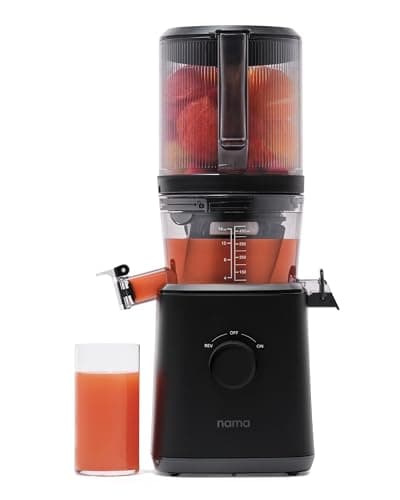
Nama Nama J2 Cold Press Juicer
Nama J2 Cold Press Juicer

The buy-it-once pick, and the only machine here you do not have to stand over. Nama publishes 200 watts at 50 RPM, a hands-free hopper that takes a whole recipe at once, and a 15-year warranty on all parts — which is the specification that actually separates it from the field, because a juicer is a gearbox and gearboxes wear.

Juicing several times a week, hands-free
8.2
$497.17Amazon
02
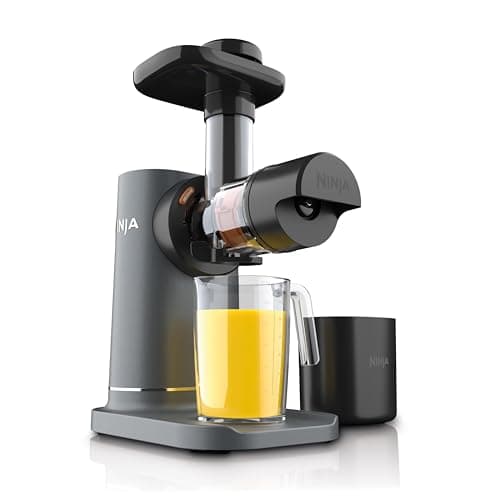
Ninja Ninja NeverClog Cold Press Juicer (JC151)
Ninja NeverClog Cold Press Juicer (JC151)

The budget pick — the cheapest cold press here that genuinely does the job, and the machine that makes this format mainstream. Ninja publishes a 150-watt high-torque auger, two interchangeable pulp filters so you set the pulp level at the machine, and dishwasher-safe juice-contact parts. It costs roughly what a fast centrifugal juicer costs.

Budget pick — cold press at centrifugal money
7.6
$118.79Amazon
03
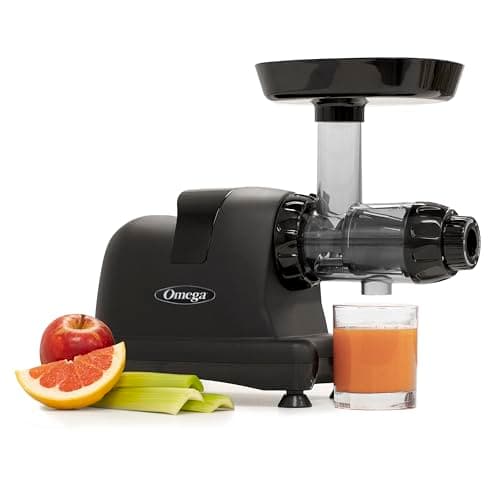
Omega Omega Cold Press Juicer (triple-stage, 80 RPM)
Omega Cold Press Juicer (triple-stage, 80 RPM)

The extraction specialist, and the pick for anything fibrous. A horizontal auger turning at a published 80 RPM through a triple-stage screw is the arrangement that actually gets juice out of celery, kale, chard and wheatgrass — and the pulp comes out notably drier than a centrifugal machine's. It asks for the most chopping of anything here.

Leafy greens, celery and wheatgrass
6.4
$199.87Amazon

#ad · Live prices from the Amazon Product API, as of November 23, 2026. Where we have no verified live price, we show none — a gap beats a number that has rotted.

In detail

The picks, in full

01
Nama Nama J2 Cold Press Juicer

Juicing several times a week, hands-free

Nama J2 Cold Press Juicer

50 RPM200 WHands-free hopper15-year warranty published
8.2/10

The buy-it-once pick, and the only machine here you do not have to stand over. Nama publishes 200 watts at 50 RPM, a hands-free hopper that takes a whole recipe at once, and a 15-year warranty on all parts — which is the specification that actually separates it from the field, because a juicer is a gearbox and gearboxes wear.

Extraction
9
Prep required
10
Warranty and build
10
Cleaning
8
Value
4

Pros

  • Load the whole recipe, walk away, come back to juice
  • 15-year warranty on all parts, published on Nama's own US product page
  • 50 RPM extraction, with the low-foam behavior that comes with it
  • Fewer wet parts than a horizontal masticating machine, and a published 12.1 lb weight

Cons

  • The most expensive pick here by a wide margin
  • Nama publishes a yield per load rather than a hopper volume, so batch size is harder to plan
  • Published height is 17.7 inches, which will not clear a standard 18-inch under-cabinet gap with room to load it
  • Still a slow juicer: a big pitcher takes real minutes

Don't buy this if…

…you are not already juicing several times a week. The hopper and the warranty are both arguments about years of use, and at a glass on Sunday they are an expensive convenience.

Also ranked on the main juicer roundup, where it sits against the centrifugal machines. The honest summary of its position: it is the only juicer we track whose price is justified by something other than performance — the hopper buys back your mornings and the warranty buys back the gearbox risk.

$497.17View on Amazon

$599.0017% off

Price as of November 23, 2026. Prices change — Amazon's at checkout is the one that counts.

#ad · we may earn a commission from this link to Nama J2 Cold Press Juicer

02
Ninja Ninja NeverClog Cold Press Juicer (JC151)

Budget pick — cold press at centrifugal money

Ninja NeverClog Cold Press Juicer (JC151)

150 W high-torque auger24 oz jug / 36 oz pulp bin2 pulp filtersDishwasher-safe juice parts
7.6/10

The budget pick — the cheapest cold press here that genuinely does the job, and the machine that makes this format mainstream. Ninja publishes a 150-watt high-torque auger, two interchangeable pulp filters so you set the pulp level at the machine, and dishwasher-safe juice-contact parts. It costs roughly what a fast centrifugal juicer costs.

Extraction
7
Prep required
5
Warranty and build
7
Cleaning
9
Value
10

Pros

  • Cold-press extraction at a price no other machine in the format matches
  • Two published pulp filters — pulp level chosen at the machine, not with a sieve
  • All juice-contact parts published as dishwasher-safe, so cleaning is not a negotiation
  • Quiet, in the way every slow juicer is quiet
  • Two one-touch programs instead of a speed dial to learn

Cons

  • The 24-ounce jug is the smallest catch volume here — a family batch means emptying mid-run
  • No wide hopper: you feed it piece by piece
  • Narrow feed means real prep time on apples and beets
  • Ninja publishes no warranty length for this model that we could verify on its own US page

Don't buy this if…

…you want a full pitcher for four people in one go. This is a small-batch machine by capacity as well as a slow one by design.

Number one on the juicer roundup and a pick on the best Ninja appliances page. Within this format it is the machine we would put in most kitchens: the Nama above is better in every way that costs money, and this one is the difference between juicing and intending to.

$118.79View on Amazon

$149.9921% off

Price as of November 23, 2026. Prices change — Amazon's at checkout is the one that counts.

#ad · we may earn a commission from this link to Ninja NeverClog Cold Press Juicer (JC151)

03
Omega Omega Cold Press Juicer (triple-stage, 80 RPM)

Leafy greens, celery and wheatgrass

Omega Cold Press Juicer (triple-stage, 80 RPM)

80 RPM published200 WTriple-stage augerHorizontal, all-in-one
6.4/10

The extraction specialist, and the pick for anything fibrous. A horizontal auger turning at a published 80 RPM through a triple-stage screw is the arrangement that actually gets juice out of celery, kale, chard and wheatgrass — and the pulp comes out notably drier than a centrifugal machine's. It asks for the most chopping of anything here.

Extraction
10
Prep required
3
Warranty and build
7
Cleaning
5
Value
7

Pros

  • 80 RPM with a horizontal auger is the configuration that extracts from leaves and stalks
  • Triple-stage screw is published rather than implied, and the pulp is visibly drier
  • Doubles as a nut-butter, baby-food, pasta and sorbet attachment set
  • Very quiet, and slow enough that it does not foam the juice

Cons

  • The narrowest feed chute here — everything gets cut to batons first
  • Most parts to wash, and the screen needs brushing before the pulp dries into it
  • Omega's own site does not carry a page for this exact variant, so the warranty is not verifiable from the maker
  • Long horizontal footprint — it takes counter depth rather than height

Don't buy this if…

…you juice mostly whole fruit and value your mornings. The chopping this machine requires is the thing people quietly stop doing.

Ranked against the whole category on the juicer roundup. It is the clearest case on this site of a machine that wins the specification and loses the kitchen: the extraction is the best here and so is the amount of standing at a chopping board, and the second of those decides whether a juicer gets used.

$199.87View on Amazon

Price as of November 23, 2026. Prices change — Amazon's at checkout is the one that counts.

#ad · we may earn a commission from this link to Omega Cold Press Juicer (triple-stage, 80 RPM)

Cold press or centrifugal, decided in two questions

First: do you juice greens? Celery, kale, chard and wheatgrass are the foods a spinning blade cannot extract properly, and they are the whole reason the slow format exists. If your list is apples, carrots and oranges, a centrifugal machine is faster, cheaper and the difference in the glass is small. Second: will you clean it within ten minutes of using it? Every juicer in both formats is unpleasant to clean once the pulp has dried into the screen, and the honest predictor of whether a juicer stays on the counter is not its price. The main juicer roundup ranks both formats together.

The prep tax nobody prices in

A narrow feed chute is a hidden cost measured in minutes per glass. The Omega wants everything cut into batons; the Ninja wants fruit in pieces; the Nama takes a whole recipe at once and that is what the price difference buys. Before you choose on extraction, be honest about which of those you will still be doing on a Tuesday in February — because a juicer that gets used twice a week at 85% yield puts far more juice in you than one that gets used monthly at 95%.

What cold press does not do

  • It does not keep the fibre. Juicing removes insoluble fibre by design. If that is not what you wanted, a blender is the appliance — the blender roundup is the page.
  • It does not make juice keep indefinitely. Less aeration slows oxidation; it does not stop it. Treat cold-press juice as a same-day product, refrigerated.
  • It is not fast. 50 to 80 RPM is the point of the format. A pitcher for four is a project, on every machine here.

How we picked

We did not lab-test this gear

Everyone in this category says they tested twenty air fryers. We have not lab-tested any of these, and we say so. What we did instead: compiled the published specifications — wattage, capacity, materials — worked out what each machine actually costs to run at the national electricity rate, read the manuals and owner reviews, and scored each one against a published rubric. The scores are judgments from documented research — not measurements we took, because we do not have a lab and we will not pretend we do. Where a number came from someone else's work, we name them in Sources.

Questions

Frequently asked

What is the best cold press juicer?

The Nama J2, for anyone juicing several times a week: a published 50 RPM, a hands-free hopper that takes a whole recipe, and a 15-year parts warranty published on the maker's own US page. For occasional juicing, the Ninja NeverClog JC151 is the budget pick and the cheapest honest route into the format.

What is the difference between cold press and masticating?

Nothing meaningful — they are two names for the same mechanism: a slow auger that crushes and presses food against a screen, at 50 to 80 RPM on the machines here. “Cold press” is the marketing term and refers to the absence of high-speed heat and aeration, not to refrigeration.

Is a cold press juicer worth it over a centrifugal one?

For leafy greens, celery and wheatgrass, yes — a spinning blade cannot extract from them properly. For apples, carrots and citrus the difference is much smaller, and a centrifugal machine is faster and cheaper.

How long does cold press juice last?

Treat it as a same-day product kept in the fridge. Slow extraction reduces aeration, which slows oxidation, but it does not prevent it — and no maker on this page publishes a shelf-life figure we could quote.

Keep reading